Q1: What is Overloading?
Ans: Overloading is the condition when the current flowing in a circuit exceeds its safe limit.
It can cause overheating and damage to electrical equipment.
Q2: What is Short Circuit?
Ans: A short circuit is a fault condition in which current flows through an unintended path with very low resistance.
This results in a sudden large current.
Q3: State any four causes of short circuit.
Ans: Causes of short circuit:
- ➔ Damaged insulation
- ➔ Loose connections
- ➔ Moisture in wiring
- ➔ Faulty appliances
Q4: What is H.R.C?
Ans: H.R.C (High Rupturing Capacity) fuse is a type of fuse that can safely interrupt very high fault currents without damage.
Q5: What is a Fuse?
Ans: A fuse is a safety device used to protect electrical circuits from overcurrent.
It melts and breaks the circuit when excessive current flows.
Q6: State the uses of a fuse.
Ans: Uses of a fuse:
- ➔ Protects electrical devices from damage
- ➔ Prevents fire hazards
- ➔ Breaks the circuit during faults
Q7: State the parts of a fuse.
Ans: Parts of a fuse:
- ➔ Fuse Element
- ➔ Fuse Base
- ➔ Fuse Carrier
Q8: What is Fusing Current?
Ans: Fusing current is the minimum current at which the fuse element melts and breaks the circuit.
Q9: What is Fuse Element?
Ans: Fuse element is the thin wire inside the fuse that melts when excessive current flows.
Q10: What is Fuse Base?
Ans: Fuse base is the fixed part of the fuse in which the fuse carrier is placed.
Q11: Define rating of fuse.
Ans: The rating of a fuse is the maximum amount of current it can safely carry without melting.
If the current exceeds this value, the fuse wire melts and breaks the circuit to protect the device.
Q12: What is the Fusing Factor? Write the Formula.
Ans: Fusing factor is the ratio of fusing current to the rated current of the fuse.
Formula:
Fusing Factor = Fusing Current / Rated Current
Q13: State the importance of a fuse.
Ans: Importance of a fuse:
- ➔ Protects wiring and equipment
- ➔ Prevents electrical accidents
- ➔ Ensures safe operation of circuits
Q14: Name the types of Fuse.
Ans: Types of fuse:
- ➔ Rewireable Fuse
- ➔ Cartridge Fuse
- ➔ H.R.C Fuse
Q15: What is a Rewireable Fuse?
Ans: A rewireable fuse is a type of fuse in which the fuse wire can be replaced after it melts.
Q16: What is a Cartridge Fuse?
Ans: A cartridge fuse is a sealed fuse that contains a fuse element inside a glass or ceramic body.
It cannot be reused once blown.
Q17: State any two demerits of Fuse.
Ans: Demerits of fuse:
- ➔ Needs replacement after operation
- ➔ Cannot be reused (except rewireable type)
Q18: Briefly explain the working of a fuse.
Ans: When normal current flows, the fuse works properly without melting.
When excessive current flows, heat is produced due to resistance.
This heat melts the fuse element.
The circuit breaks and stops the flow of current, protecting the system.
Q19: What is a Circuit Breaker?
Ans: A circuit breaker is an automatic electrical device used to protect a circuit from overcurrent or short circuit.
It breaks the circuit when a fault occurs.
Q20: State four advantages of using a Circuit Breaker over a fuse.
Ans: Advantages of circuit breaker:
- ➔ It can be reset and reused
- ➔ It operates faster and more reliably
- ➔ It provides better protection
- ➔ No need to replace parts after operation
Q21: Name the parts of a circuit breaker.
Ans: Parts of a circuit breaker:
- ➔ Contacts
- ➔ Operating mechanism
- ➔ Trip unit
- ➔ Arc extinguisher
Q22: Briefly explain the working of a circuit breaker.
Ans: Under normal conditions, the circuit breaker allows current to flow.
When a fault occurs, the trip mechanism is activated.
The contacts open and break the circuit.
The arc produced is extinguished, stopping the current flow.
Q23: What is a Molded Case Circuit Breaker (M.C.C.B)?
Ans: MCCB is a type of circuit breaker enclosed in a molded insulating case.
It is used for higher current ratings and industrial applications.
Q24: Briefly explain the working of a MCCB.
Ans: MCCB works by detecting overcurrent or short circuit conditions.
When fault occurs, the trip unit activates.
The contacts open and interrupt the current flow.
It can be reset after clearing the fault.
Q25: What is a Miniature Circuit Breaker (M.C.B)?
Ans: MCB is a small circuit breaker used for low current applications like household wiring.
It protects against overload and short circuit.
Q26: Briefly explain the working of a MCB.
Ans: MCB works using a thermal and magnetic mechanism.
During overload, heat causes the bimetal strip to bend and trip the circuit.
During short circuit, the magnetic mechanism acts instantly to open the contacts.
Q27: What are High Power Circuit Breakers?
Ans: High power circuit breakers are used in power systems to control and protect circuits carrying large currents and high voltages.
Q28: What is a Vacuum Circuit Breaker?
Ans: A vacuum circuit breaker is a type of circuit breaker in which the arc is extinguished in a vacuum.
It is highly efficient and requires less maintenance.
Q29: Define Relay.
Ans: A relay is an automatic switching device that opens or closes a circuit using an electrical signal.
Q30: State the types of Relay.
Ans: Types of relays:
- ➔ Thermal Relay
- ➔ Magnetic Relay
Q31: What is a Thermal Relay?
Ans: A thermal relay is a protective device that operates based on heat produced by excessive current.
Q32: Briefly explain the working principle of a Thermal Relay.
Ans: When excess current flows, heat is produced.
This heat bends a bimetallic strip.
The bending action trips the circuit and stops the current flow.
Q33: What is a Magnetic Relay?
Ans: A magnetic relay is a device that operates using an electromagnetic effect to control a circuit.
Q34: Briefly explain the working principle of a Magnetic Relay.
Ans: When current flows through the coil, it produces a magnetic field.
This attracts an armature.
The contacts open or close, controlling the circuit.
Q35: What is a Starter?
Ans: A starter is a device used to start, stop, and protect an electric motor from damage.
Q36: What is D.C Motor Starter?
Ans: A D.C motor starter is a device used to safely start a DC motor by limiting the starting current.
Q37: What is a Three Point D.C Motor Starter?
Ans: A three point DC motor starter has three terminals:
- ➔ Line (L)
- ➔ Armature (A)
- ➔ Field (F)
It provides protection and controls starting current.
Q38: What is a Four Point D.C Motor Starter?
Ans: A four point DC motor starter has four terminals and provides better control by separating the field circuit from the starter circuit.
Q39: State four uses of Motor Starter?
Ans: Uses of motor starter:
- ➔ To limit starting current
- ➔ To protect motor from overload
- ➔ To safely start and stop the motor
- ➔ To increase motor life
Q40: What are Magnetic Contactors?
Ans: Magnetic contactors are electrically operated switches used to control high-power circuits using a low-power signal.
Q41: State two uses of Magnetic Contactors?
Ans: Uses of magnetic contactors:
- ➔ Used to control electric motors
- ➔ Used in industrial automation systems
Q42: State at least six personal safety measures while working with electricity.
Ans: Personal safety measures:
- ➔ Switch off power before working
- ➔ Use insulated tools
- ➔ Wear rubber gloves and shoes
- ➔ Avoid wet conditions
- ➔ Check wires before use
- ➔ Do not touch live wires
Q43: State four things one should do if someone gets an electric shock.
Ans: Actions to take:
- ➔ Switch off the power supply immediately
- ➔ Do not touch the person directly
- ➔ Use a dry wooden object to separate the person
- ➔ Call for medical help
Q44: What is SF6 gas?
Ans: SF6 (Sulfur Hexafluoride) is a gas used in electrical equipment for insulation and arc quenching.
Q45: Define Earthing System.
Ans: An earthing system connects electrical equipment to the earth to prevent electric shock.
Q46: Draw the symbol of Earth.
Ans: 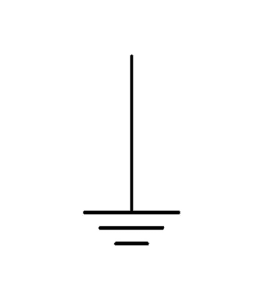
Q47: State the importance of Earthing.
Ans: Earthing is important because it protects people from electric shock and prevents damage to electrical appliances.
Q48: Name the methods of Earthing.
Ans: The methods of earthing are as follows:
- ➔ Plate earthing
- ➔ Rod earthing
- ➔ Pipe earthing
- ➔ Strip earthing
Q49: Name the components of Earthing.
Ans: Some of the components of Earthing are as follows:
- ➔ Earth electrode
- ➔ Earthing lead
- ➔ Earth pit
- ➔ Charcoal and salt
Q50: How will you extinguish a fire in an electric room?
Ans: Steps to extinguish fire:
- ➔ Switch off the main power supply
- ➔ Use CO2 or dry powder fire extinguisher
- ➔ Do not use water
- ➔ Call fire emergency services