Q1: Define HVAC.
Ans: HVAC stands for Heating, Ventilation, and Air Conditioning. It is a system used to control the temperature, humidity, and air quality in buildings.
Q2: Define ASHRAE.
Ans: ASHRAE stands for American Society of Heating, Refrigerating and Air-Conditioning Engineers. It is an international organization that develops standards and guidelines for HVAC and refrigeration systems.
Q3: Define Heat.
Ans: Heat is a form of energy that flows from a hotter object to a cooler one.
Q4: Define Heating.
Ans: Heating is the process of raising the temperature of a space or substance.
Q5: Write the measuring unit of Heat.
Ans: The measuring unit of heat is calorie (cal) or joule (J).
Q6: Name the Heating systems in Buildings.
Ans: The Heating systems are as follows:
- ➔ Local Heating System
- ➔ Central Heating System
- ➔ Partial Heating System
- ➔ Combined Heating System
Q7: Define Local Heating System.
Ans: A local heating system heats only a small area or a single room in a building.
Q8: Define Combined Heating System.
Ans: A combined heating system uses more than one method to provide heating to different parts of a building.
Q9: Define Central Heating System.
Ans: A central heating system provides heat from a single central source to the entire building through pipes or ducts.
Q10: Define Partial Heating System.
Ans: A partial heating system heats only selected parts of a building rather than the whole area.
Q11: Name the methods of Heating of Buildings.
Ans: The methods of Heating of buildings are as follows:
- ➔ Hot water method
- ➔ Steam Heating method
- ➔ Plenum Heating method
Q12: Define the Hot Water method for heating a building.
Ans: The hot water method heats a building by circulating hot water through pipes and radiators.
Q13: Define Steam Heating method for heating a building.
Ans: The steam heating method heats a building by circulating steam through pipes and radiators.
Q14: Define Plenum Heating method for heating a building.
Ans: The plenum heating method heats a building by blowing warm air through ducts into rooms.
Q15: Define Ventilation.
Ans: Ventilation is the process of supplying fresh air and removing stale air from a building.
Q16: Define Ventilators.
Ans: Ventilators are devices or openings in a building that allow air to enter or leave for ventilation.
Q17: Write the importance of Ventilation in a building.
Ans: Ventilation is important to provide fresh air, remove pollutants, control humidity, and maintain a comfortable temperature.
Q18: Name 4 factors affecting the Ventilation.
Ans: Some of the factors affecting the ventilation are as follows:
- ➔ Size of doors and windows
- ➔ Position of doors and windows
- ➔ Number of occupants
- ➔ Type of building construction
Q19: Define Humidity.
Ans: Humidity is the amount of water vapor present in the air.
Q20: Define Temperature.
Ans: Temperature is the measure of how hot or cold the air or an object is.
Q21: What is a normal body temperature?
Ans: Normal body temperature is 370C or 98.70F.
Q22: Define Dry Bulb Temperature.
Ans: Dry bulb temperature is the temperature measured by a standard thermometer with a dry bulb, meaning there is no moisture or wet covering on it. It represents the actual air temperature.
Q23: Define Wet Bulb Temperature.
Ans: Wet bulb temperature is the temperature measured by a thermometer whose bulb is covered with a wet cloth. It helps indicate the amount of moisture present in the air.
Q24: Define Purity of Wind.
Ans: Purity of wind refers to the cleanliness or freshness of the air entering a building.
Q25: How does the size of doors and windows affect ventilation?
Ans: Larger doors and windows allow more air to enter and exit, improving ventilation.
Q26: How does the position of doors and windows affect ventilation?
Ans: Properly positioned doors and windows create airflow paths and enhance cross ventilation in a building.
Q27: Name the types of ventilation.
Ans: The types of ventilation are:
- ➔ Natural Ventilation
- ➔ Artificial Ventilation
Q28: Define Natural ventilation.
Ans: Natural ventilation is the movement of fresh air into a building without using mechanical devices, usually through windows, doors, or vents.
Q29: Define Artificial ventilation.
Ans: Artificial ventilation is the use of fans or mechanical devices to supply fresh air or remove stale air from a building.
Q30: Define Cross ventilation.
Ans: Cross ventilation occurs when fresh air enters a building from one side and exits from the opposite side, creating airflow through the space.
Q31: Define the Central Plant System in ventilation.
Ans: A central plant system is a ventilation system where air is cooled, heated, or filtered at a central location and then distributed to different parts of a building.
Q32: Define the Suction System in ventilation.
Ans: A suction system is a ventilation system that removes air from a building by creating negative pressure and drawing fresh air from outside.
Q33: Define the Air Conditioning.
Ans: Air conditioning is the process of controlling the temperature, humidity, and quality of air in a room or building for comfort.
Q34: Briefly discuss the scope of air conditioning.
Ans: Air conditioning is used in homes, offices, hospitals, and industries to control temperature and humidity and improve comfort.
Q35: Define the Air Circulation.
Ans: Air circulation is the movement of air inside a room or building to maintain even temperature and freshness.
Q36: What is the normal human body temperature?
Ans: The normal human body temperature is 37°C (98.6°F).
Q37: Define the Air Filtration.
Ans: Air filtration is the process of removing dust, pollen, and other particles from the air using filters.
Q38: Define the Air Pressure.
Ans: Air pressure is the force exerted by the weight of air on a surface.
Q39: Name the methods of Cooling the building.
Ans: The methods of cooling the building are as follows:
- ➔ Evaporative cooling
- ➔ Well water cooling
- ➔ Mechanical refrigeration
Q40: Define the Evaporative Cooling.
Ans: Evaporative cooling is a method of reducing air temperature by passing air over water, which absorbs heat as it evaporates.
Q41: Define the Well Water Cooling.
Ans: Well water cooling is a method of cooling a building by circulating cold water from a well through air cooling systems.
Q42: Define Mechanical Refrigeration.
Ans: Mechanical refrigeration is a method of cooling using a refrigerant and a compressor to remove heat from a space.
Q43: Name the methods of the air conditioning system.
Ans: The methods of air conditioning system are:
- ➔ Unit Air Conditioning system
- ➔ Central Air Conditioning system
- ➔ Partial Central Air Conditioning system
- ➔ Combined Air Conditioning system
Q44: Define the Window air-conditioner.
Ans: A window air conditioner is a compact air conditioning unit that is installed in a window or wall opening to cool a single room.
Q45: Define the Split air conditioner.
Ans: A split air conditioner is an air conditioning system with two separate units: an indoor unit that cools the room and an outdoor unit that dissipates heat.
Q46: Define Unit Air Conditioning system.
Ans: A unit air conditioning system is a system where all the components of the air conditioner are combined into a single unit.
Q47: Define the Air conditioner.
Ans: An air conditioner is a device that removes heat and moisture from a room to maintain a comfortable temperature and humidity.
Q48: Name the components of the air conditioner.
Ans: Some of the components of air conditioner are as follows:
- ➔ Compressor
- ➔ Condenser
- ➔ Evaporator
- ➔ Capillary tube
- ➔ Fan
- ➔ Capacitor
- ➔ Thermostat
- ➔ Starting relay
- ➔ Selector switch
Q49: Define Compressor.
Ans: A compressor is a device that increases the pressure and temperature of the refrigerant gas in an air conditioning system.
Q50: Define Condenser.
Ans: A condenser is a device that removes heat from the refrigerant and changes it from a gas to a liquid.
Q51: Define Evaporator.
Ans: An evaporator is a device where the refrigerant absorbs heat from the room air and changes from a liquid to a gas.
Q52: Define Capillary Tube.
Ans: A capillary tube is a small tube that controls the flow of refrigerant from the condenser to the evaporator.
Q53: Define Capacitor.
Ans: A capacitor is an electrical device that stores and releases energy to help start and run the motor in an air conditioner.
Q54: Define Selector Switch.
Ans: A selector switch is a switch used to select different modes of operation in an air conditioner, such as cooling or fan mode.
Q55: Define Thermostat.
Ans: A thermostat is a device that senses the room temperature and switches the air conditioner on or off to maintain the desired temperature.
Q56: Define Starting Relay.
Ans: A starting relay is a device that helps the compressor motor to start by temporarily providing extra current.
Q57: Name the methods of Heat transfer.
Ans: The methods of heat transfer are as follows:
- ➔ Conduction
- ➔ Convection
- ➔ Radiation
Q58: Define Convection.
Ans: Convection is the transfer of heat through the movement of fluids such as air or water.
Q59: Define Radiation.
Ans: Radiation is the transfer of heat in the form of electromagnetic waves without using any medium.
Q60: Define Conduction.
Ans: Conduction is the transfer of heat through a solid material from a hotter part to a cooler part.
Q61: Name the methods of Body Heat Loss.
Ans: The methods of Body heat loss are as follows:
- ➔ Convection
- ➔ Radiation
- ➔ Evaporation
Q62: Define Evaporation.
Ans: Evaporation is the process in which a liquid changes into vapor at a temperature below its boiling point.
Q63: On which factors does the rate of evaporation depend on?
Ans: The rate of evaporation depends on:
- ➔ Temperature
- ➔ Surface area
- ➔ Humidity
- ➔ Air movement
Q64: Define Oxidation.
Ans: Oxidation is a chemical reaction in which a substance combines with oxygen and may produce heat or rust.
Q65: Define ASTM.
Ans: ASTM stands for American Society for Testing and Materials. It is an organization that develops standards for materials, products, and systems.
Q66: Name 4 fittings of steel pipe.
Ans: The fittings of steel pipe are as follows:
- ➔ Elbow
- ➔ Tee
- ➔ Union
- ➔ Coupling
- ➔ Bushing
Q67: Name 4 types of valves.
Ans: The types of valves are as follows:
- ➔ Needle
- ➔ Ball
- ➔ Angle
- ➔ Globe
- ➔ Butterfly
Q68: Define Valve.
Ans: A valve is a device used to control the flow of liquids or gases in a system.
Q69: Define Check Valve.
Ans: A check valve is a valve that allows fluid to flow in only one direction and prevents backflow.
Q70: Define Ducts.
Ans: Ducts are passages or tubes used to carry air from one place to another in a ventilation or air-conditioning system.
Q71: Define SMACNA.
Ans: SMACNA is an organization that sets standards for the design, fabrication, and installation of HVAC duct systems. It stands for Sheet Metal and Air Conditioning Contractors’ National Association.
Q72: Define Fans.
Ans: Fans are devices that move air by using rotating blades.
Q73: Name the types of fans.
Ans: The two main types of fans are:
- ➔ Centrifugal Fans
- ➔ Axial Flow fans
Q74: Define Insulation.
Ans: Insulation is a material used to reduce heat transfer, control temperature, and save energy in a system.
Q75: Define Pipe insulation.
Ans: Pipe insulation is a material used to cover pipes to prevent heat loss, condensation, and freezing.
Q76: Define Duct insulation.
Ans: Duct insulation is the covering of air ducts to reduce heat loss, prevent condensation, and improve energy efficiency.
Q77: Define Heating Load.
Ans: Heating load is the amount of heat needed to keep a room or building warm.
Q78: Define Cooling Load.
Ans: Cooling load is the amount of heat that must be removed to keep a room or building cool.
Q79: Name 4 factors affecting Heating Load.
Ans: The factors affecting Heating load are as follows:
- ➔ Outside temperature
- ➔ Size of the room
- ➔ Insulation quality
- ➔ Number of windows and doors
Q80: Name 4 factors affecting Cooling Load.
Ans: The factors affecting Cooling load are as follows:
- ➔ Sunlight entering the room
- ➔ Number of people in the room
- ➔ Heat from lights and appliances
- ➔ Room ventilation
Q81: Name the types of Cooling Load.
Ans: The types of Cooling load are as follows:
- ➔ Sensible cooling load
- ➔ Latent cooling load
Q82: Define Sensible Cooling Load.
Ans: Sensible cooling load is the heat removed to lower the air temperature in a room.
Q83: Define Latent Cooling Load.
Ans: Latent cooling load is the heat removed to reduce the moisture or humidity in the air.
Q84: Define Ventilation Heat Load.
Ans: Ventilation heat load is the heat gained or lost due to fresh air entering the room.
Q85: Define Infilteration Heat Load.
Ans: Infiltration heat load is the heat gained or lost when outside air enters the room through gaps and cracks.
Q86: Draw Heat Flow Diagram.
Ans: 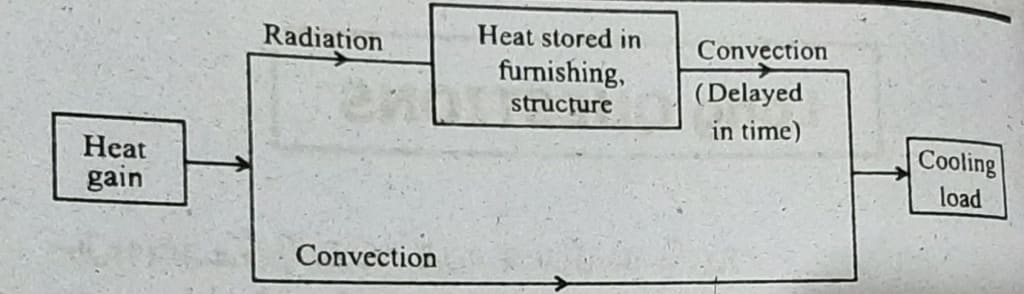
Q87: Name Room Heat gain components.
Ans: Some of the Room Heat gain components are as follows:
- ➔ Heat from walls
- ➔ Heat from windows
- ➔ Heat from people
- ➔ Heat from appliances
Q88: Define Human Comfort.
Ans: Human comfort is the condition in which a person feels comfortable with the temperature, humidity, and airflow in a room.
Q89: Name 4 factors to be kept in mind while selecting a Room Air Conditioner.
Ans: Following factors should be kept in mind while selecting an Air Conditioner:
- ➔ Size of the room
- ➔ Cooling capacity of the AC
- ➔ Energy efficiency
- ➔ Budget and maintenance needs
Q90: Define Solderning.
Ans: Soldering is the process of joining two metal parts using a melted filler metal called solder.
Q91: Write the full form of the following.
Ans: | Abbreviation | Full Form |
|---|
| BTU | British Thermal Unit |
| EPA | Environmental Protection Agency |
| SEER2 | Seasonal Energy Efficiency Ration |
| EER2 | Energy Efficiency Ratio |
| HSPF2 | Heating Seasonal Performance Factor |
| AFUE | Annual Fuel Utilization Efficiency |