Q1: Define Electrification.
Ans: Electrification is the process of supplying electrical power to an area, building, or machine to make it function using electricity.
Q2: Define Outlet in electrification.
Ans: An outlet in electrification refers to a socket or plug point where electrical devices are connected to draw power.
Q3: Write the importance of electrification.
Ans: Electrification is important because:
- ➔ It provides energy for daily life activities.
- ➔ It supports industries.
- ➔ It improves living standards.
- ➔ It facilitates technological advancements.
Q4: Write 4 advantages of electrification.
Ans: The advantages of electrification are as follows:
- ➔ It makes life better by providing power for lights, heating, and appliances.
- ➔ It helps the economy grow by powering factories and businesses.
- ➔ It reduces the need for manual work and boosts efficiency.
- ➔ It supports communication, transportation, and healthcare systems.
Q5: Write 4 uses of electrification.
Ans: Some of the uses are as follows:
- ➔ It provides power for home appliances like lights, fans, and fridges.
- ➔ It runs machines and equipment in factories.
- ➔ It gives energy to transport systems like trains and electric vehicles.
- ➔ It helps communication systems like radio, TV, and the internet work.
Q6: Write 4 safety measures in electrification.
Ans: Some of the safety measures are as follows:
- ➔ Use Circuit breakers and fuses.
- ➔ Do proper grounding.
- ➔ Inspect electrical wiring regularly.
- ➔ Wear protective gear when handling electrical systems.
Q8: Why experts are preferred for the installation of electrical wiring?
Ans: Experts are preferred because they ensure safe and correct wiring, reducing the risk of short circuits, electric shocks, and fire hazards.
Q9: Define Cable.
Ans: A cable is a bundle of wires or conductors that are covered with an insulating material, designed to carry electrical current from one point to another.
Q10: Write 2 uses of cables.
Ans: Cables are used as follows:
- ➔ To connect electrical devices to power sources.
- ➔ To transmit electrical signals in communication systems.
Q11: Name the types of cables.
Ans: The types of cable are as follows:
- ➔ Power cables
- ➔ Control cables
- ➔ Signal cables
- ➔ Coaxial cables
- ➔ Fiber optic cables
Q12: Name the parts of cable.
Ans: Some of the parts of cable are as follows:
- ➔ Conductor
- ➔ Insulation
- ➔ Sheath
- ➔ Armor
Q13: Name 4 types of cables used for domestic purposes.
Ans: The types of cable used for domestic purpose are as follows:
- ➔ PVC insulated cables
- ➔ Armored cables
- ➔ Flat cables
- ➔ Flexible cables
Q14: Define VRI Cable.
Ans: VRI Cable stands for 'Vulcanized Rubber Insulated' cable, which is used for medium voltage applications. It has rubber insulation for flexibility and durability.
Q15: Define PVC.
Ans: PVC means Polyvinyl Chloride, a plastic material used to cover cables because it is strong and resists water and chemicals.
Q16: Define PVC Cable.
Ans: PVC Cable is a type of electrical cable with insulation made of Polyvinyl Chloride (PVC) that is commonly used for low and medium voltage electrical wiring.
Q17: Define TRS Cable.
Ans: TRS Cable stands for 'Triple Run System' cable, which is a type of electrical cable designed for use in power distribution systems. It is typically used in industrial settings.
Q18: Define CTS Cable.
Ans: CTS Cable refers to 'Cross-linked Thermoset Insulated' cable, which is known for its high-temperature resistance and is commonly used in high-temperature environments.
Q19: Name the types of cable based on the core.
Ans: The types of cable on the basis of core are as follows:
- ➔ Single Core Cable
- ➔ Twin Core Cable
- ➔ Three Core Cable
- ➔ Four Core Cable
Q20: Define Single Core Cable.
Ans: A Single Core Cable is a type of electrical cable that contains only one conductor, typically used for simple electrical applications.
Q21: Define Twin Core Cable.
Ans: A Twin Core Cable is a cable that contains two conductors, used for circuits that require two connections, such as in basic power distribution.
Q22: Define Three Core Cable.
Ans: A Three Core Cable has three conductors inside, often used for systems that require a neutral wire in addition to the live and earth connections.
Q23: Define Four Core Cable.
Ans: A Four Core Cable contains four conductors, typically used in circuits where multiple connections or control systems are required.
Q24: Define Voltage.
Ans: Voltage is the electrical potential difference between two points in a circuit, which drives the flow of electrical current. In Pakistan it is 220V to 240V.
Q25: Define Low Voltage.
Ans: Low Voltage refers to electrical voltage that is lower than 1000 volts, commonly used in household and light industrial applications.
Q26: Define Low Voltage Grade Cable.
Ans: Low Voltage Grade Cable is a type of cable designed to carry low voltage (up to 1000V) without risk of overheating or insulation failure.
Q27: Define High Voltage.
Ans: High Voltage refers to electrical voltage that is higher than 1000 volts, typically used in power transmission systems.
Q28: Define Medium Voltage Grade Cable.
Ans: Medium Voltage Grade Cable is designed for voltage levels typically between 1000V and 33kV, commonly used in electrical distribution systems.
Q29: Define Transformer.
Ans: A transformer is an electrical device used to increase or decrease the voltage of an alternating current (AC) in a power system.
Q30: Define Current.
Ans: Current is the flow of electric charge, typically measured in amperes (A), and is what powers electrical devices.
Q31: Define Electric Circuit.
Ans: An electric circuit is a complete path through which electric current can flow, consisting of power sources, conductors, and load devices like bulbs or motors.
Q32: Define Transmission system.
Ans: A transmission system is the network of power lines, transformers, and substations used to transport electrical energy from power plants to end users like homes and industries.
Q33: Define Load in electrification.
Ans: A load is any electrical device that uses electrical power to do work.
Q34: Define Control system.
Ans: A control system is a system that manages, directs, or regulates the behavior of other devices or systems.
Q35: Name the types of circuit.
Ans: The types of circuit are as follows:
- ➔ Series circuit
- ➔ Parallel circuit
- ➔ Series-parallel circuit
Q36: Define Parallel Circuit.
Ans: A parallel circuit is a circuit in which components are connected across the same two points, so each has its own path for current.
Q37: Define Series Circuit.
Ans: A series circuit is a circuit in which components are connected end to end in a single path for current.
Q38: Define Series Parallel Circuit.
Ans: A series-parallel circuit is a circuit that has some components connected in series and some in parallel.
Q39: Define Insulation.
Ans: Insulation is a material used to cover electrical wires to prevent electric shock and short circuits.
Q40: Name the items used for cable insulation.
Ans: Some of the items used for cable insulation are:
- ➔ PVC
- ➔ Rubber
- ➔ Paper
- ➔ Varnish
- ➔ Plastic
Q41: Name the types of Cable Insulation.
Ans: Following are the types of Cable Insulation:
- ➔ PVC insulation
- ➔ Rubber insulation
- ➔ Paper insulation
- ➔ XLPE insulation
Q42: Define Conduit.
Ans: A conduit is a protective tube used to carry and protect electrical wires.
Q43: Define Conduit Layout.
Ans: A conduit layout is the planned arrangement of conduit pipes and wiring in a building.
Q44: Name the parts of Conduit Layout.
Ans: Following are the parts of Conduit Layout:
- ➔ Conduits
- ➔ Junction boxes
- ➔ Couplers
- ➔ Elbows
- ➔ Bends
- ➔ Saddles
Q45: Define Open or Surface Wiring.
Ans: Open or surface wiring is wiring that is installed on the surface of walls using wooden or PVC battens.
Q46: Write 4 advantages of Open Wiring.
Ans: Following are the advantages of Open Wiring:
- ➔ It is simple to install.
- ➔ It is easy to repair.
- ➔ It is less expensive.
- ➔ Faults can be easily detected.
Q47: Write 2 disadvantages of Open Wiring.
Ans: Following are the disadvantages of Open Wiring:
- ➔ It is not very safe.
- ➔ It does not look neat or attractive.
Q48: Define Concealed Wiring.
Ans: Concealed wiring is wiring that is hidden inside walls, floors, or ceilings using conduits.
Q49: Write 4 advantages of Closed Wiring.
Ans: Following are the advantages of Closed Wiring:
- ➔ It looks neat and attractive.
- ➔ It is safer from damage.
- ➔ It reduces the risk of electric shock.
- ➔ It has a longer life.
Q50: Write 2 disadvantages of Closed Wiring.
Ans: Following are the disadvantages of Closed Wiring:
- ➔ It is more expensive.
- ➔ It is difficult to repair.
Q51: Name 6 items used in Conduit Layout.
Ans: The items used in the Conduit Layout are as follows:
- ➔ Conduits
- ➔ Junction boxes
- ➔ Couplers
- ➔ Elbows
- ➔ Bends
- ➔ Saddles
Q52: Name the phases of electricity.
Ans: The phases of electricity are:
- ➔ Single Phase System
- ➔ Two Phase System
- ➔ Three Phase system
Q53: Define Single Phase System.
Ans: A single phase system uses only one alternating voltage to supply power.
Q54: Define 2 advantages of Single Phase System.
Ans: Following are the advantages of Single Phase System:
- ➔ It is cheaper to install.
- ➔ It is suitable for small loads.
Q55: Define Poly Phase System.
Ans: A poly phase system uses more than one alternating voltage or current. It includes Two Phase System and Three Phase system.
Q56: Define Two Phase System.
Ans: A two phase system uses two voltages that are 90 degrees apart.
Q57: Define 2 advantages of Two Phase System.
Ans: Following are the advantages of Two Phase System:
- ➔ It provides smoother power than single phase.
- ➔ It can run medium-sized motors efficiently.
Q58: Define Three Phase System.
Ans: A three phase system uses three voltages that are 120 degrees apart.
Q59: Define 2 advantages of Three Phase System.
Ans: Following are the advantages of Three Phase System:
- ➔ It is more efficient for power transmission.
- ➔ It runs heavy motors smoothly.
Q60: Define Earthing System.
Ans: An earthing system connects electrical equipment to the earth to prevent electric shock.
Q61: Draw the symbol of Earth.
Ans: 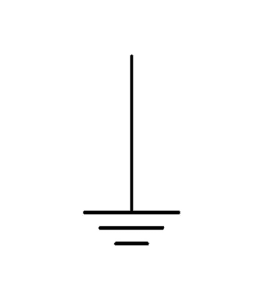
Q62: State the importance of Earthing.
Ans: Earthing is important because it protects people from electric shock and prevents damage to electrical appliances.
Q63: Define Leakage Current.
Ans: Leakage current is a small amount of current that flows through an unwanted path.
Q64: Name the methods of Earthing.
Ans: The methods of earthing are as follows:
- ➔ Plate earthing
- ➔ Rod earthing
- ➔ Pipe earthing
- ➔ Strip earthing
Q65: Name the components of Earthing.
Ans: Some of the components of Earthing are as follows:
- ➔ Earth electrode
- ➔ Earthing lead
- ➔ Earth pit
- ➔ Charcoal and salt
Q66: Define Earthing Lead.
Ans: An earthing lead is a conductor that connects electrical equipment to the earth electrode.
Q67: Define AC and DC Current.
Ans:
AC (Alternating Current) is current that changes direction repeatedly.
DC (Direct Current) is current that flows in one direction only.