ROMAN ARCHITECTURE
Other Chapters
ANCIENT CIVILIZATIONGREEK ARCHITECTUREROMAN ARCHITECTUREBYZANTINE AND GOTHIC ARCHITECTURERENAISSANCE ARCHITECTUREMUSLIM ARCHITECTUREMODERNISM AND POST MODERNISMINTRODUCTION TO ARCHITECTURE OF PAKISTAN
- Q1: Define Oculus.Ans: An oculus is a circular opening at the center of a dome or wall, often used in Roman architecture to allow natural light into a building, such as the one in the Pantheon.
- Q2: Define Hypogeum.Ans: A hypogeum is an underground structure, commonly used in Roman architecture beneath amphitheaters like the Colosseum, for housing animals, equipment, and gladiators before performances.
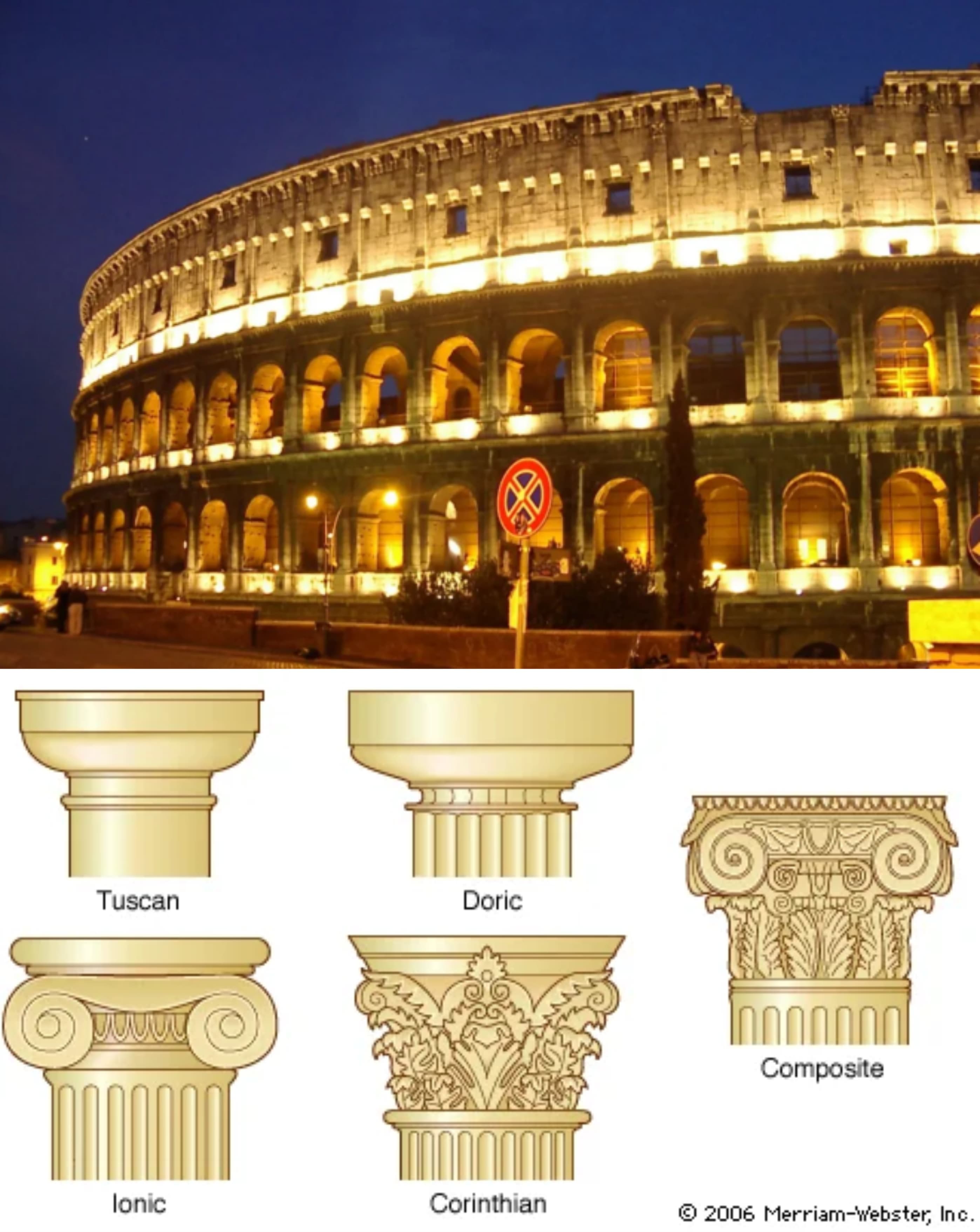
- Q3: What are the orders of Roman Architecture?Ans: The main architectural orders used in Roman architecture are:
- ➔ Tuscan
- ➔ Doric
- ➔ Ionic
- ➔ Corinthian
- ➔ Composite
- Q4: What materials were commonly used by Romans?Ans: Romans commonly used materials such as concrete, brick, marble, stone, and volcanic ash in their architectural constructions.
- Q5: Explain the contribution of Romans in the field of Architecture.Ans: The Romans contributed significantly to architecture by introducing innovations such as concrete, the arch, the dome, aqueducts, and road systems, many of which influenced modern architecture.
- Q6: For which purpose FORUM was used in Roman Architecture?Ans: The Forum was used as a central public space in Roman cities for political, commercial, religious, and social activities.
- Q7: Write about the use of Ducts in Roman Architecture.Ans: Ducts, especially aqueducts, were used by the Romans to transport water from distant sources to cities, supplying public baths, fountains, and private homes.
- Q8: What is the role of Arch and Dome in Roman Architecture?Ans: Arches and domes played a crucial role in Roman architecture by allowing the construction of larger and more durable buildings, distributing weight efficiently, and creating vast interior spaces.
- Q9: For what Coffers were used in Pantheon?Ans: Coffers were sunken panels in the dome of the Pantheon used to reduce the weight of the concrete roof and also served as a decorative element.
- Q10: What was the thickness of the Pantheon Dome from the top and base?Ans: The thickness of the Pantheon dome is approximately 6.4 meters at the base and gradually reduces to about 1.2 meters at the top near the oculus.
- Q11: Define Arena.Ans: An arena is a central area in Roman amphitheaters, such as the Colosseum, where public events like gladiator games and animal fights were held.
- Q12: Define Colosseum.Ans: The Colosseum is a large Roman amphitheater in Rome, built for hosting gladiator contests, public spectacles, and theatrical performances.
- Q13: Define Flora.Ans: In Roman architecture and art, flora refers to decorative elements featuring plants, flowers, and nature motifs used in mosaics, carvings, and paintings.
- Q14: Define Rotunda.Ans: A rotunda is a round building or room, often topped with a dome; the Pantheon is one of the most famous examples.
- Q15: What is meant by a coffered ceiling?Ans: A coffered ceiling is a ceiling with a series of sunken panels (coffers), often square or octagonal, used for decoration and to reduce the weight of a ceiling or dome.
- Q16: Write any three steps to reduce the weight of the Pantheon Dome.Ans: The three steps are:
- ➔ Use of lightweight volcanic materials like pumice in the upper dome layers
- ➔ gradual thinning of the dome's thickness from base to top
- ➔ use of coffered ceiling design to remove excess concrete mass
- Q17: For which activity the Colosseum was famous for?Ans: The Colosseum was famous for hosting gladiator contests, mock naval battles, animal hunts, and public executions.
- Q18: Why is Pantheon called the cultural revolution?Ans: The Pantheon is considered a cultural revolution due to its advanced engineering, harmonious design, and symbolic representation of Roman religious and political power.
- Q19: What is meant by “Pantheon”?Ans: The word 'Pantheon' means 'all gods.' The Pantheon in Rome was originally built as a temple dedicated to all Roman deities.
- Q20: What are Aquaducts?Ans: Aqueducts are bridge-like structures built by the Romans to carry water over long distances from springs or rivers to cities and towns.
- Q21: Define Insulae.Ans: Insulae were multi-story apartment buildings in ancient Rome that housed the urban poor, often built close together with minimal space.
- Q22: Define Amphitheatre.Ans: An amphitheatre is a circular or oval open-air venue with raised seating, used in Roman times for public spectacles like gladiator contests and theatrical performances.
- Q23: What do you know about Roman Baths?Ans: Roman baths were large public bathing complexes that included facilities for bathing, exercise, and socializing, supplied by aqueducts and heated through an underfloor heating system.
- Q24: Define Buttresses.Ans: Buttresses are architectural structures built against or projecting from a wall to support or reinforce it, helping to bear the weight of large domes or roofs.
- Q25: What is the Tuscan Order?Ans: The Tuscan Order is a simplified Roman order of architecture with unfluted columns, a plain base, and a simple capital, derived from the Doric order.
- Q26: What was the purpose of Pantheon Temple?Ans: The Pantheon was built as a temple to honor all the Roman gods and served as a symbol of the empire’s power and architectural innovation.
- Q27: What were Triumphal Arches?Ans: Triumphal arches were monumental structures built by the Romans to commemorate military victories and honor emperors or generals.
- Q28: Explain Mosaic Work.Ans: Mosaic work is an art form using small pieces of colored glass, stone, or tiles arranged to create images or patterns, commonly used in Roman floors and walls.
- Q29: Explain the working of Aqua ducts.Ans: Aqueducts worked using gravity to transport water from a higher elevation source across long distances through a system of channels, pipes, and bridges to cities.
- Q30: What is the influence of Roman Architecture on Modern Architecture?Ans: Roman architecture has greatly influenced modern architecture through the use of arches, domes, columns, concrete construction, and the emphasis on symmetry and grandeur in public buildings.