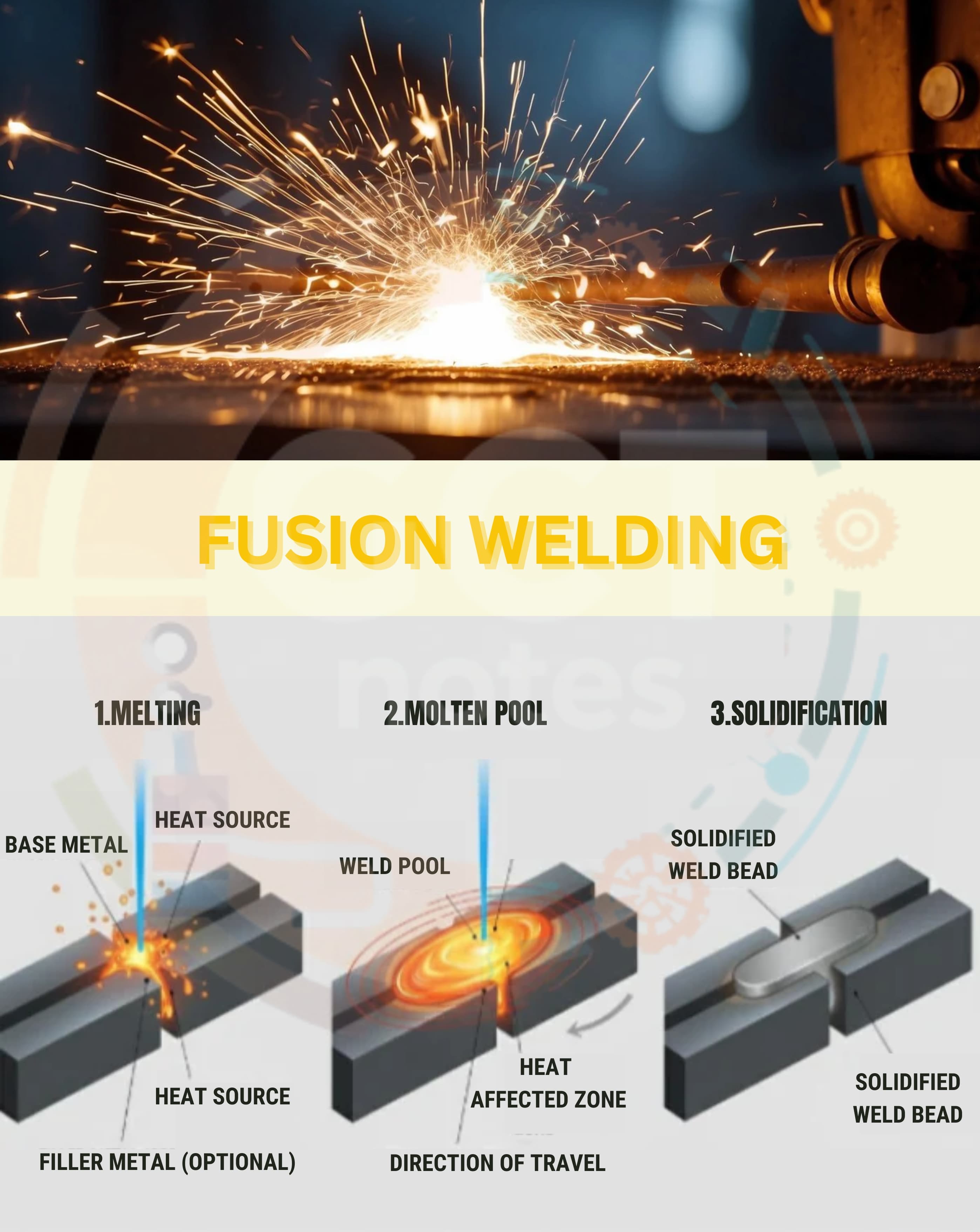
Q1: Define Oxy-Acetylene gas welding.
Ans: Oxy-acetylene gas welding is a fusion welding process in which heat is produced by burning acetylene gas with oxygen.
Q2: Name the tools used for Oxy-Acetylene gas welding.
Ans:
The tools used are:- ➔ Oxygen cylinder
- ➔ Acetylene cylinder
- ➔ Gas regulators
- ➔ Welding torch
Q3: Define non-return valve.
Ans: A non-return valve allows gas to flow in one direction and prevents reverse flow.
Q4: Define Gas regulators.
Ans: Gas regulators are devices used to control and reduce gas pressure from cylinders.
Q5: Define Pressure regulators.
Ans: Pressure regulators maintain constant gas pressure during welding operations.
Q6: Define gas hoses.
Ans: Gas hoses are flexible pipes used to carry oxygen and fuel gas to the welding torch.
Q7: Define Check Valve.
Ans: A check valve prevents backflow of gases and improves safety during welding.
Q8: What is a welding torch?
Ans: A welding torch is a device that mixes oxygen and fuel gas and produces a controlled flame.
Q9: Define Filler.
Ans: Filler is a material added to molten metal to fill the joint during welding.
Q10: Define Flux.
Ans: Flux is a chemical substance used to prevent oxidation during welding.
Q11: Define Needle Valve.
Ans: A needle valve is used to control the flow rate of gas in welding equipment.
Q12: Define the use of Oxy-Acetylene gas welding.
Ans: Oxy-acetylene welding is used for joining, cutting, and repairing metal parts.
Q13: Define Injector Blow Pipe.
Ans: An injector blow pipe uses oxygen pressure to draw fuel gas into the torch.
Q14: Define Non-Injector Blow Pipe.
Ans: A non-injector blow pipe uses equal gas pressure from both cylinders.
Q15: State the difference between an oxygen and a gas/fuel cylinder.
Ans: An oxygen cylinder stores oxygen at high pressure, while a fuel cylinder stores gas at low pressure.
Q16: What is a transformer?
Ans: A transformer is an electrical device used to change voltage levels.
Q17: Define a step-down transformer.
Ans: A step-down transformer reduces high voltage to low voltage.
Q18: Define a step-up transformer.
Ans: A step-up transformer increases low voltage to high voltage.
Q19: Define Primary coil.
Ans: The primary coil is the input winding of a transformer connected to the power supply.
Q20: Define Secondary coil.
Ans: The secondary coil is the output winding of a transformer that delivers changed voltage.
Q21: Define Magnetic Flux.
Ans: Magnetic flux is the total magnetic field passing through a given area.
Q22: Define Electrodes.
Ans: Electrodes are metal rods used to conduct electric current in arc welding.
Q23: Define Electrode holders.
Ans: Electrode holders hold and supply current to the welding electrode.
Q24: State the types of Electrodes.
Ans:
The types of electrodes are:- ➔ Consumable electrodes
- ➔ Non-consumable electrodes
Q25: State the equipment required for the arc welding process.
Ans:
The equipment required are:- ➔ Power source
- ➔ Electrode holder
- ➔ Welding electrodes
- ➔ Ground clamp
Q26: Define Ground Clamps.
Ans: Ground clamps connect the workpiece to the welding circuit to complete the electric path.
Q27: What is a welding table?
Ans: A welding table is a flat metal table used to support workpieces during welding.
Q28: What is arc welding used for?
Ans: Arc welding is used to join thick metal parts in fabrication and construction.
Q29: State various arc welding processes.
Ans:
The arc welding processes are:- ➔ Shielded metal arc welding
- ➔ TIG welding
- ➔ MIG welding
- ➔ Submerged arc welding
Q30: Define Polarity in arc welding.
Ans: Polarity refers to the direction of current flow between electrode and workpiece.
Q31: Define Power source of arc welding.
Ans: The power source supplies electrical energy required to produce the welding arc.
Q32: Define a chipping hammer.
Ans: A chipping hammer is used to remove slag after welding.
Q33: Define wire brush.
Ans: A wire brush is used to clean weld joints and remove slag or rust.
Q34: Define Flux.
Ans: Flux is a material used to prevent oxidation and improve weld quality.
Q35: Write some uses of Flux.
Ans:
Uses of flux are:- ➔ Prevents oxidation
- ➔ Improves weld strength
- ➔ Cleans metal surfaces
Q36: Write some advantages of Flux.
Ans:
Advantages of flux are:- ➔ Produces clean welds
- ➔ Improves penetration
- ➔ Reduces welding defects
Q37: State some commonly used flux materials.
Ans:
Common flux materials are:- ➔ Borax
- ➔ Silica
- ➔ Limestone
Q38: Define Filler rod.
Ans: A filler rod is a metal rod added to molten metal during welding.
Q39: Sate the types of Filler rod.
Ans:
The types of filler rods are:- ➔ Bare filler rod
- ➔ Coated filler rod
Q40: State the safety precautions applied during grinding.
Ans:
Safety precautions are:- ➔ Wear safety goggles
- ➔ Use guards properly
- ➔ Avoid loose clothing
- ➔ Stand safely
Q41: State some welding defects.
Ans:
Welding defects are:- ➔ Cracks
- ➔ Porosity
- ➔ Undercut
- ➔ Blow holes
Q42: Define Undercut.
Ans: Undercut is a groove formed at the edge of a weld that weakens the joint.
Q43: Define Blow holes.
Ans: Blow holes are gas cavities formed in weld metal due to trapped gases.
Q44: Define Consumable rod.
Ans: A consumable rod melts during welding and becomes part of the weld joint.
Q45: Define Flash rod.
Ans: A flash rod is a coated welding electrode used in arc welding.