Q1: Define Stress.
Ans: Stress is the internal resisting force developed inside a material when an external load is applied.
Formula:
Stress = Force / Area
Q2: Name the types of stress.
Ans: The types are:
- ➔ Direct Stress
- ➔ Tensile Stress
- ➔ Compressive Stress
- ➔ Shear Stress
Q3: Define Direct Stress.
Ans: Direct stress is the stress produced by Direct Force (when a force acts perpendicular to the cross-sectional area of a material).
Formula:
Direct Stress = Direct Force / Area
Q4: Define Shear Stress.
Ans: Shear stress is the stress produced by Shear Force (when a force acts parallel to the surface or cross-section of a material).
Formula:
Shear Stress = Shear Force / Area
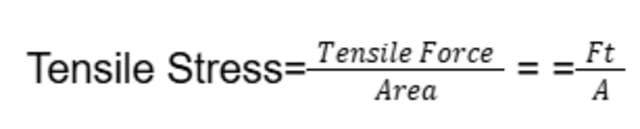
Q5: Define Tensile Stress.
Ans: Tensile stress is the stress produced when a material is pulled or stretched by an external force.
It increases the length of the material.
Q6: Define Compressive Stress.
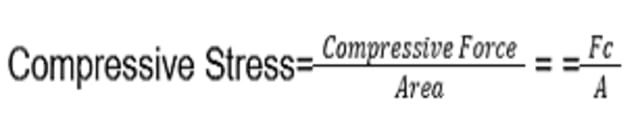
Ans: Compressive stress is the stress produced when a material is compressed or squeezed by an external force.
It decreases the length of the material.
Q7: Write down the unit of stress in:
Ans: | System | Measuring Unit |
|---|
| MKS | kg/m2 |
| CGS | g/cm2 |
| FPS | lbs/ft2 |
| SI | N/m2 |
Q8: Define Bending Stress.
Ans: The stress produced by Bending Moment is Bending Stress.
Q9: Define Strain.
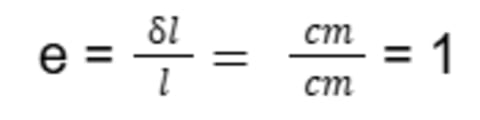
Ans: The ratio of change in dimension to original dimension is strain. It has no unit.

Q10: Why does strain has no unit?
Ans: It is because both change in length and length have the same units which cancel out each other.
Q11: Name the types of strain
Ans: The types are:
- ➔ Direct Strain
- ➔ Tensile Strain
- ➔ Compressive Strain
- ➔ Shear Strain
- ➔ Volumetric Strain
- ➔ Linear Strain
- ➔ Lateral Strain
Q12: Define Direct Strain.
Ans: Direct strain is the strain produced when a material experiences direct stress.
It causes a change in length of the material along the direction of the applied force.
Q13: What do you know about shear strain.
Ans: The strain produced in a body due to Shear Force and Shear Stresses is called Shear Strain.
Q14: Define tensile strain.
Ans: If a Tensile force is applied on the body and its length increases, this is a Tensile Strain.

Q15: Define compressive strain.
Ans: If a Compressive force is applied on the body and its length decreases, this is a Compressive Strain.

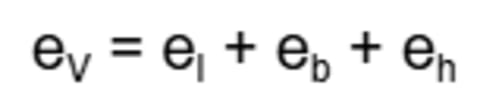
Q16: Define volumetric strain.
Ans: If a force is applied on the body and the volume of the body changes i.e. the length, height or width changes then such a strain is volumetric strain.
Q17: Define Linear Strain.
Ans: Linear strain is the ratio of change in length of a material to its original length when a force is applied.
Formula:
Linear Strain = Change in Length / Original Length
Q18: Define Lateral Strain.
Ans: Lateral strain is the strain produced in the direction perpendicular to the applied force.
It occurs when a material changes its width or diameter due to tensile or compressive stress.
Q19: Name various elastic constants.
Ans: Some of the elastic constants are:
- ➔ Modulus of Elasticity
- ➔ Modulus of Rigidity
- ➔ Bulk Modulus of Elasticity
Q20: Define Bulk Modulus of Elasticity.
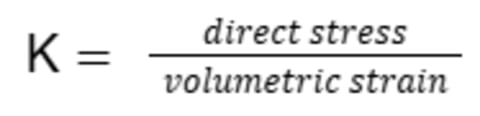
Ans: The ratio of direct stress to volumetric strain is Bulk Modulus.
Q21: Define Shear Modulus.
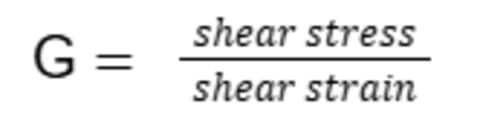
Ans: The ratio of shear stress to shear strain is Shear Modulus or Modulus of Rigidity.
Q22: Define Poisson’s Ratio.
Ans: Poisson's ratio is the ratio of lateral strain to linear strain in a material when it is subjected to stress.
Formula:
Poisson's Ratio = Lateral Strain / Linear Strain
Q23: State Hook's Law.
Ans: Hook's Law states that:
“Within elastic limits, stress is directly proportional to strain”

Q24: What do you know about elasticity?
Ans: The property of a material by which it returns back to its original position after the removal of external force is called elasticity.
Q25: Define plasticity.
Ans: The property of a material by which it does not return to its original position after the removal of external force is called plasticity.
Q26: Define elastic materials.
Ans: The property of a material by which it returns back to its original position after the removal of external force is called elasticity while such materials are elastic materials.
Q27: Define plastic materials.
Ans: The property of a material by which it does not return to its original position after the removal of external force is called plasticity while such materials are plastic materials.
Q28: Differentiate between perfectly elastic and partially elastic materials.
Ans: The materials that completely return back to their original state after the removal of external force are perfectly elastic materials. The materials that partially (not fully) return back to their original state after the removal of external force are partially elastic materials.
Q29: What is the stress-strain curve?
Ans: The curve in which stress is plotted on y-axis and strain on x-axis and point joined as curve is stress-strain curve.
Q30: Enlist different stages that a material passes during tensile tests.
Ans: - ➔ Limit of proportionality
- ➔ Elastic limit
- ➔ Yield point
- ➔ Ultimate point
- ➔ Breaking point
Q31: Define Yield Point.
Ans: Yield point is the point on the stress strain diagram at which the material begins to deform permanently without an increase in load.
Q32: Define Elastic Limit.
Ans: Elastic limit is the maximum stress that a material can withstand without permanent deformation.
If the load is removed within this limit, the material returns to its original shape.
Q33: Define Plastic Limit.
Ans: Plastic limit is the stage beyond the elastic limit where permanent deformation occurs in the material.
After this point, the material does not return to its original shape when the load is removed.
Q34: Define Proportional Limit.
Ans: Proportional limit is the maximum stress up to which stress is directly proportional to strain.
In this region, the material obeys Hooke's Law.
Q35: Define Ultimate Stress.
Ans: The maximum stress that a material can carry without failure is Ultimate or Maximum Stress.
Q36: Define Breaking Stress.
Ans: The stress at which the material fails and breaks apart is Breaking Stress.
Q37: Define Critical Stress.
Ans: Critical Stress is the maximum stress a structural member, like a column, can handle before it starts to bend or buckle.
It tells us the point at which the member may fail due to instability.
Q38: What do you know about the factor of safety?
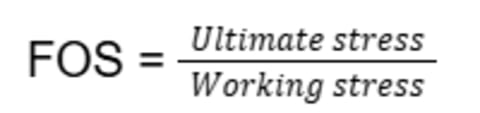
Ans: The ratio of Ultimate Stress to Working Stress is called the Factor of Safety. It is normally 3-5.
Q39: Define Working stress.
Ans: The maximum stress that a material can take without failure is called Working Stress.
Q40: What is meant by the limit of proportionality?
Ans: The value of stress up to which stress and strain remain proportional is the limit of proportionality.
Q41: Define Beam.
Ans: A beam is a horizontal member which is designed to carry both tensile and compressive loads.
A beam transfers the load of slab to the walls or columns.
Q42: Enlist different types of a beam.
Ans: The types are:
➔ Statically Determinate Beam- ➔ Simply supported beam
- ➔ Overhanging beam
- ➔ Cantilever beam
➔ Statically Indeterminate Beam- ➔ Propped supported beam
- ➔ Fixed beam
- ➔ Continuous beam beam
Q43: Sketch any 4 types of beams.
Ans: 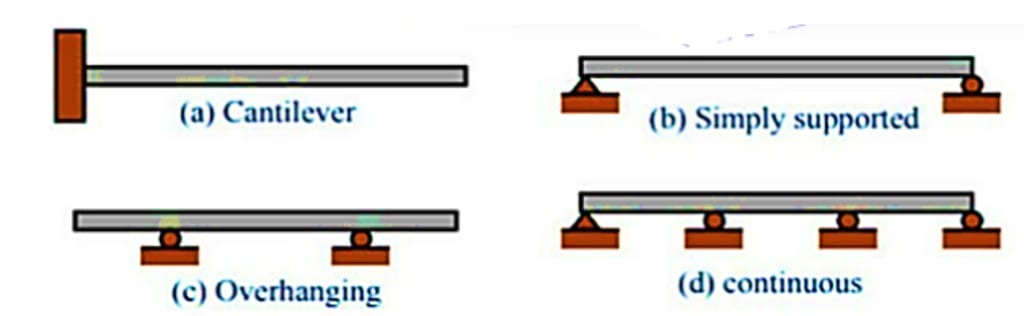
Q44: What is meant by a statically determinate beam?
Ans: A beam which supports reactions can be calculated by using the equation of static equilibrium is a statically determinate beam.
It include the following beams:
➔ Statically Determinate Beams:- ➔ Simply supported beam
- ➔ Overhanging beam
- ➔ Cantilever beam
Q45: Define a statically indeterminate beam.
Ans: A beam which supports reactions cannot be calculated by using the equation of static equilibrium is a statically indeterminate beam.
It include the following beams:
➔ Statically Indeterminate Beams:- ➔ Propped supported beam
- ➔ Fixed beam
- ➔ Continuous beam beam
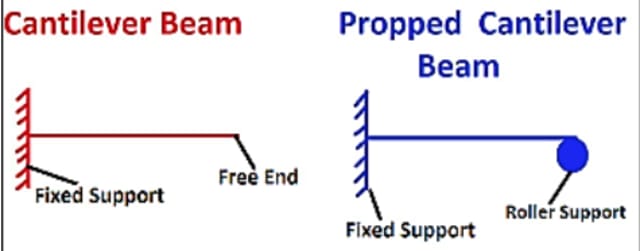
Q46: Differentiate between cantilever beam and propped beam.
Ans: A beam having fixed support at one end and simple support at the other end is a
propped beam.
Examples:Balconies, Canopies etc.
A beam in which one end is fixed and the other end is free is a
cantilever beam.
Examples:A balcony supported by a column at the outer end.
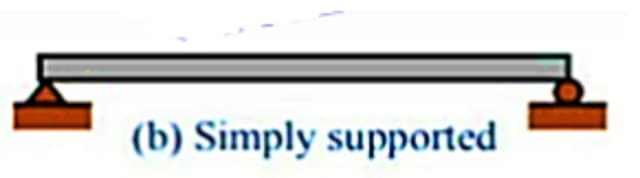
Q47: Define simply supported beams.
Ans: A beam having simple supports at both ends is a simply supported beam.
Examples: Beam resting on two walls or columns.
Q48: Define a simple beam.
Ans: A simply supported beam is known as a simple beam. A beam having simple supports at both ends is a simple beam.
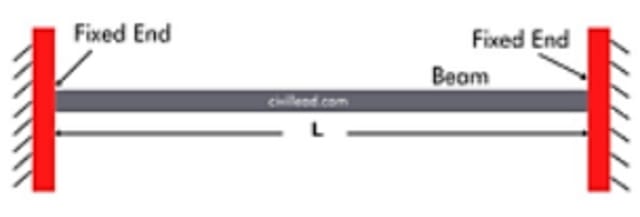
Q49: Define a fixed beam.
Ans: A beam having fixed support at both ends is a fixed beam.
Examples: Beam built into concrete walls on both sides.
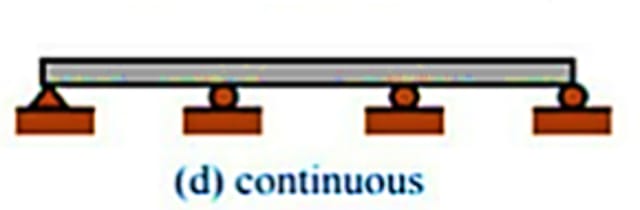
Q50: What do you know about continuous beams?
Ans: A beam having more than two simple supports is called a continuous beam.
Examples: Long Bridges etc.
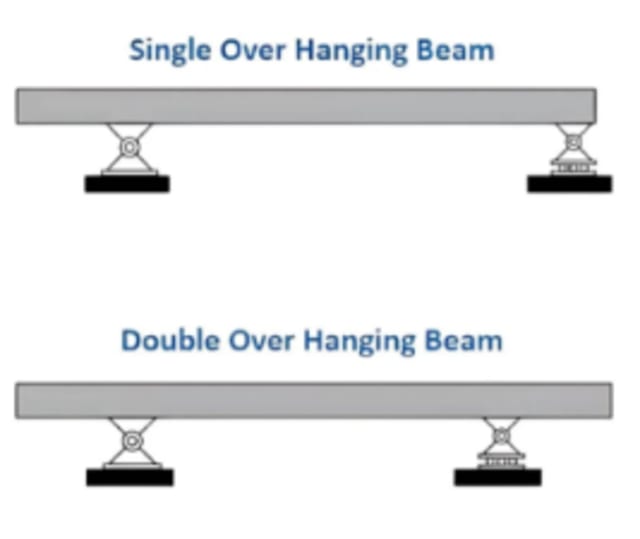
Q51: What is an Overhanging beam?
Ans: A simply supported beam extending beyond the supports is called overhanging beam.
Examples: Sunshade (chajja), Blacony Slab etc.
Q52: What is a Dropped beam?
Ans: A dropped beam is a beam that extends below the slab level to support the slab and carry structural loads.
Q53: Define Load.
Ans: The external force acting on a structural member (beam, column, slab etc.) is called Load.
Q54: Enlist different types of loads.
Ans: The types are:
- ➔ Point Load
- ➔ Distributed Load
- ➔ Uniformly Distributed Load (U.D.L)
- ➔ Varyingly Distributed Load (V.D.L)
- ➔ Triangular Load
- ➔ Trapezoidal Load
- ➔ Couple
Q55: Define Point Load.
Ans: The load acting on a point (very small span or area) is called point load or concentrated load. It is represented by an arrow.

Q56: What is meant by a couple?
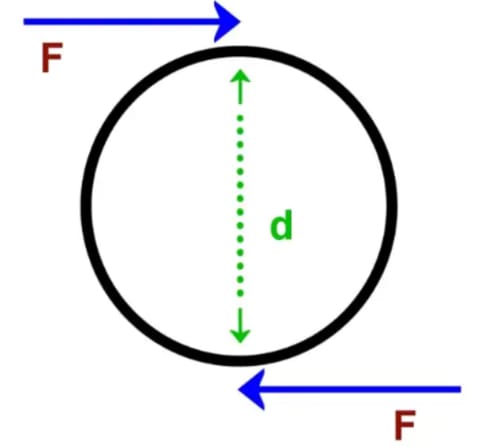
Ans: When two and opposite forces are applied to a body they form a couple.
Q57: What is meant by a couple arm?
Ans: The distance between two forces forming a couple is called a couple arm. It is represented by d.
Q58: Define distributed load.
Ans: The load distributed over a span is called a distributed load.
Q59: Enlist different types of distributed load.
Ans: The types of distributed loads are:
- ➔ Uniformly Distributed Load (U.D.L)
- ➔ Varyingly Distributed Load (V.D.L)
- ➔ Triangular Load
- ➔ Trapezoidal Load
Q60: Define UDL.
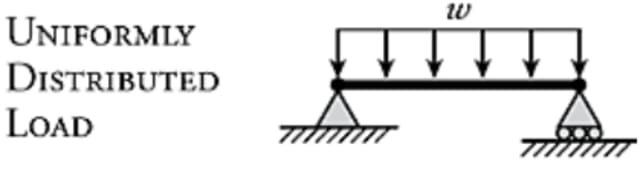
Ans: A UDL is a Uniformly Distributed Load. It is a type of load that is equally divided over the span i.e. each point of the span has the same amount of load.
Q61: Define VDL.
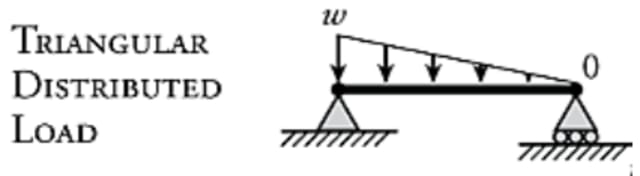
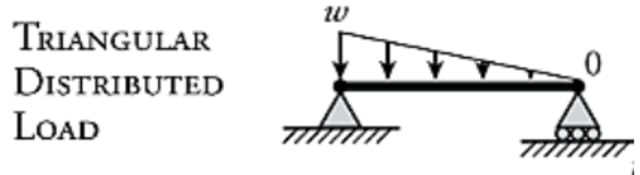
Ans: A VDL is a Varyingly Distributed Load. It is a type of load that is unequally divided over the span i.e. each point of the span has a different amount of load. The starting point has zero load and slowly the load increases and reaches maximum at the other point.
Q62: Define ECL.
Ans: ECL is Equivalent Concentrated Load. For calculations, a UDL is first converted into a point load called ECL. The formula to calculate ECL is:
ECL = UDL x Loaded Length
Q63: Define triangular load.
Ans: A triangular load is a type of varyingly distributed load in which the starting point has zero load and slowly the load increases and reaches maximum at the other point.
Q64: Define trapezoidal load.
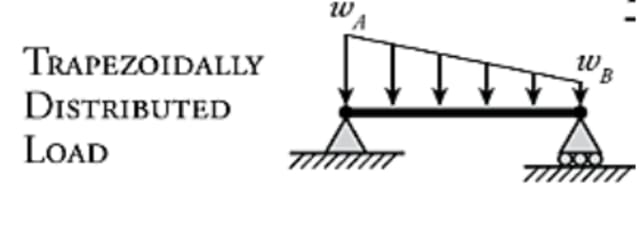
Ans: A trapezoidal load is a combination of both UDL and Triangular load, forming a trapezoid.
Q65: What is meant by span of the beam?
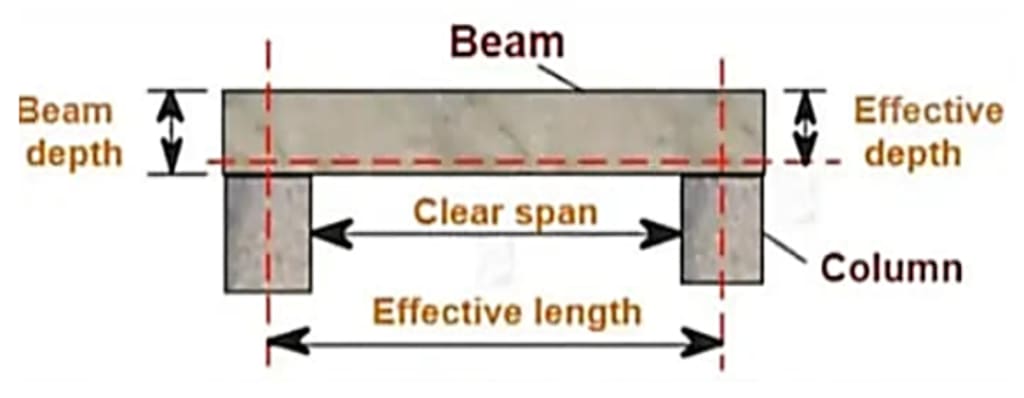
Ans: The length of the beam is known as the span of the beam.
Q66: Differentiate between clear span and effective span.
Ans: The centre-to-centre distance between two supports is called Effective Span while the internal distance between two supports is called clear span.
Q67: Define moment of force.
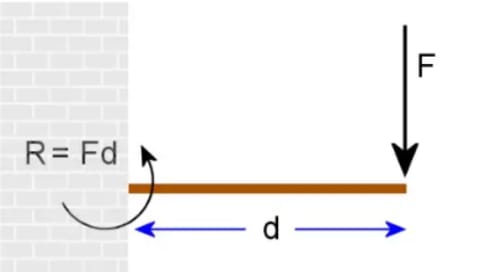
Ans: The turning effect of a force is called moment of force or torque.
Torque = Force x Distance
Q68: What is the difference between clockwise moment and anti-clockwise moment?
Ans: The moment produced just like the moving direction of the clock is a Clockwise Moment (C.W.M).
The moment produced opposite to the moving direction of the clock is an Anti-clockwise Moment (A.C.W.M).
Usually, the clockwise moment is taken +ve and anticlockwise moment is taken -ve.
Q69: Define shear force.
Ans: The algebraic sum of all the vertical forces at any section of a beam to the right or left of the section is known as shear force.
Q70: Define shear force diagram.
Ans: A shear force diagram (SFD) visually represents the variation of shear force along the length of a structural member, such as a beam.
Q71: Define bending moment.
Ans: The algebraic sum of all the moments of all the forces acting to the right or left of the section is known as bending moment.
Q72: Define bending moment diagram.
Ans: A bending moment diagram (BMD) visually represents the variation of bending moments along the length of a structural member, such as a beam.
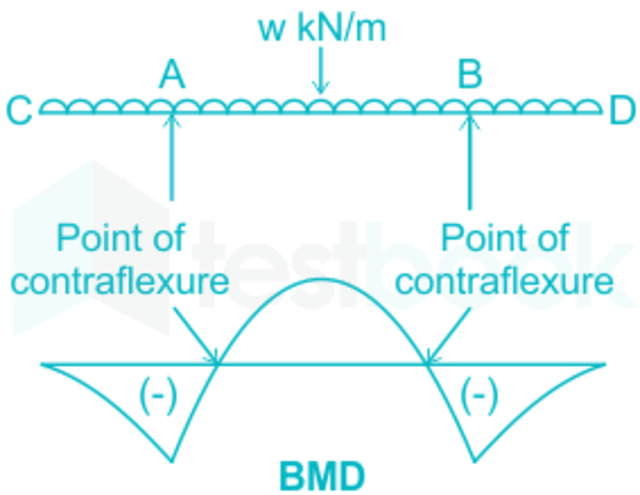
Q73: Define point of contraflexure.
Ans: The points of contraflexure (or inflection) are points of zero bending moment, i.e. where the beam changes its curvature from negative to positive or vice versa.
It mostly occurs in overhanging beams.
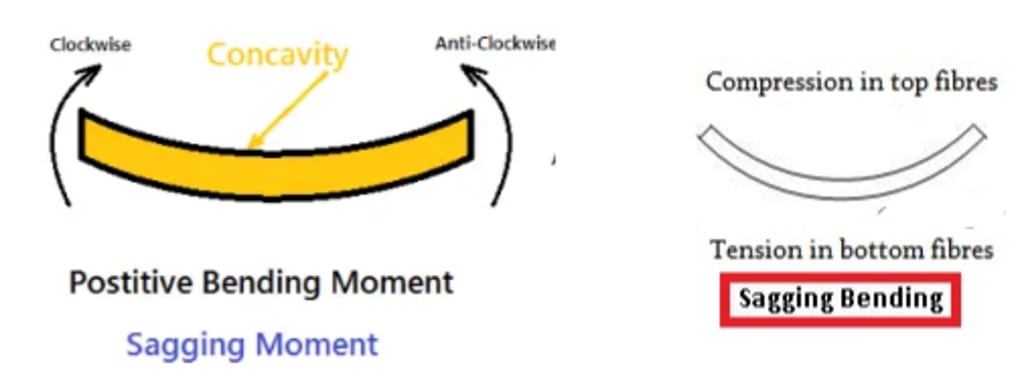
Q74: Define sagging or sag.
Ans: A positive bending moment is called Sag or sagging.
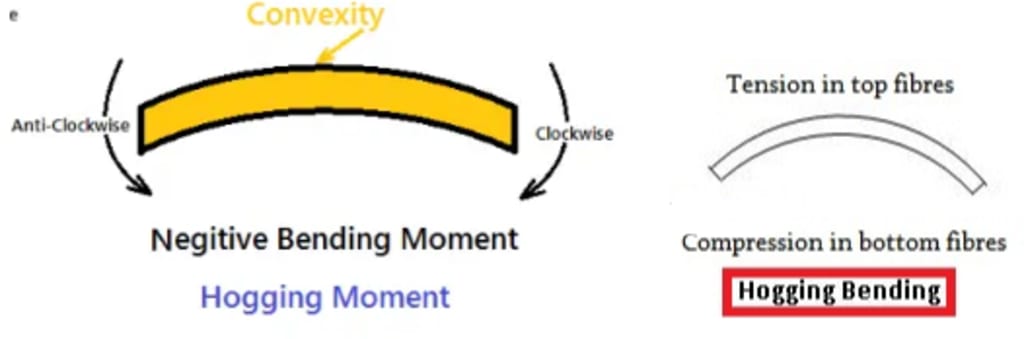
Q75: Define hogging or hog.
Ans: A negative bending moment is called Hog or hogging.
Q76: Define Point of Zero Shear.
Ans: The point of zero shear is the point on a beam where the shear force becomes zero, and the bending moment is usually maximum.