VENTILATION
Other Chapters
PHYSICAL ENVIRONMENTCLIMATEVENTILATIONILLUMINATIONHEAT TRANSFER IN BUILDINGSWATER SUPPLY AND DRAINAGEPLUMBING AND SANITATION
- Q1: Define Ventilation.Ans: Ventilation is the process of supplying fresh air to a space and removing stale air to maintain air quality.
- Q2: Write the importance of Ventilation.Ans: Ventilation ensures proper airflow, removes harmful gases, and helps maintain comfort and health.
- Q3: Which factors affect ventilation?Ans: Factors that affect ventilation include:
- ➔ Temperature
- ➔ Humidity
- ➔ Wind direction
- ➔ Type of ventilation system used
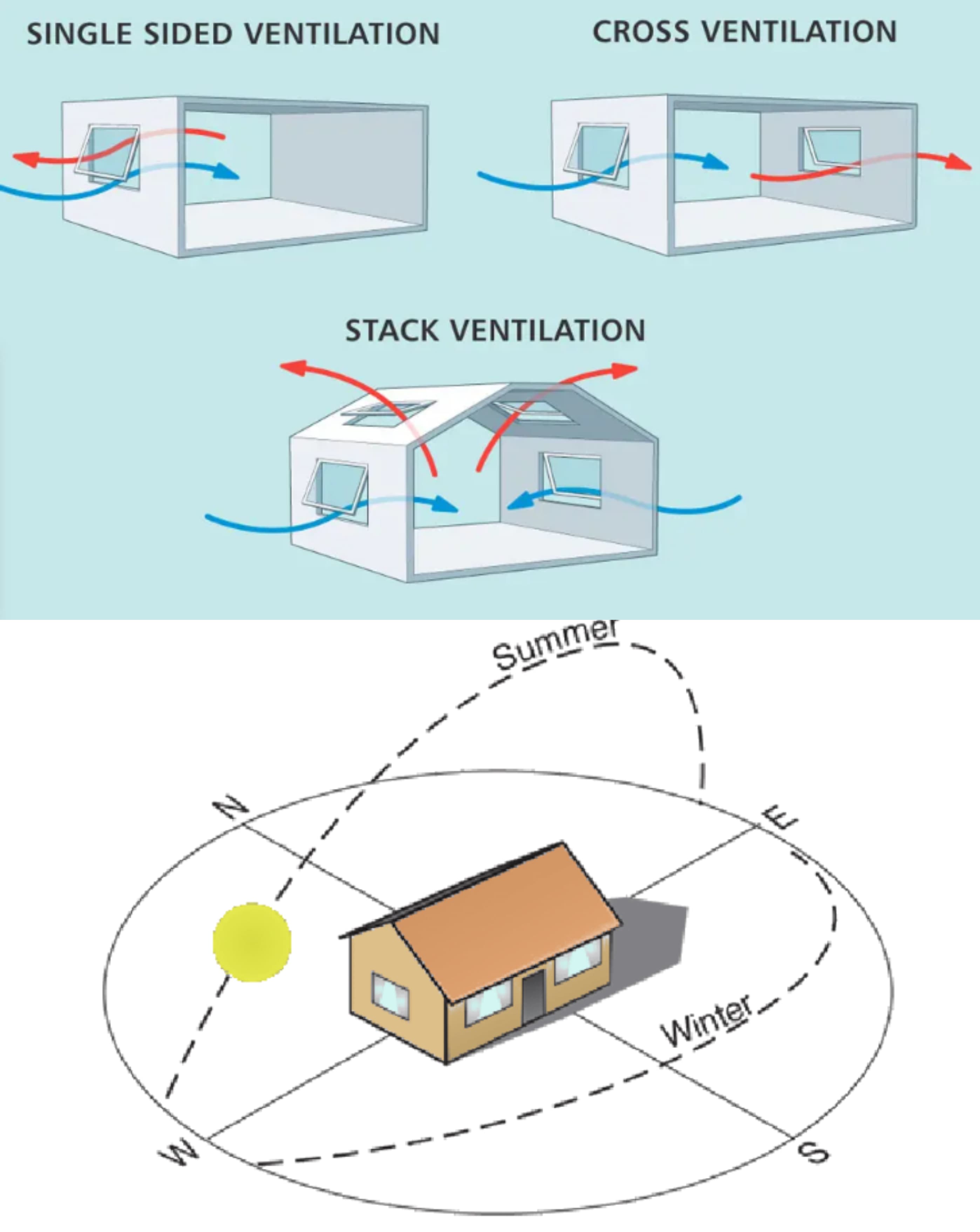
- Q4: What is Cross-ventilation?Ans: Cross-ventilation is a method of airflow where fresh air enters through one side and exits through the other, cooling and refreshing a space.
- Q5: Define opening.Ans: An opening is a gap or space (like a window or door) used to allow air to enter or exit a room for ventilation.
- Q6: What is the ventilation process?Ans: Ventilation involves the movement of air to bring in fresh air and remove pollutants or hot air from a space.
- Q7: What are the types of ventilation?Ans: The different types of ventilation are:
- ➔ Natural ventilation
- ➔ Mechanical ventilation
- ➔ Mixed-mode ventilation
- Q8: Define Natural Ventilation.Ans: Natural ventilation relies on air movement from natural forces like wind and temperature differences to circulate air.
- Q9: Define Mechanical Ventilation.Ans: Mechanical ventilation uses fans or mechanical systems to move air in and out of a building.
- Q10: Define Mix mode Ventilation.Ans: Mixed-mode ventilation combines both natural and mechanical methods to improve air quality and comfort.
- Q11: What are the important design considerations for ventilation?Ans: Important design considerations for ventilation include:
- ➔ Airflow patterns
- ➔ Air distribution
- ➔ Humidity control
- ➔ Temperature
- ➔ Building layout
- Q12: How does the direction of wind affect ventilation?Ans: Wind direction can enhance or reduce airflow, affecting how efficiently air enters and exits a space.
- Q13: What is the purity of wind?Ans: The purity of wind refers to its cleanliness, which affects air quality. Purified air is free of pollutants.
- Q14: Define Humidity.Ans: Humidity is the amount of water vapor in the air, which can impact comfort and ventilation efficiency.
- Q15: How does humidity affect ventilation?Ans: High humidity can reduce air quality and comfort, while low humidity can dry out airways and materials.
- Q16: Name the types of Natural ventilation.Ans: The types of natural ventilation are:
- ➔ Window ventilation
- ➔ Stack ventilation
- ➔ Cross-ventilation
- Q17: Name the methods of Mechanical ventilation.Ans: The methods of mechanical ventilation are:
- ➔ Exhaust fans
- ➔ Air handling units
- ➔ Ducted systems
- Q18: Explain the Central Plant System.Ans: A central plant system provides heating, cooling, and ventilation from a single location to multiple parts of a building.
- Q19: How does chimney help in ventilation?Ans: Chimneys help ventilate by allowing smoke, heat, and gases to escape, creating a natural draft for air circulation.
- Q20: What is wind driven ventilation?Ans: Wind-driven ventilation uses natural wind to force air through a space, improving air exchange.
- Q21: Define Roshan Daan and its effects on ventilation.Ans: Roshan Daan is a traditional ventilation system that allows natural light and air to enter a building through small openings, improving air quality.
- Q22: Define Ventilators.Ans: Ventilators are devices used to circulate or supply air into a room or building, improving ventilation.
- Q23: What are some design considerations for openings in ventilation?Ans: Some of the considerations are:
- ➔ Size
- ➔ Placement
- ➔ Type (window, vent, etc.)
- ➔ Orientation to optimize airflow and comfort
- Q24: Define Infiltration.Ans: Infiltration is the uncontrolled movement of outdoor air into a building, typically through cracks or gaps in the structure.
- Q25: What are some effects of ventilation?Ans: Ventilation has the following effects:
- ➔ Improves air quality
- ➔ Reduces humidity
- ➔ Prevents mold
- ➔ Ensures comfort