PLUMBING AND SANITATION
Other Chapters
PHYSICAL ENVIRONMENTCLIMATEVENTILATIONILLUMINATIONHEAT TRANSFER IN BUILDINGSWATER SUPPLY AND DRAINAGEPLUMBING AND SANITATION
- Q1: Define Plumbing.Ans: Plumbing is the system of pipes, fixtures, and fittings used to distribute water, gas, and remove waste in residential, commercial, and industrial buildings.
- Q2: Why is plumbing necessary?Ans: Plumbing is necessary for the safe and efficient distribution of water and removal of wastewater, ensuring hygiene, sanitation, and the smooth functioning of a building.
- Q3: Enlist a few plumbing fixtures.Ans: Some of the plumbing fixtures are:
- ➔ Faucets
- ➔ Showers
- ➔ Toilets (WC)
- ➔ Sinks
- ➔ Bathtubs
- ➔ Bidets
- ➔ Water heaters
- Q4: What is Sanitation?Ans: Sanitation refers to the practice of maintaining clean and hygienic conditions, especially by managing waste, to prevent the spread of disease.
- Q5: What is WC?Ans: WC stands for Water Closet. It is a type of toilet that includes a flush mechanism for waste removal.
- Q6: What is a European type WC?Ans: A European type WC is a modern, typically more compact, version of a water closet, often installed in European-style bathrooms with advanced flushing systems.
- Q7: Name some sanitary fittings used in the bathroom.Ans: Some of the sanitary fittings are:
- ➔ Washbasins
- ➔ Toilets
- ➔ Showerheads
- ➔ Bathtubs
- ➔ Bidets
- ➔ Taps
- Q8: How is WHB?Ans: A WHB, or wash hand basin, is a small basin designed for washing hands, usually equipped with a tap and drain.
- Q9: What is a Flushing cistern?Ans: A flushing cistern is a water tank connected to a toilet that stores and releases water to flush waste down the drain.
- Q10: What is an intercepting trap?Ans: An intercepting trap is a plumbing device that prevents foul odors and gases from entering the living spaces by trapping sewage gases in the waste pipe.
- Q11: Define floor traps.Ans: Floor traps are plumbing fixtures installed in floors to prevent the backflow of waste and allow the removal of wastewater from sinks, showers, and other drains.
- Q12: What is a gully trap?Ans: A gully trap is a drainage system used to prevent the entry of foul gases from the sewer system into a building. It also allows for surface water to drain away.
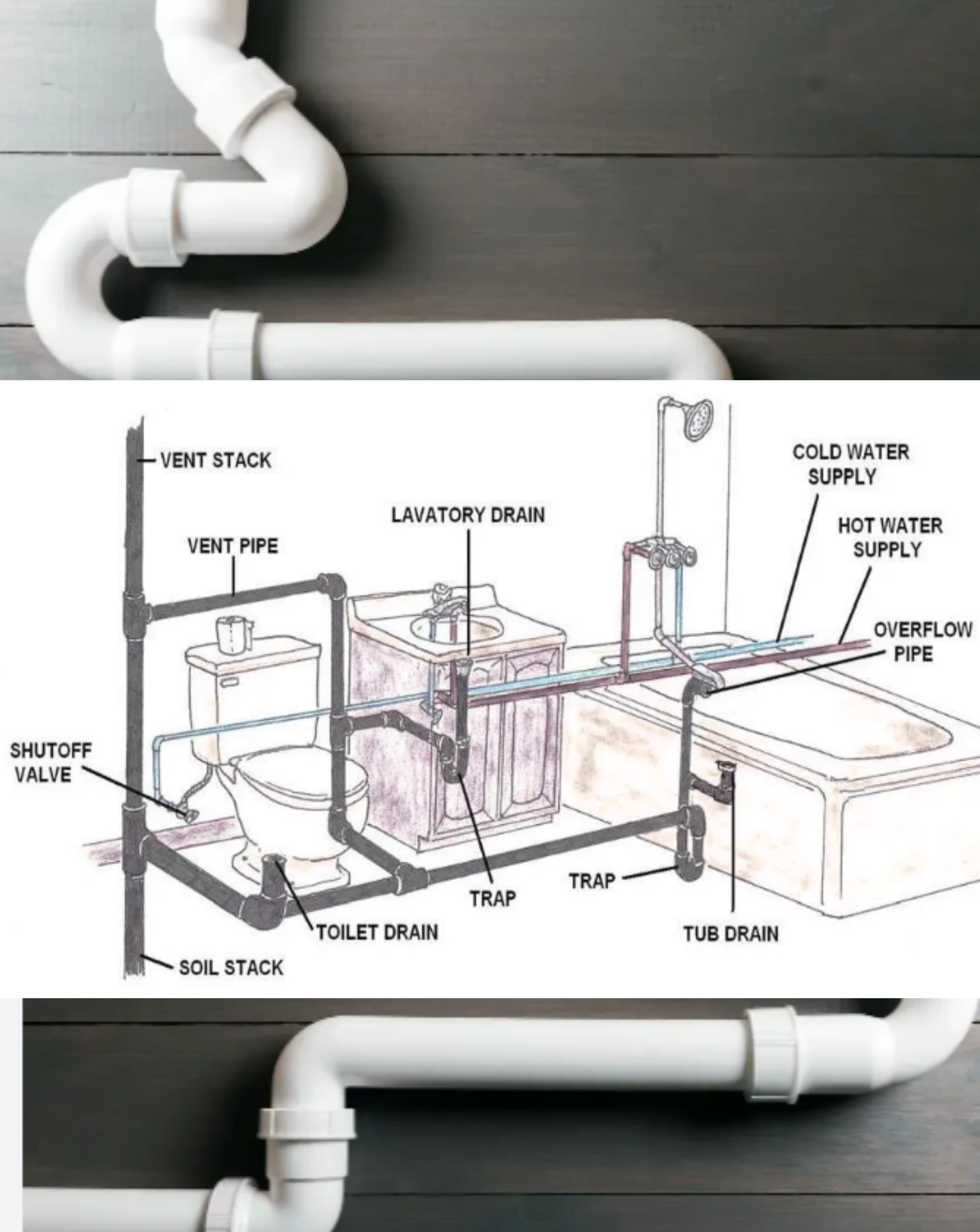
- Q13: What is a soil stack?Ans: A soil stack is a vertical pipe that carries human waste and wastewater from bathrooms and kitchens to the sewer system.
- Q14: What is a waste pipe?Ans: A waste pipe is a pipe that carries wastewater (from sinks, bathtubs, or showers) but does not carry solid waste.
- Q15: Define Vent pipe.Ans: A vent pipe is a pipe connected to the plumbing system to release gases and maintain pressure, ensuring smooth wastewater flow.
- Q16: What is an S trap, P trap and Q trap?Ans:
S Trap: A trap shaped like an S, used to prevent the entry of gases from the drain.
P Trap: A trap shaped like a P, commonly used for sinks to prevent odor.
Q Trap: A variant of the P trap, used in some plumbing systems. - Q17: Define Water Pollution.Ans: Water pollution refers to the contamination of water bodies (rivers, lakes, oceans) with harmful substances, making it unsafe for consumption and damaging ecosystems.
- Q18: Define Water Pollutants.Ans: Water pollutants are harmful substances such as chemicals, waste, or pathogens that degrade the quality of water.
- Q19: Write the types of Water Pollution.Ans: The types are:
- ➔ Chemical Pollution
- ➔ Biological Pollution
- ➔ Physical Pollution
- ➔ Thermal Pollution
- ➔ Nutrient Pollution
- Q20: Write the causes of Water Pollution.Ans: Some of the causes are:
- ➔ Industrial waste
- ➔ Agricultural runoff (pesticides, fertilizers)
- ➔ Improper sewage disposal
- ➔ Oil spills
- ➔ Plastic waste
- Q21: Write some effects of Water Pollution.Ans: Some of the effects are:
- ➔ Contaminated drinking water
- ➔ Destruction of aquatic life
- ➔ Spread of waterborne diseases
- ➔ Ecosystem imbalances
- ➔ Harm to agriculture and fishing
- Q22: Write a few preventions of Water Pollution.Ans: A few preventions are:
- ➔ Proper disposal of industrial and household waste
- ➔ Reducing plastic use
- ➔ Using eco-friendly agricultural practices
- ➔ Wastewater treatment
- ➔ Implementing laws and regulations on waste management
- Q23: Name some Water Pollutants.Ans: Some of the water pollutants are:
- ➔ Pesticides
- ➔ Heavy metals (e.g., mercury, lead)
- ➔ Oil
- ➔ Plastic waste
- ➔ Pathogens (bacteria, viruses)
- Q24: What is Water Purification?Ans: Water purification is the process of removing contaminants from water to make it safe for drinking and other uses.
- Q25: Write down steps to remove water impurities.Ans: Following steps are performed:
- ➔ Screening
- ➔ Sedimentation
- ➔ Filtration
- ➔ Coagulation
- ➔ Sterilization (e.g., chlorination)
- Q26: Define Screening.Ans: Screening is the process of removing large particles and debris from water by passing it through a mesh or screen.
- Q27: Define Sedimentation.Ans: Sedimentation is the process of allowing particles in water to settle at the bottom of a container under the influence of gravity.
- Q28: Define Filtration.Ans: Filtration is the process of passing water through a porous material to remove smaller particles and impurities.
- Q29: Define Co-agulation.Ans: Coagulation is the process of adding chemicals (coagulants) to water to clump small particles together, making them easier to remove through sedimentation and filtration.
- Q30: Define Sterilization.Ans: Sterilization involves killing harmful microorganisms in water through physical or chemical means (e.g., boiling, UV light, chlorination).
- Q31: Define Chlorination.Ans: Chlorination is the addition of chlorine to water to disinfect it and kill harmful bacteria, viruses, and other microorganisms.
- Q32: Name the chemical used in the process of chlorination of water.Ans: Chlorine (Cl₂) is commonly used for water chlorination.
- Q33: Name some water purification methods.Ans: The methods are:
- ➔ Filtration
- ➔ Boiling
- ➔ Chlorination
- ➔ UV purification
- ➔ Reverse osmosis
- Q34: What are sanitary fixtures? Name a few.Ans: Sanitary fixtures are plumbing devices used in bathrooms for hygiene and waste disposal. Examples include toilets, washbasins, bathtubs, and urinals.
- Q35: Define Single Stack system.Ans: The single stack system is a plumbing system where one main stack (vertical pipe) serves as both a waste and vent pipe for the entire building.
- Q36: Define Double Stack system.Ans: The double stack system uses two separate vertical pipes—one for waste and the other for venting purposes—in a building's plumbing.
- Q37: Define Urinal.Ans: A urinal is a plumbing fixture used for the disposal of urine, typically installed in men's bathrooms.