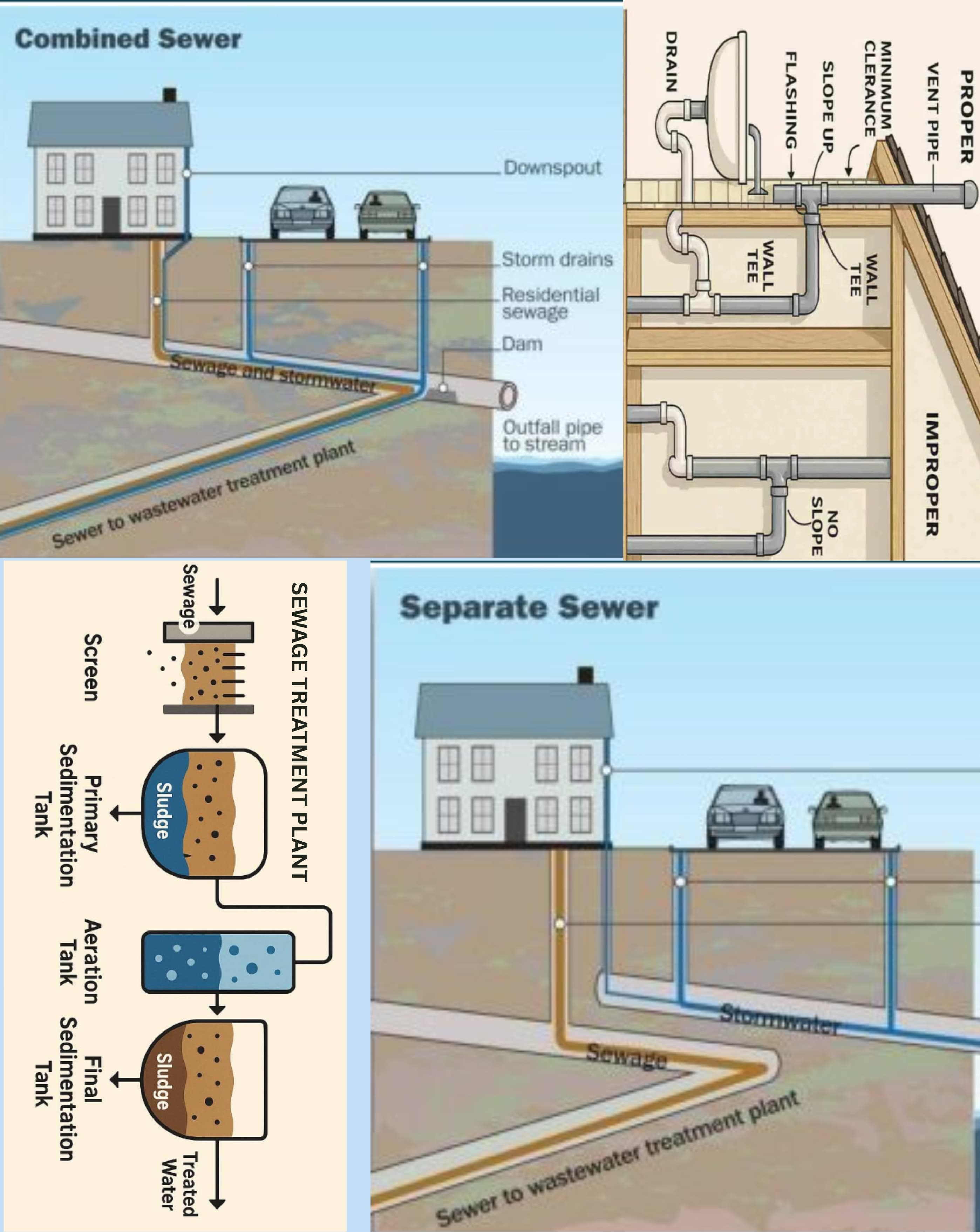
SEWERAGE SYSTEM
Other Chapters
ACOUSTICSSEWERAGE SYSTEMFIRE PREVENTION & PROTECTIONHEATING, VENTILATION & AIR CONDITIONINGELECTRIFICATION
- Q1: Define Sewage.Ans: Sewage is wastewater that comes from homes, industries, and businesses containing human waste, chemicals, and other pollutants.
- Q2: Define Sewerage.Ans: Sewerage is the system of pipes and channels that carries sewage from buildings to treatment facilities.
- Q3: Define Sewerage system.Ans: A sewerage system is a network of pipes, pumps, and treatment plants designed to collect and dispose of sewage safely.
- Q4: Define Sludge.Ans: Sludge is the thick, solid, or semi-solid material that settles out from sewage during treatment.
- Q5: Define Waste water.Ans: Waste water is used water from homes, industries, and businesses that contains contaminants.
- Q6: Define Storm Water.Ans: Storm water is rainwater or melted snow that flows over streets, roofs, and land into drains and rivers.
- Q7: Define Waste Pipe.Ans: A waste pipe is a pipe that carries sewage or wastewater from sinks and other fixtures except from W.C to the sewer.
- Q8: Define Soil Pipe.Ans: A soil pipe is a vertical pipe that carries human waste and sewage from toilets to the sewer system.
- Q9: Define Subsoil water.Ans: Subsoil water is the water present beneath the ground in soil layers.
- Q10: Define Infiltration.Ans: Infiltration is the process of water entering the soil or a sewer system from the surrounding ground.
- Q11: Define Exfilteration.Ans: Exfiltration is the leakage of wastewater from a sewer or pipe into the surrounding soil.
- Q12: Define Invert.Ans: The invert is the lowest point inside the bottom of a pipe or sewer channel.
- Q13: Define Inflow.Ans: Inflow is water that enters a sewer system from sources like rain, storm drains, or surface runoff.
- Q14: Define Refuse.Ans: Refuse is solid waste or garbage that is discarded from homes, businesses, or industries.
- Q15: Define Septic Tank.Ans: A septic tank is an underground tank that cleans sewage by separating solids from liquids and breaking down some waste.
- Q16: Define Drainage.Ans: Drainage is the system of pipes, channels, or ditches that removes excess water from land or buildings.
- Q17: Define Manhole.Ans: A manhole is an access point in a sewer or drainage system for inspection, cleaning, or maintenance.
- Q18: Define Gully trap.Ans: A gully trap is a plumbing device that prevents sewer gases from entering a building while allowing wastewater to pass.
- Q19: Define Floor drain.Ans: A floor drain is a drain installed in the floor to remove water from bathrooms, kitchens, or basements.
- Q20: Define Garbage.Ans: Garbage is household or commercial waste, including food scraps, paper, and other disposable items.
- Q21: Name the types of sewage.Ans: The types of sewage are as follows:
- ➔ Domestic sewage
- ➔ Sanitary sewage
- ➔ Industrial sewage
- ➔ Storm sewage
- ➔ Combined sewage
- ➔ Raw sewage
- ➔ Dilute sewage
- ➔ Septic sewage
- ➔ Fresh sewage
- Q22: Define Domestic Sewage.Ans: Domestic sewage is wastewater that comes from households, including water from kitchens, bathrooms, and toilets.
- Q23: Define Sanitary Sewage.Ans: Sanitary sewage is wastewater that contains human waste and water from domestic activities but no stormwater.
- Q24: Define Industrial Sewage.Ans: Industrial sewage is wastewater produced by factories and industries containing chemicals, oils, or other pollutants.
- Q25: Define Septic Sewage.Ans: Septic sewage is wastewater that is partially treated in a septic tank before being discharged or absorbed into the ground.
- Q26: Define Dilute Sewage.Ans: Dilute sewage is wastewater that contains a large amount of water and a small amount of solid waste.
- Q27: Define Fresh Sewage.Ans: Fresh sewage is newly produced sewage that has not started to decompose or produce bad odors.
- Q28: Define Storm Sewage.Ans: Storm sewage is water from rain or melting snow that flows into drains and sewers.
- Q29: Define Combined Sewage.Ans: Combined sewage is a mixture of domestic sewage and stormwater carried together in one sewer system.
- Q30: Define Raw Sewage.Ans: Raw sewage is untreated wastewater directly discharged from homes or industries into sewers.
- Q31: Define Sewer.Ans: A sewer is an underground pipe that carries sewage and wastewater to a treatment plant or disposal area.
- Q32: Name the types of sewer.Ans: The types of sewer are as follows:
- ➔ Sanitary sewer
- ➔ Combined sewer
- ➔ Storm sewer
- ➔ House sewer
- ➔ Lateral sewer
- ➔ Branch sewer
- ➔ Main sewer
- ➔ Trunk sewer
- Q33: Define Sanitary sewer.Ans: A sanitary sewer is a pipe that carries only domestic or industrial wastewater without stormwater.
- Q34: Define House sewer.Ans: A house sewer is a pipe that carries wastewater from a building to the main sewer.
- Q35: Define Combined sewer.Ans: A combined sewer carries both wastewater and stormwater in a single pipe.
- Q36: Define Storm sewer.Ans: A storm sewer carries only rainwater or melted snow to rivers, lakes, or treatment facilities.
- Q37: Define Depressed sewer.Ans: A depressed sewer is a sewer built below the main sewer level to receive wastewater from low-lying areas.
- Q38: Define Relief sewer.Ans: A relief sewer is an additional sewer constructed to reduce the load on an existing sewer.
- Q39: Define Lateral sewer.Ans: A lateral sewer is a small pipe that connects houses or buildings to the branch sewer.
- Q40: Define Branch sewer.Ans: A branch sewer collects wastewater from lateral sewers and carries it to the main sewer.
- Q41: Define Main sewer.Ans: A main sewer is a large sewer that carries wastewater from branch sewers to the treatment plant.
- Q42: Define Trunk sewer.Ans: A trunk sewer is a large sewer that carries wastewater from main sewers to the treatment plant.
- Q43: Define Intercepting sewer.Ans: An intercepting sewer is a sewer built to intercept wastewater from existing sewers and redirect it to a treatment plant.
- Q44: Name the systems of sewerage.Ans: The systems of sewerage are as follows:
- ➔ Separate system
- ➔ Combined system
- ➔ Partially separate system
- Q45: Define Separate sewerage system.Ans: A separate sewerage system has two different sewers: one for wastewater and one for stormwater.
- Q46: Write 4 advantages of Separate sewerage system.Ans: The advantages of Separate sewerage system are as follows:
- ➔ Reduces sewer overflow
- ➔ Easier treatment of wastewater
- ➔ Prevents mixing of stormwater with sewage
- ➔ Reduces risk of contamination
- Q47: Write 4 dis-advantages of Separate sewerage system.Ans: The disadvantages of Separate sewerage system are as follows:
- ➔ Higher construction cost
- ➔ Requires more space
- ➔ More maintenance needed
- ➔ Complex design
- Q48: Define Combined sewerage system.Ans: A combined sewerage system carries both wastewater and stormwater in the same pipe.
- Q49: Write 4 advantages of Combined sewerage system.Ans: The advantages of Combined sewerage system are as follows:
- ➔ Lower construction cost
- ➔ Requires less space
- ➔ Simple design
- ➔ Easy to maintain
- Q50: Write 4 dis-advantages of Combined sewerage system.Ans: The disadvantages of Combined sewerage system are as follows:
- ➔ Risk of overflow during heavy rain
- ➔ Difficult wastewater treatment
- ➔ High pollution if discharged directly
- ➔ Possible damage to sewers due to stormwater load
- Q51: Define Partially Separate sewerage system.Ans: A partially separate sewerage system carries wastewater and stormwater in separate sewers in some areas and combined in others.
- Q52: Write 4 advantages of Partially Separate sewerage system.Ans: The advantages of Partially Separate sewerage system are as follows:
- ➔ Reduces overflow in critical areas
- ➔ Easier wastewater treatment
- ➔ Lower cost than fully separate system
- ➔ Reduces risk of contamination
- Q53: Write 4 dis-advantages of Partially Separate sewerage system.Ans: The disadvantages of Partially Separate sewerage system are as follows:
- ➔ Complex design
- ➔ Maintenance is difficult
- ➔ Risk of mixing wastewater and stormwater
- ➔ Partial contamination may occur
- Q54: Define the purpose of Slope in sewerage design.Ans: The slope ensures wastewater flows by gravity and prevents blockages in sewers.
- Q55: Define Scouring Velocity.Ans: Scouring velocity is the minimum speed of wastewater in a sewer required to keep solids in suspension and prevent deposits.
- Q56: Define Sewer pipes.Ans: Sewer pipes are pipes used to carry sewage from houses, industries, or streets to treatment plants.
- Q57: Name 6 types of sewer materials.Ans: The types of sewer materials are as follows:
- ➔ Concrete
- ➔ Brick
- ➔ Clay
- ➔ Cast iron
- ➔ Steel
- ➔ PVC
- Q58: Define Corrugated Iron sewer.Ans: A corrugated iron sewer is made of corrugated iron sheets and is used for temporary or low-cost sewers.
- Q59: Define Cast Iron sewer.Ans: A cast iron sewer is a strong, durable pipe made of cast iron used for building and house connections.
- Q60: Where is the steel sewer used?Ans: Steel sewers are used where high strength is needed, such as industrial areas and large pipelines.
- Q61: Define Sewage treatment.Ans: Sewage treatment is the process of removing contaminants from wastewater before it is released into the environment.
- Q62: Name the stages of Sewage treatment.Ans: Following are the stages of sewage treatment:
- ➔ Primary treatment
- ➔ Secondary treatment
- ➔ Tertiary treatment
- Q63: Name the methods of Sewage treatment.Ans: Following are the methods of sewage treatment:
- ➔ Physical method
- ➔ Chemical methods
- ➔ Biological methods
- Q64: Name the types of sewage treatment tanks.Ans: Following are the types of sewage treatment tanks:
- ➔ Sedimentation tank
- ➔ Digestion tank
- ➔ Septic tank
- ➔ Oxidation tank
- Q65: Define Inlet.Ans: An inlet is the point where sewage enters a tank or sewer.
- Q66: Define Outlet.Ans: An outlet is the point where treated water or wastewater leaves a tank or sewer.
- Q67: Define Sedimentation Chamber.Ans: A sedimentation chamber is a tank where solids settle down from sewage before further treatment.
- Q68: Define the Digestion Chamber.Ans: A digestion chamber is a tank where settled solids are decomposed by bacteria.
- Q69: Define Cesspool Drainage System.Ans: A cesspool drainage system collects sewage in underground pits for decomposition and gradual absorption into the soil.
- Q70: Define Water Carriage System.Ans: A water carriage system uses water to carry waste from homes and streets to a sewer or treatment facility.
- Q71: Define Chlorination.Ans: Chlorination is the process of adding chlorine to water or sewage to kill harmful bacteria.
- Q72: Name the types of Chlorination.Ans: Following are the types of chlorination:
- ➔ Dry chlorination
- ➔ Liquid chlorination
- ➔ Gas chlorination
- Q73: Define W.H.O.Ans: W.H.O. stands for World Health Organization, an international agency that promotes public health.
- Q74: Which chemical is used in Chlorination?Ans: Chlorine or chlorine compounds are used in chlorination.
- Q75: Define Sewage Chlorination.Ans: Sewage chlorination is adding chlorine to sewage to disinfect it before discharge.
- Q76: What is a Sewage Chlorination Test?Ans: A sewage chlorination test checks whether the amount of chlorine added is enough to kill bacteria in sewage.
- Q77: Name the types of Sewage Chlorination Test.Ans: Following are the types of Sewage Chlorination Test:
- ➔ Breakpoint chlorination test
- ➔ Residual chlorine test