Q1: Define Foundry sand.
Ans: Foundry sand is a type of high-quality sand used in casting molds to form the cavity for molten metal.
Q2: Define Molding sand.
Ans: Molding sand is sand prepared with binders and moisture to make molds capable of holding molten metal without collapsing.
Q3: Define Green sand.
Ans: Green sand is a mixture of sand, clay, and water that is used in a moist condition for molding in foundries.
Q4: State the composition of sand.
Ans:
The composition of foundry sand is:- ➔ Silica sand (major component)
- ➔ Clay (binder)
- ➔ Moisture (water)
- ➔ Additives (for improved properties)
Q5: Why is green sand named “Green”?
Ans: Green sand is called 'green' because it is used in a moist, uncured condition, similar to how green wood is fresh and flexible.
Q6: Define Dry sand.
Ans: Dry sand is molding sand that has been baked or dried to remove moisture, making it hard and strong for certain types of molds.
Q7: Define Binders.
Ans: Binders are substances added to sand to hold the particles together and give strength to the mold.
Q8: State the types of Binders.
Ans:
The main types of binders are:- ➔ Clay type binders
- ➔ Organic type binders
- ➔ Inorganic type binders
Q9: What are Clay type binders?
Ans: Clay type binders use natural clay, like bentonite, mixed with sand and water to provide strength and cohesiveness to the mold.
Q10: What are Organic type binders?
Ans: Organic binders are materials like starch, resin, or molasses that bind sand particles when mixed, often used for special molds.
Q11: What are In-organic type binders?
Ans: Inorganic binders are chemical compounds like sodium silicate that harden when exposed to heat or chemicals to form a strong mold.
Q12: Explain CO2 molding process.
Ans: In the CO2 molding process, sand mixed with sodium silicate is shaped, and CO2 gas is passed through it to harden the mold quickly.
Q13: Define Parting sand.
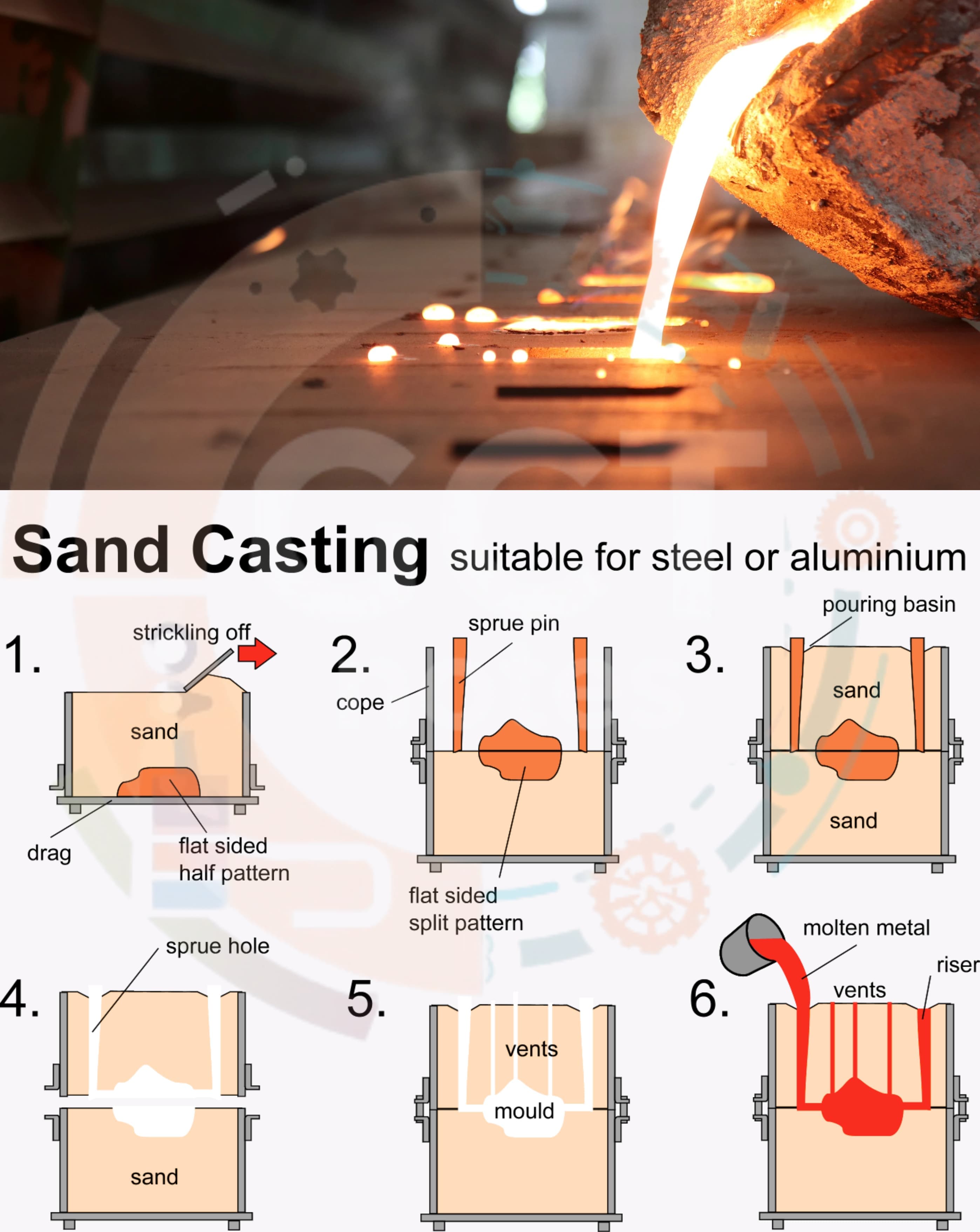
Ans: Parting sand is a dry sand sprinkled between the cope and drag to prevent them from sticking together.
Q14: Define Facing sand.
Ans: Facing sand is the fine sand applied directly to the mold cavity to provide a smooth surface finish to the casting.
Q15: Define Refractoriness.
Ans: Refractoriness is the ability of sand to withstand high temperatures without melting or breaking down.
Q16: Define Porosity/Permeability.
Ans: Porosity or permeability is the ability of sand to allow gases to pass through the mold during casting.
Q17: Define Flow-ability.
Ans: Flow-ability is the property of sand to flow and fill intricate parts of the mold cavity easily.
Q18: Define the green strength of sand.
Ans: Green strength is the strength of moist or green sand to hold the mold shape before pouring molten metal.
Q19: Define dry strength of sand.
Ans: Dry strength is the strength of sand after it has been dried or baked, which allows it to withstand the metal pour.
Q20: State 2 characteristics of foundry sand.
Ans:
Two important characteristics of foundry sand are:- ➔ High refractoriness to withstand molten metal
- ➔ Good strength and cohesiveness to hold the mold shape
Q21: Name 4 binding materials.
Ans:
Four common binding materials are:- ➔ Clay
- ➔ Starch
- ➔ Resin
- ➔ Sodium silicate