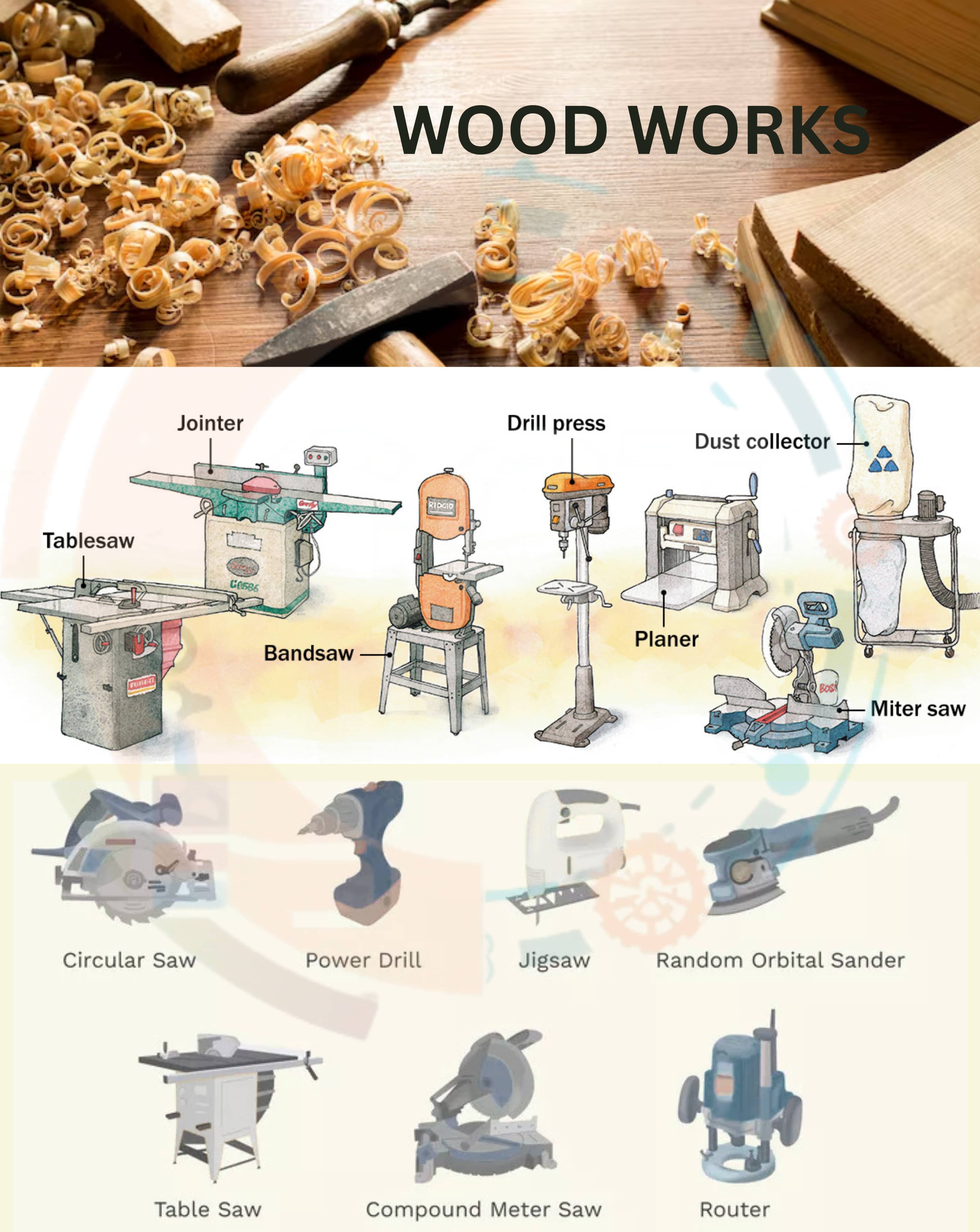
Q1: Define a wood working machine.
Ans: A wood working machine is a machine used to cut, shape, and finish wood.
Q2: Name some machines used in a wood workshop.
Ans:
The machines used in a wood workshop are as follows:- ➔ Circular saw
- ➔ Band saw
- ➔ Jointer
- ➔ Planer
Q3: Define Radical saw.
Ans: A radical saw is a machine used to cut wood at different angles.
Q4: Define Radial Saw.
Ans: A radial saw is a machine in which the blade moves along an arm to cut wood.
Q5: Name the parts of a Radial saw.
Ans:
The parts of a radial saw are as follows:- ➔ Yoke
- ➔ Motor
- ➔ Arm
- ➔ Table
Q6: State some safety precautions while using a radial saw.
Ans:
The safety precautions are as follows:- ➔ Wear safety goggles
- ➔ Keep hands away from the blade
- ➔ Use proper guards
Q7: Define Yoke.
Ans: A yoke is a part of a radial saw that holds the motor.
Q8: Define Circular saw.
Ans: A circular saw is a machine used to cut wood using a rotating circular blade.
Q9: Name the parts of a Circular saw.
Ans:
The parts of a circular saw are as follows:- ➔ Arbor
- ➔ Blade
- ➔ Table
- ➔ Guard
Q10: Define Arbor.
Ans: An arbor is a shaft on which the circular saw blade is mounted.
Q11: Define Miter Gauge.
Ans: A miter gauge is used to guide wood at an angle while cutting.
Q12: Define Rip Fence.
Ans: A rip fence is used to guide wood for straight cutting.
Q13: Define Hand Wheel.
Ans: A hand wheel is used to adjust the height or position of the blade.
Q14: Define Guard.
Ans: A guard is a safety device that covers the blade to prevent accidents.
Q15: Define Splitter.
Ans: A splitter prevents the wood from closing on the blade during cutting.
Q16: Define the use of Dado heads.
Ans: Dado heads are used to cut wide grooves in wood.
Q17: State some safety precautions while using a circular saw.
Ans:
The safety precautions are as follows:- ➔ Do not wear loose clothes
- ➔ Use blade guard
- ➔ Keep hands away from blade
Q18: Define Band Saw.
Ans: A band saw is a machine used to cut wood using a continuous band blade.
Q19: Name the types of a Band saw.
Ans:
The types of band saw are as follows:- ➔ Vertical band saw
- ➔ Horizontal band saw
Q20: Name the parts of a band saw.
Ans:
The parts of a band saw are as follows:- ➔ Wheels
- ➔ Blade
- ➔ Table
- ➔ Guard
Q21: State the guiding mechanism of a band saw.
Ans: The blade is guided by guide blocks and thrust wheels.
Q22: Define a Throat Plate.
Ans: A throat plate supports the wood near the blade opening.
Q23: What is a Thrust Wheel?
Ans: A thrust wheel supports the back of the band saw blade.
Q24: State some safety precautions while using a band saw.
Ans:
The safety precautions are as follows:- ➔ Adjust blade guard properly
- ➔ Keep fingers away from blade
- ➔ Stop machine before adjustments
Q25: Define Jointer.
Ans: A jointer is a machine used to make wood surfaces flat and straight.
Q26: Name the parts of a jointer.
Ans:
The parts of a jointer are as follows:- ➔ Infeed table
- ➔ Outfeed table
- ➔ Cutter head
- ➔ Fence
Q27: State some safety precautions while working with a jointer.
Ans:
The safety precautions are as follows:- ➔ Use push sticks
- ➔ Keep hands away from cutter
- ➔ Use proper guard
Q28: Define Planner.
Ans: A planner is a machine used to reduce the thickness of wood.
Q29: Name the parts of a planner.
Ans:
The parts of a planner are as follows:- ➔ Feed rollers
- ➔ Cutter head
- ➔ Table
Q30: State some safety precautions while working with a planner.
Ans:
The safety precautions are as follows:- ➔ Do not overload the machine
- ➔ Keep hands away from rollers
Q31: What are feed roles?
Ans: Feed rollers move the wood through the machine.
Q32: What is Wood Turning Lathe?
Ans: A wood turning lathe is a machine used to shape rotating wood.
Q33: State the working procedure of a wood turning lathe.
Ans:
The working procedure is as follows:- ➔ Fix the wood between centers
- ➔ Start the machine
- ➔ Shape using turning tools
Q34: Name the parts of a wood turning lathe.
Ans:
The parts of a wood turning lathe are as follows:- ➔ Headstock
- ➔ Tailstock
- ➔ Tool rest
- ➔ Bed
Q35: State the turning tools of a wood turning lathe.
Ans:
The turning tools are as follows:Q36: State some safety precautions while working with a wood turning lathe.
Ans:
The safety precautions are as follows:- ➔ Wear eye protection
- ➔ Tighten work properly
- ➔ Do not touch rotating work
Q37: Define Spindle.
Ans: A spindle is a rotating shaft that holds the work or tool.
Q38: Define Tailstock.
Ans: A tailstock supports the other end of the work piece.
Q39: Define Chip Tray.
Ans: A chip tray collects waste wood chips.
Q40: What is a standing disc?
Ans: A standing disc is a disc used for sanding wood.
Q41: Define Drill Chuck.
Ans: A drill chuck holds the drill bit firmly.
Q42: Define Lower Chuck.
Ans: A lower chuck supports the work from below.
Q43: Define Upper Chuck.
Ans: An upper chuck holds the tool or bit from above.
Q44: Define Jig Saw.
Ans: A jig saw is a machine used to cut curved shapes in wood.
Q45: Name the parts of a Jig Saw.
Ans:
The parts of a jig saw are as follows:- ➔ Blade
- ➔ Motor
- ➔ Base plate
- ➔ Handle
Q46: State some safety precautions while working with a Jig Saw.
Ans:
The safety precautions are as follows:- ➔ Secure the work properly
- ➔ Keep hands away from blade
Q47: Define Bevelling.
Ans: Bevelling is the process of making an angled edge on wood.
Q48: What is a Disc cutter?
Ans: A disc cutter is used to cut or shape wood using a rotating disc.