Q1: Define wood cuts.
Ans: Wood cuts are the methods of cutting wood in different directions.
Q2: Define wood joints.
Ans: Wood joints are methods of joining two or more wooden pieces.
Q3: Define Joinery.
Ans: Joinery is the technique of joining wooden parts together.
Q4: Where is the joinery technique used?
Ans: Joinery technique is used in furniture making and wood construction.
Q5: Name the types of wood cuts.
Ans:
The types of wood cuts are as follows:Q6: Define Ripping.
Ans: Ripping is cutting wood along the grain.
Q7: Define Cross-cutting.
Ans: Cross-cutting is cutting wood across the grain.
Q8: What is a wood joint?
Ans: A wood joint is a connection between two wooden pieces.
Q9: Name some types of wood joints.
Ans:
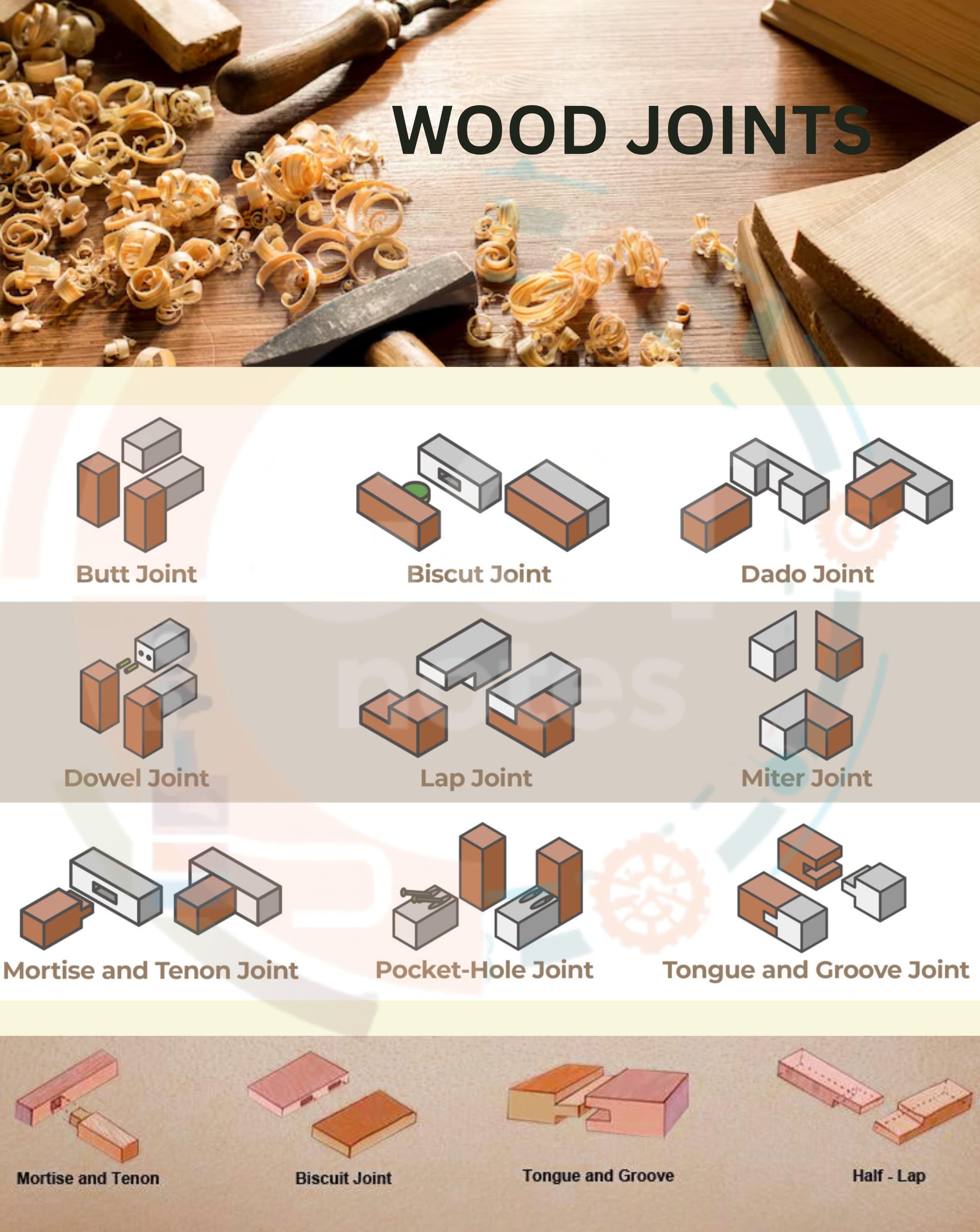
The types of wood joints are as follows:- ➔ Butt joint
- ➔ Lap joint
- ➔ Dado joint
- ➔ Mortise and tenon joint
Q10: Define Butt Joint.
Ans: A butt joint joins two pieces end to end.
Q11: Define Lap joint.
Ans: A lap joint is made by overlapping two wooden pieces.
Q12: Define Dado Joint.
Ans: A dado joint is made by cutting a slot across the wood.
Q13: Define Edge joint.
Ans: An edge joint joins two boards along their edges.
Q14: Define Rabbet Joint.
Ans: A rabbet joint is made by cutting a step along the edge.
Q15: Define Dovetail Joint.
Ans: A dovetail joint is a strong joint with interlocking shapes.
Q16: Define Mortise and Tenon Joint.
Ans: A mortise and tenon joint joins a tenon into a mortise hole.
Q17: Define Wood fasteners.
Ans: Wood fasteners are devices that are used to join wooden parts.
Q18: Name some types of fasteners.
Ans:
The fasteners are as follows:- ➔ Nails
- ➔ Screws
- ➔ Nuts and bolts
- ➔ Dowel pins
Q19: Define Nails.
Ans: Nails are metal fasteners driven into wood. The nails keep the wood intact in its place.
Q20: Define Wood Screws.
Ans: Wood screws are threaded fasteners that are used in wood.
Q21: Define Nuts and Bolts.
Ans: Nuts and bolts are fasteners that are used to join parts tightly.
Q22: Define Dowel Pins.
Ans: Dowel pins are wooden pins that are used to align joints.
Q23: What is wood glue?
Ans: Wood glue is an adhesive that is used to join wooden parts.
Q24: Name some types of wood glues used commonly.
Ans:
The wood glues are as follows:- ➔ PVA glue
- ➔ Epoxy glue
- ➔ Animal glue
Q25: How is glue applied in joinery work?
Ans: Glue is applied evenly on joint surfaces before joining.
Q26: State some safety precautions while gluing.
Ans:
The safety precautions are as follows:- ➔ Avoid skin contact
- ➔ Work in a ventilated area
Q27: Define Wood.
Ans: Wood is a natural material obtained from trees.
Q28: Name the types of wood.
Ans:
The types of wood are as follows:Q29: Define Soft wood.
Ans: Soft wood comes from coniferous trees.
Q30: Define Hard wood.
Ans: Hard wood comes from deciduous trees.
Q31: State the parts of a tree.
Ans:
The parts of a tree are as follows:- ➔ Bark
- ➔ Sap wood
- ➔ Heart wood
- ➔ Pith
Q32: Define Bark.
Ans: Bark is the outer protective layer of a tree.
Q33: Define Sap wood.
Ans: Sap wood is the outer active wood layer.
Q34: Define Pith.
Ans: Pith is the soft center of a tree.
Q35: Define Heart wood.
Ans: Heart wood is the strong inner part of a tree.
Q36: Define Cambium Layer.
Ans: Cambium is the growth layer between bark and wood.
Q37: Define Medullary Rays.
Ans: Medullary rays carry nutrients across the tree.
Q38: Define Annual Rings.
Ans: Annual rings show the yearly growth of a tree.
Q39: State any 4 defects in wood.
Ans:
The defects in wood are as follows:- ➔ Knots
- ➔ Shakes
- ➔ Wane
- ➔ Twisting
Q40: What are knots in wood?
Ans: Knots are hard spots formed by branches.
Q41: What are shakes in wood?
Ans: Shakes are cracks in wood along the grain.
Q42: What is wane in wood?
Ans: Wane is missing wood on the edge.
Q43: What is twisting in wood?
Ans: Twisting is uneven warping of wood.
Q44: What is Bowing in Wood?
Ans: Bowing is bending of wood lengthwise.
Q45: What are pitch pockets in wood?
Ans: Pitch pockets are resin-filled cavities.
Q46: Define Wood Seasoning.
Ans: Wood seasoning is drying wood to remove moisture.
Q47: Name the methods of wood seasoning.
Ans:
The methods are as follows:- ➔ Air seasoning
- ➔ Kiln seasoning
- ➔ Water seasoning
Q48: Define Natural Air Seasoning.
Ans: Natural air seasoning dries wood using air.
Q49: Define Water Seasoning.
Ans: Water seasoning involves soaking wood in water.
Q50: Define Air Seasoning.
Ans: Air seasoning dries wood in open air.
Q51: Define Forced Air Seasoning.
Ans: Forced air seasoning uses air flow to dry wood.
Q52: Define Kiln Seasoning.
Ans: Kiln seasoning dries wood using heat in a chamber.
Q53: Define X-ray Seasoning.
Ans: X-ray seasoning dries wood using radiation.
Q54: Define Electrical Seasoning.
Ans: Electrical seasoning dries wood using electric current.
Q55: Define Wood Finishing.
Ans: Wood finishing improves appearance and protection.
Q56: State some Wood Finishing materials.
Ans:
The materials are as follows:Q57: Define Staining.
Ans: Staining is a method that adds color to wood.
Q58: Name 3 types of stains used in industries.
Ans:
The stains are as follows:- ➔ Oil stain
- ➔ Water stain
- ➔ Spirit stain
Q59: Define French Polish.
Ans: French polish gives a glossy wood finish.
Q60: Define Wax Polish.
Ans: Wax polish provides shine and protection.
Q61: Define Plastic Finishes.
Ans: Plastic finishes form a protective layer.
Q62: Define Varnishing.
Ans: Varnishing coats wood with protective liquid.
Q63: Define Abrasives.
Ans: Abrasives are materials used for smoothing.
Q64: Define Abrasive sheets.
Ans: Abrasive sheets are sand papers.
Q65: What is a Grit size?
Ans: Grit size shows roughness of abrasive.
Q66: Define Sanding.
Ans: Sanding is the process of smoothing wood surfaces using abrasives. It removes roughness and prepares the surface for finishing.
Q67: Define Manual Sanding.
Ans: Manual sanding is done by hand using sandpaper. It is used for small work and fine finishing.
Q68: Define Machine Sanding.
Ans: Machine sanding uses powered machines to smooth wood surfaces. It is faster and suitable for large work.
Q69: Define Flat Belt Sanding.
Ans: Flat belt sanding uses a continuous moving abrasive belt. It is used for smoothing flat wooden surfaces.
Q70: Define Drum Sanding Machine.
Ans: A drum sanding machine smoothens wood using a rotating drum. It is used for leveling and finishing wood surfaces.
Q71: Define Disc Sander.
Ans: A disc sander smoothens wood using a disc.
Q72: What is the cutting speed of a sanding machine?
Ans: The cutting speed of a sanding machine is usually between 10 to 30 meters per second. It depends on the type of machine and abrasive used.