STRAIN
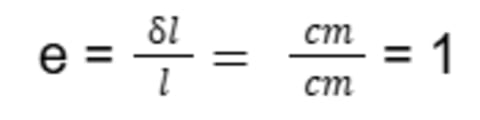
- Q1: Define Strain.Ans: The ratio of change in dimension to original dimension is strain. It has no unit.
- Q2: Why does strain has no unit?Ans: It is because both change in length and length have the same units which cancel out each other.
- Q3: Name the types of strainAns: The types are:
- ➔ Direct Strain
- ➔ Tensile Strain
- ➔ Compressive Strain
- ➔ Shear Strain
- ➔ Volumetric Strain
- ➔ Linear Strain
- ➔ Lateral Strain
- ➔ Direct Strain
- Q4: Define Direct Strain.Ans: Direct strain is the strain produced when a material experiences direct stress.
It causes a change in length of the material along the direction of the applied force. - Q5: What do you know about shear strain.Ans: The strain produced in a body due to Shear Force and Shear Stresses is called Shear Strain.
- Q6: Define tensile strain.Ans: If a Tensile force is applied on the body and its length increases, this is a Tensile Strain.
- Q7: Define compressive strain.Ans: If a Compressive force is applied on the body and its length decreases, this is a Compressive Strain.
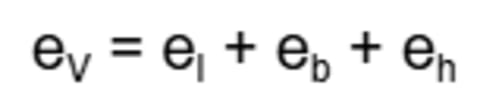
- Q8: Define volumetric strain.Ans: If a force is applied on the body and the volume of the body changes i.e. the length, height or width changes then such a strain is volumetric strain.
- Q9: Define Linear Strain.Ans: Linear strain is the ratio of change in length of a material to its original length when a force is applied.
Formula:
Linear Strain = Change in Length / Original Length - Q10: Define Lateral Strain.Ans: Lateral strain is the strain produced in the direction perpendicular to the applied force.
It occurs when a material changes its width or diameter due to tensile or compressive stress. - Q11: Name various elastic constants.Ans: Some of the elastic constants are:
- ➔ Modulus of Elasticity
- ➔ Modulus of Rigidity
- ➔ Bulk Modulus of Elasticity
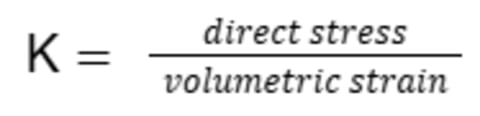
- Q12: Define Bulk Modulus of Elasticity.Ans: The ratio of direct stress to volumetric strain is Bulk Modulus.
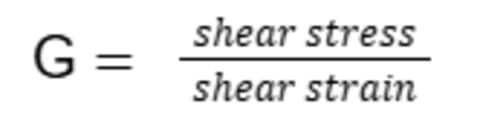
- Q13: Define Shear Modulus.Ans: The ratio of shear stress to shear strain is Shear Modulus or Modulus of Rigidity.
- Q14: Define Poisson’s Ratio.Ans: Poisson's ratio is the ratio of lateral strain to linear strain in a material when it is subjected to stress.
Formula:
Poisson's Ratio = Lateral Strain / Linear Strain - Q15: Define Percentage Elongation.Ans: Percentage elongation is the increase in length of a material expressed as a percentage of its original length after the application of load.
Formula:
Percentage Elongation = (Increase in Length / Original Length) × 100 - Q16: State Hook's Law.Ans: Hook's Law states that:
“Within elastic limits, stress is directly proportional to strain”