INTRODUCTION TO BUILDING MATERIALS
Other Chapters
INTRODUCTION TO BUILDING MATERIALSSTRUCTURAL MATERIALSNON-STRUCTURAL MATERIALSFINISHING MATERIALSINSULATING / WATER PROOFING MATERIALS
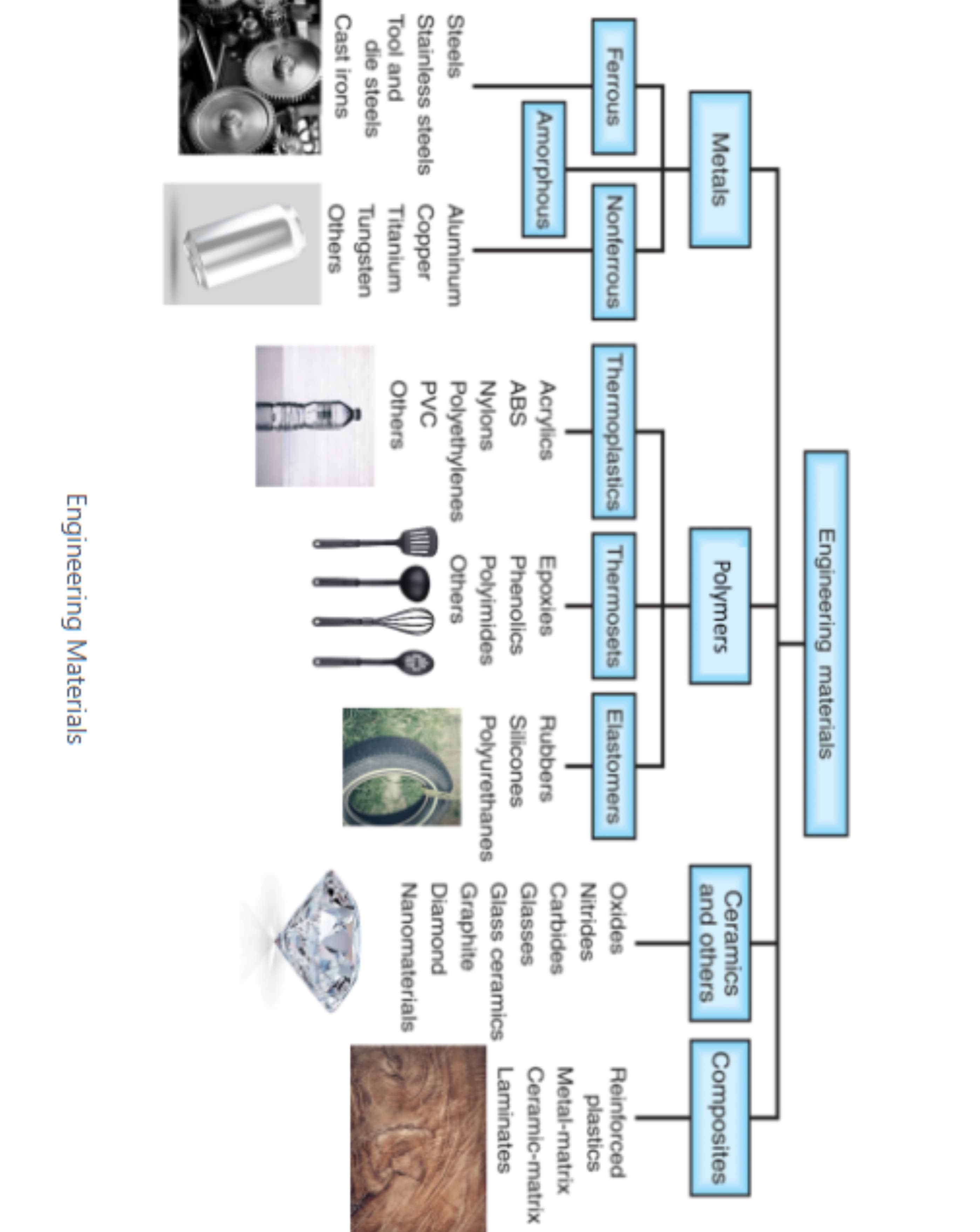
- Q1: Define Engineering material.Ans: Engineering material is any material that is used to make machines, structures, or products.
- Q2: State the classification of materials.Ans: Materials are classified mainly as:
- ➔ Metals
- ➔ Non-metals
- ➔ Organic material
- ➔ Inorganic material
- Q3: Define Metals.Ans: Metals are materials that are hard, strong, shiny, and good conductors of heat and electricity.
- Q4: Define non-metals.Ans: Non-metals are materials that are not shiny, not good conductors, and are usually brittle in solid form.
- Q5: Enlist the types of metals.Ans: The types of metals are:
- ➔ Ferrous
- ➔ Non-ferrous
- Q6: Define Ferrous metals.Ans: Ferrous metals are metals that contain iron as their main element.
- Q7: Define non-ferrous metals.Ans: Non-ferrous metals are metals that do not contain iron.
- Q8: What is Wrought Iron?Ans: Wrought iron is a very pure form of iron that contains less than 0.08% carbon. It is soft, tough, and can be bent or shaped easily. It is used for making gates, railings, chains, and decorative items.
- Q9: What is Cast Iron?Ans: Cast iron is a hard and brittle form of iron that contains 2% to 4% carbon. It is produced by melting iron and pouring it into molds. It is used in engine blocks, pipes, cookware, machine parts, and heavy structural components.
- Q10: What is Carbon Steel?Ans: Carbon steel is steel that contains iron and up to 2% carbon. Its properties change with carbon content.
- ➔ Low carbon steel: 0.05% to 0.30% carbon
- ➔ Medium carbon steel: 0.30% to 0.60% carbon
- ➔ High carbon steel: 0.60% to 1.50% carbon
- Q11: What is Alloy Steel?Ans: Alloy steel is steel that contains iron mixed with other elements like chromium, nickel, or manganese to improve its properties.
- Q12: Define Aluminum.Ans: Aluminum is a lightweight, soft, and corrosion-resistant non-ferrous metal.
- Q13: Define Silver.Ans: Silver is a shiny and soft non-ferrous metal that conducts electricity very well.
- Q14: Define Organic materials.Ans: Organic materials are materials that come from living organisms or contain carbon.
- Q15: Name some Organic materials.Ans: Some organic materials are:
- ➔ Paper
- ➔ Wood
- ➔ Rubber
- ➔ Cotton
- Q16: Define In-organic materials.Ans: Inorganic materials are materials that do not come from living organisms and usually do not contain carbon.
- Q17: Name some In-organic materials.Ans: Some inorganic materials are:
- ➔ Metal
- ➔ Glass
- ➔ Ceramic
- ➔ Cement
- Q18: Define Plastic.Ans: Plastic is a synthetic material that can be easily shaped when heated. It is used for making pipes, sheets etc.
- Q19: Define Wood.Ans: Wood is a natural material obtained from trees and used for construction and manufacturing.
- Q20: Define Paper.Ans: Paper is a thin material made from wood pulp and used for writing, printing, and packaging.
- Q21: Define Rubber.Ans: Rubber is a flexible material made from natural latex or synthetic chemicals. It is used for making tyres etc.
- Q22: Define Leather.Ans: Leather is a durable material made from the processed skin of animals. It is used in clothing.
- Q23: Define Petroleum.Ans: Petroleum is a thick, oily liquid found underground that is used to make fuel and many products.
- Q24: Define Cement.Ans: Cement is a binder, a fine powder made from ground limestone and clay, that is mixed with water to form a paste.
- Q25: Define Glass.Ans: Glass is a hard, transparent material made by heating sand and other substances. It is also used for construction works and finishing.
- Q26: Define Ceramic.Ans: Ceramic is a hard material made by shaping and heating clay at high temperatures.
- Q27: Define PVC.Ans: PVC is a strong plastic material made from chemicals. It is used for pipes and other products.
- Q28: Define Resins.Ans: Resins are sticky substances that are converted into hard states called polymers. They are used to make plastics and glue.
- Q29: Define Polythene.Ans: Polythene is a lightweight plastic. It is used to make bags, bottles, and containers.
- Q30: Define Polyester.Ans: Polyester is a man-made fiber. It is used to make fabrics and clothing.
- Q31: Define Natural materials.Ans: Natural materials are materials found in nature and not made by humans.
- Q32: Define Man-made materials.Ans: Man-made materials are materials created by humans through processing or chemical methods. For example: glass, plastic etc.
- Q33: Define Biotic Materials.Ans: Biotic materials are materials that come from living things. For example: wood, cotton etc.
- Q34: State some Biotic Materials.Ans: Some Biotic materials are as follows:
- ➔ Wood
- ➔ Cotton
- ➔ Leather
- ➔ Wool
- Q35: Define Abiotic Materials.Ans: Abiotic materials are materials that come from non-living sources. For example: glass, plastic etc.
- Q36: State some Abiotic Materials.Ans: Some Abiotic materials are as follows:
- ➔ Metals
- ➔ Glass
- ➔ Stone
- ➔ Plastic
- Q37: Define Stone.Ans: Stone is a hard natural material found in the earth. It is used in construction for making walls and finishing purposes.
- Q38: Define Metamorphic rock.Ans: Metamorphic rock is rock that has changed form due to heat and pressure.
- Q39: Define Tile.Ans: A tile is a flat piece of material. It is used to cover floors and walls.
- Q40: Define Brick.Ans: Brick is a block made from clay or mud. It is used in construction for making walls and foundations.
- Q41: Define Concrete.Ans: Concrete is a strong building material made by mixing cement, sand, gravel, and water. It is used in making beams, columns etc.
- Q42: Define Plywood.Ans: Plywood is a wood material made by gluing thin layers of wood together to make strong boards.
- Q43: Define Plaster board.Ans: Plaster board is a flat building sheet made of plaster sandwiched between paper and used for walls and ceilings.
- Q44: Define Quartz.Ans: Quartz is a hard mineral made of silica and is commonly found in rocks and sand.
- Q45: Define Quick Lime.Ans: Quick lime is a white, powdery substance made by heating limestone and is used in construction and industry.
- Q46: Define Polymers.Ans: Polymers are large molecules made of repeating units and are used to make many plastics and materials.
- Q47: Define Alloys.Ans: Alloys are materials made by mixing two or more metals to improve strength or other properties. For example: steel, brass, bronze etc.
- Q48: Define Sedimentary rocks.Ans: Sedimentary rocks are rocks formed when layers of sand, mud, and minerals are pressed together over time.
- Q49: Define Igneous rocks.Ans: Igneous rocks are rocks formed when melted rock cools and hardens.
- Q50: Define Kapok.Ans: Kapok is a soft, fluffy fiber taken from the kapok tree and used for stuffing cushions and mattresses.
- Q51: Define Kenaf.Ans: Kenaf is a natural fiber from the kenaf plant and is used to make ropes, paper, and fabrics.
- Q52: Define Manure.Ans: Manure is animal waste used to enrich soil and help plants grow.
- Q53: Define Flax.Ans: Flax is a plant whose fibers are used to make linen fabric and whose seeds are used for oil.
- Q54: Define Bark.Ans: Bark is the outer covering of a tree that protects it from damage and disease.
- Q55: Define Materials.Ans: Materials are substances used to make objects, structures, or products.
- Q56: Define Solute.Ans: A solute is a substance that dissolves in a liquid to form a solution. For eaxmple in tea, sugar is solute and milk is solvent.
- Q57: Define Solvent.Ans: A solvent is a liquid that dissolves a solute to make a solution. For eaxmple in tea, sugar is solute and milk is solvent.
- Q58: Define Quarrying of stone.Ans: Quarrying of stone is the process of cutting or digging stone out of the ground for building and construction.