INSULATING / WATER PROOFING MATERIALS
Other Chapters
INTRODUCTION TO BUILDING MATERIALSSTRUCTURAL MATERIALSNON-STRUCTURAL MATERIALSFINISHING MATERIALSINSULATING / WATER PROOFING MATERIALS
- Q1: Define Rigid materials.Ans: The materials that do not bend, stretch, or change shape easily are called Rigid materials.
- Q2: Name some Rigid materials.Ans: Some rigid materials are as follows:
- ➔ Wood
- ➔ Metal
- ➔ Glass
- ➔ Ceramics
- Q3: Define Flexible materials.Ans: Flexible materials are materials that can bend, stretch, or change shape without breaking.
- Q4: Name some Flexible materials.Ans: Some flexible materials are as follows:
- ➔ Rubber
- ➔ Plastic
- ➔ Cloth
- ➔ Leather
- Q5: Write the classification of rigid materials.Ans: Rigid materials are classified as follows:
- ➔ Metals
- ➔ Non-metals
- ➔ Composites
- Q6: Define Wood.Ans: Wood is a natural material obtained from trees and used for construction and manufacturing.
- Q7: Define Glass.Ans: Glass is a hard, transparent material made by heating sand and other substances. It is also used for construction works and finishing.
- Q8: Define Ceramic.Ans: Ceramic is a hard material made by shaping and heating clay at high temperatures.
- Q9: State the properties of ceramics.Ans: Ceramics are strong, heat-resistant, corrosion-resistant, and brittle.
- Q10: Define Synthetic fibre.Ans: Synthetic fibre is a man-made fibre produced from chemicals.
- Q11: State the classification of Synthetic fibre.Ans: Synthetic fibres are classified into:
- ➔ Polyester
- ➔ Nylon
- ➔ Acrylic
- ➔ Rayon
- Q12: Define Polyester.Ans: Polyester is a man-made fiber. It is used to make fabrics and clothing.
- Q13: Define Bitumen.Ans: Bitumen is a black, sticky, waterproof material obtained from petroleum. It is used for waterproofing.
- Q14: What is Bitumen used for?Ans: Bitumen is used for road construction, waterproofing, and roofing.
- Q15: Define Bamboo.Ans: Bamboo is a strong, lightweight natural material obtained from bamboo plants. It is used in construction works and furniture.
- Q16: Define Sound Insulation.Ans: Sound insulation is the process of reducing the amount of sound entering or leaving a space.
- Q17: Define Insulation.Ans: Insulation is the method of preventing heat, sound, or electricity from passing through a material.
- Q18: Define Insulating materials.Ans: Insulating materials are materials that reduce the flow of heat, sound, or electricity.
- Q19: State the properties of Insulating materials.Ans: The properties of insulating materials are:
- ➔ Lightweight
- ➔ Poor conductors
- ➔ Moisture-resistant
- ➔ Durable
- Q20: Name some Insulating materials.Ans: Some insulating materials are as follows:
- ➔ Fiberglass
- ➔ Mineral wool
- ➔ Cellulose
- ➔ Polystyrene
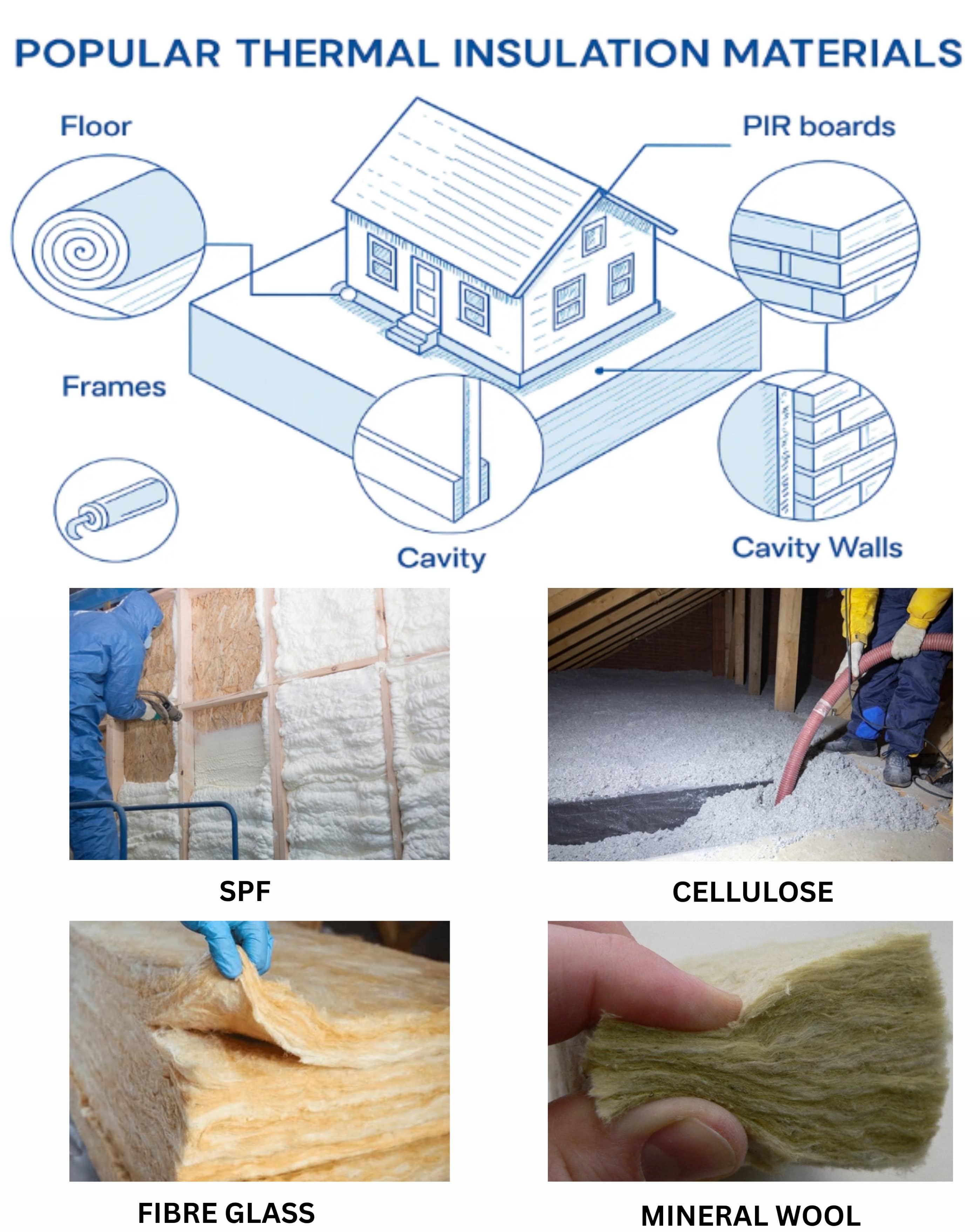
- Q21: Define Thermal Insulation.Ans: Thermal insulation is the reduction of heat transfer between objects or spaces.
- Q22: Name some Thermal Insulating materials.Ans: Some thermal insulating materials are as follows:
- ➔ Fiberglass
- ➔ Mineral wool
- ➔ Cellulose
- ➔ Foam boards
- Q23: Define Fibreglass.Ans: Fibreglass is an insulating material made from fine glass fibres.
- Q24: Define Mineral wool.Ans: Mineral wool is an insulating material made from melted rock or industrial waste spun into fibres.
- Q25: Define Cellulose.Ans: Cellulose is an insulating material made from recycled paper treated with chemicals.
- Q26: Define Polystyrene.Ans: Polystyrene is a lightweight plastic foam. It is used for insulation.
- Q27: State the factors affecting the selection of building insulation.Ans: The factors include:
- ➔ Cost
- ➔ Climate
- ➔ Durability
- ➔ Safety
- ➔ Moisture resistance
- ➔ Thermal performance
- Q28: Name some Sound Insulating materials.Ans: Some sound insulating materials are:
- ➔ Acoustic foam
- ➔ Mineral wool
- ➔ Cork
- ➔ Cellulose
- Q29: Define Waterproofing.Ans: Waterproofing is the process of making a surface or structure resistant to water.
- Q30: Name some Waterproofing materials.Ans: Some waterproofing materials are as follows:
- ➔ Bitumen
- ➔ Waterproof membranes
- ➔ Sealants
- ➔ Liquid waterproofing coatings