HYDRAULIC CIRCUITS AND ACCESSORIES
Other Chapters
INTRODUCTION TO HYDRAULICSHYDRO KINEMATICSFLOW THROUGH PIPESIMPACT OF JETWATER TURBINESPUMPSHYDRAULIC VALVES AND SEALSHYDRAULIC SIMPLE MACHINESHYDRAULIC ACTUATORSHYDRAULIC CIRCUITS AND ACCESSORIESPNEUMATIC SIMPLE MACHINES
- Q1: What is a Hydraulic Circuit?Ans: A hydraulic circuit is a system that uses hydraulic fluid under pressure to transmit power and perform work. It consists of interconnected components like pumps, valves, actuators, and pipes. The fluid flows in a closed loop to control movement and force in machines.
- Q2: List the components of a Hydraulic Circuit.Ans: The main components of a hydraulic circuit are:
- ➔ Reservoir
- ➔ Hydraulic Pump
- ➔ Actuator (Cylinder or Motor)
- ➔ Control Valves
- ➔ Pipes and Hoses
- ➔ Filters
- ➔ Accumulator
- Q3: What is a Reservoir?Ans: A reservoir is a storage tank used to hold hydraulic fluid in a hydraulic system. It stores the fluid when it is not in use and supplies it to the pump when needed.
- Q4: What is an Actuator?Ans: An actuator is a device that converts hydraulic energy into mechanical motion. It uses pressurized fluid to create linear or rotary movement. Hydraulic cylinders and hydraulic motors are common types of actuators.
- Q5: What is an Accumulator?Ans: An accumulator is a device that stores hydraulic fluid under pressure. It helps maintain pressure in the system and provides extra energy when required. It also reduces shocks and vibrations in the hydraulic circuit.
- Q6: What is a Filter for in a Hydraulic Circuit?Ans: A filter in a hydraulic circuit is used to remove dirt and contaminants from the hydraulic fluid. Clean fluid ensures smooth operation and prevents damage to system components. It increases the life and efficiency of the hydraulic system.
- Q7: Write some uses of Hydraulic Filters.Ans: The uses of hydraulic filters are as follows:
- ➔ Remove dust and metal particles from fluid
- ➔ Protect pumps and valves from damage
- ➔ Improve system efficiency
- ➔ Increase service life of components
- ➔ Reduce maintenance cost
- Q8: What is Hydraulic Coupling for in a Hydraulic Circuit?Ans: Hydraulic coupling is used to connect different parts of a hydraulic system. It allows easy connection and disconnection of pipes and hoses. It also helps prevent leakage of hydraulic fluid.
- Q9: Name the pumps used in a Hydraulic Circuit.Ans: The pumps used in a hydraulic circuit are:
- ➔ Gear Pump
- ➔ Vane Pump
- ➔ Piston Pump
- ➔ Screw Pump
- Q10: What are Pressure Release Valves?Ans: Pressure release valves are safety devices used in hydraulic systems. They release excess fluid when pressure exceeds a safe limit. This prevents damage to the system and ensures safe operation.
- Q11: What are Pressure Regulators?Ans: Pressure regulators are devices that control and maintain a constant pressure in a hydraulic system. They adjust the flow of fluid to keep the pressure at the desired level.
- Q12: What are Sequence Valves?Ans: Sequence valves are control valves used to operate hydraulic actuators in a specific order. They allow fluid to flow to the next operation only after a set pressure is reached.
- Q13: What are Counterbalance Valves?Ans: Counterbalance valves are used to control the movement of loads in hydraulic systems. They prevent a load from falling due to gravity. These valves maintain back pressure to ensure safe and smooth operation.
- Q14: What are Rotary Valves?Ans: Rotary valves are control valves that regulate fluid flow by rotating a part inside the valve body. The rotation opens or closes fluid passages. They are used to control direction and flow in hydraulic circuits.
- Q15: What are Sliding Spool Valves?Ans: Sliding spool valves are directional control valves used in hydraulic systems. They have a spool that slides inside the valve body to control fluid flow. By moving the spool, the direction of fluid flow can be changed.
- Q16: What are Poppet Valves?Ans: Poppet valves are valves that control the flow of fluid in a hydraulic system using a movable disk or plug. They open or close against a seat to allow or block fluid flow.
- Q17: What are Globe Valves?Ans: Globe valves are valves used to control fluid flow by moving a plug or disc against a seat. They provide precise flow control and can handle high pressure. These valves are commonly used when regulating flow or throttling is needed.
- Q18: What is a Restrictor in a Hydraulic Circuit?Ans: A restrictor is a device that limits the flow of hydraulic fluid in a circuit. By reducing flow, it controls the speed of actuators like cylinders or motors. It is important for smooth and controlled machine operation.
- Q19: What is a Flow Equalizer in a Hydraulic Circuit?Ans: A flow equalizer ensures that fluid is distributed evenly to multiple actuators in a hydraulic system. It balances the flow and maintains uniform speed of movement for all actuators. This prevents uneven operation or jerky movements.
- Q20: Name the types of Hydraulic CircuitAns: The main types of hydraulic circuits are:
- ➔ Open Center Circuit
- ➔ Closed Center Circuit
- Q21: Briefly explain Open Center Circuit.Ans: An open center circuit has a control valve with a center position that allows fluid to flow freely back to the reservoir. When no actuator is operating, fluid circulates without building pressure. This type of circuit is simple and economical, commonly used in low-pressure applications.
- Q22: Briefly explain Closed Center Circuit.Ans: A closed center circuit has a control valve that blocks flow in the center position. Fluid pressure is maintained in the system even when actuators are not moving. This allows multiple actuators to operate independently and provides better control.
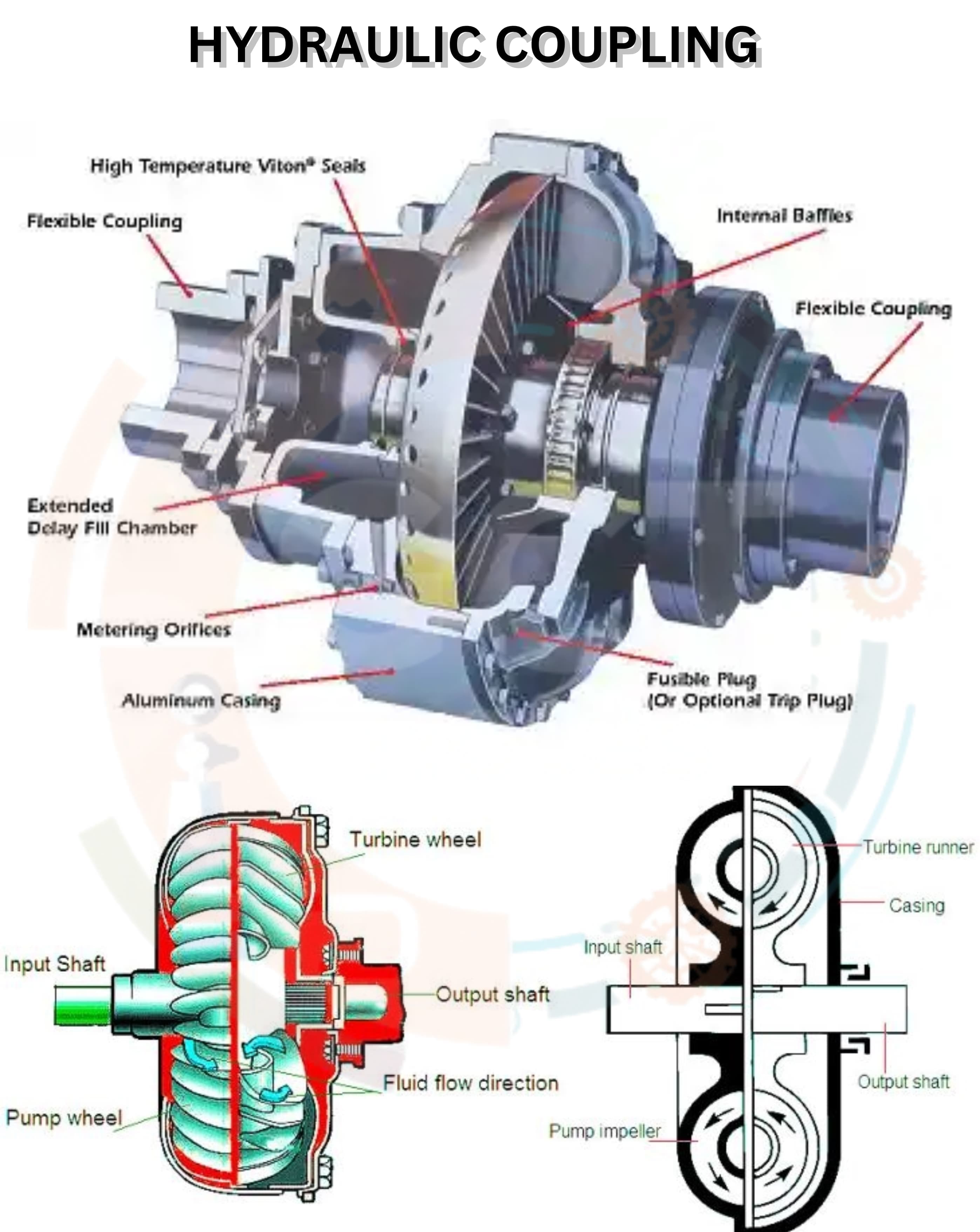
- Q23: What is Hydraulic Coupling?Ans: Hydraulic coupling is a device that transmits torque from one shaft to another using hydraulic fluid. It provides smooth power transmission and protects machinery from shock loads. It is widely used in industrial machines and vehicles.
- Q24: Briefly explain the construction of Hydraulic Coupling.Ans: A hydraulic coupling consists of two main parts: the driving member and the driven member. The driving member contains vanes or paddles that move hydraulic fluid. The driven member is connected to the output shaft and receives torque through fluid motion. The fluid inside the casing transmits power smoothly between the two members.
- Q25: Briefly explain the working of Hydraulic Coupling.Ans: When the driving member rotates, it moves the hydraulic fluid inside the casing. The moving fluid pushes the vanes of the driven member, causing it to rotate. This transfers torque from the input to the output shaft while absorbing shocks and vibrations.
- Q26: Name some advantages of Hydraulic Coupling.Ans: Advantages of hydraulic coupling include:
- ➔ Smooth power transmission
- ➔ Protects equipment from shocks
- ➔ Reduces vibration
- ➔ Allows slip during overload
- ➔ Low maintenance compared to mechanical couplings
- Q27: State some uses of Hydraulic Coupling.Ans: Uses of hydraulic coupling are:
- ➔ Driving pumps and compressors
- ➔ Conveyor systems
- ➔ Industrial machinery torque transmission
- ➔ Vehicles for smooth clutchless operation
- Q28: What are Hydraulic Pipes?Ans: Hydraulic pipes are rigid tubes used to carry hydraulic fluid between system components. They provide a leak-proof pathway and withstand high pressures. Pipes are often made of steel or other strong metals for durability.
- Q29: What are Proximity Switches?Ans: Proximity switches are sensors that detect the presence of an object without touching it. They are used in hydraulic systems to monitor positions of actuators or machine parts. Common types include inductive, capacitive, and magnetic proximity switches.
- Q30: What are some uses of Proximity Switches?Ans: Uses of proximity switches include:
- ➔ Detecting cylinder positions
- ➔ Machine safety interlocks
- ➔ Controlling hydraulic valves automatically
- ➔ Position feedback for automation
- Q31: Write some uses of Hydraulic Tubes.Ans: Uses of hydraulic tubes include:
- ➔ Carry hydraulic fluid under pressure
- ➔ Connect system components securely
- ➔ Reduce leakage and pressure loss
- ➔ Withstand high operating pressures safely
- Q32: What are Hydraulic Tubes?Ans: Hydraulic tubes are rigid cylindrical pipes made of metal used to transport hydraulic fluid in a system. They are designed to handle high pressure and provide structural support to the hydraulic circuit.
- Q33: What are Rubber Hoses?Ans: Rubber hoses are flexible tubes made of reinforced rubber used in hydraulic systems. They connect moving parts or components where flexibility is required. Hoses are able to bend without breaking and handle moderate pressures.
- Q34: Write some uses of Rubber Hoses.Ans: Uses of rubber hoses include:
- ➔ Connect moving components
- ➔ Provide flexibility in hydraulic circuits
- ➔ Absorb vibrations and shocks
- ➔ Carry hydraulic fluid safely under moderate pressure
- Q35: Name some Pipe Fitting in a Hydraulic System.Ans: Some common pipe fittings in a hydraulic system are:
- ➔ Elbows
- ➔ Tees
- ➔ Couplings
- ➔ Unions
- ➔ Adapters
- Q36: What are Face Seals?Ans: Face seals are sealing devices used between two flat surfaces in a hydraulic system. They prevent leakage of hydraulic fluid at joints or connections. They are often made of rubber, PTFE, or metal.
- Q37: What are Beam Seals?Ans: Beam seals are specialized hydraulic seals used to prevent fluid leakage along shafts or rods. They provide reliable sealing in reciprocating or rotating motion applications. Beam seals are often used in cylinders and hydraulic motors.
- Q38: What are Swaged Seals?Ans: Swaged seals are hydraulic seals that are mechanically crimped or swaged to fit into grooves. They provide tight sealing and prevent leakage under high pressure. They are commonly used in high-pressure hydraulic cylinders.
- Q39: What is the purpose of Fittings?Ans: The purpose of fittings in a hydraulic system is to connect pipes, tubes, and hoses. They provide leak-proof joints and allow proper direction of fluid flow. Fittings ensure safety, durability, and ease of maintenance.
- Q40: What is Hydraulic Lift Circuit?Ans: A hydraulic lift circuit is a system designed to lift or lower heavy loads using hydraulic power. It uses a pump to supply pressurized fluid to hydraulic cylinders that raise or lower platforms or equipment. These circuits are commonly used in elevators, lifts, and industrial machines.
- Q41: Name the Cylinders used in Hydraulic Lift Circuit.Ans: The cylinders used in a hydraulic lift circuit include:
- ➔ Single-acting cylinders
- ➔ Double-acting cylinders
- ➔ Telescopic cylinders
- Q42: What is a Power Steering Circuit?Ans: A power steering circuit is a hydraulic system used in vehicles to assist the driver in steering. It reduces the effort needed to turn the steering wheel. The system uses a hydraulic pump, fluid, and actuators to provide smooth steering control.
- Q43: What is a Road Truck Circuit?Ans: A road truck circuit is a hydraulic system used in trucks for brakes, lifting, or other functions. It uses pressurized hydraulic fluid to operate heavy-duty components like brakes, lifts, and stabilizers. This ensures safe, efficient, and controlled operation of trucks on the road.