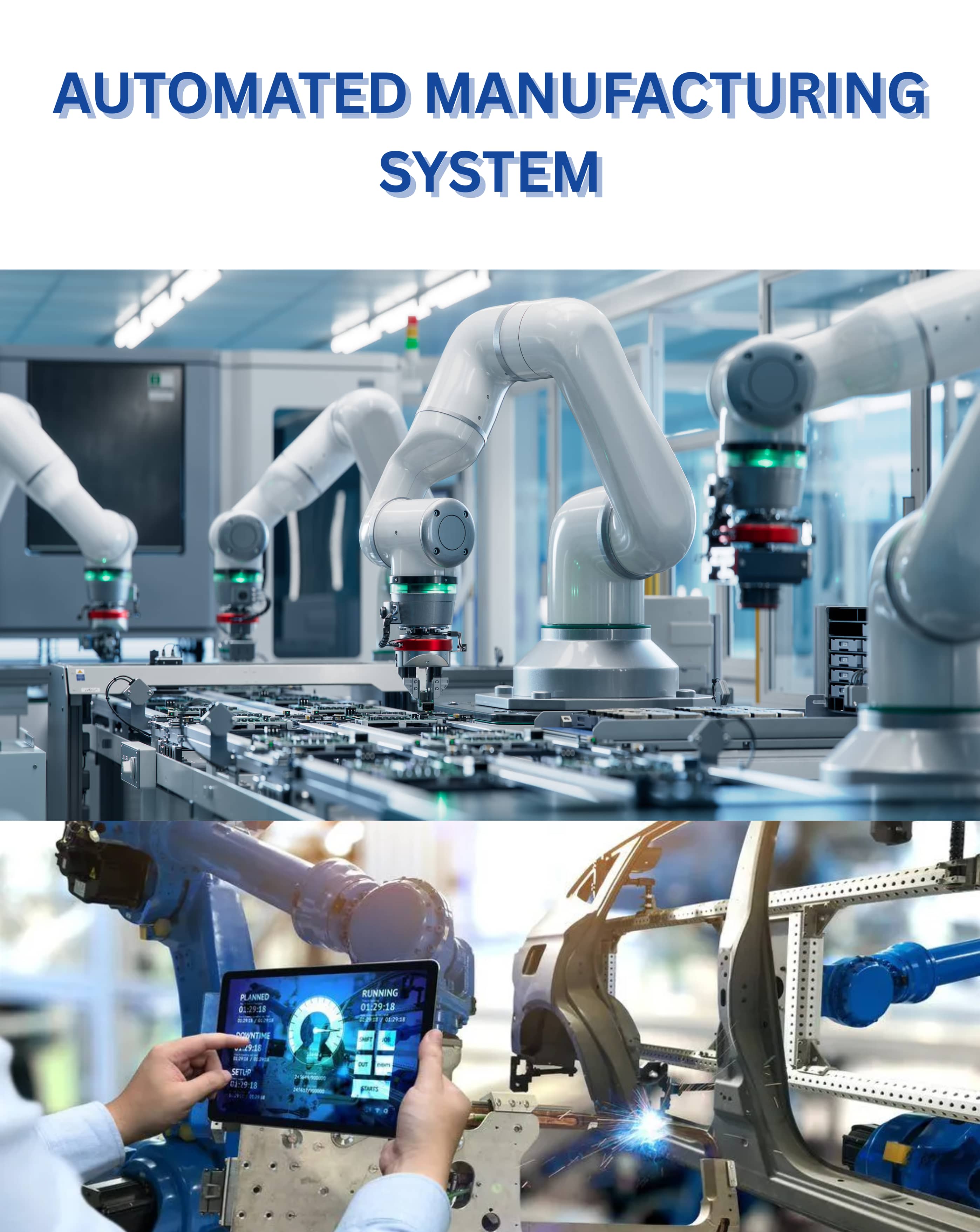
AUTOMATED MANUFACTURING SYSTEM
Other Chapters
INTRODUCTION TO NUMERICAL CONTROLNC MACHINE TOOL CHARACTERISTICSTYPES OF MACHINE TOOLSCONFIGURATION AND CONTROL METHOD OF NC MACHINE TOOLSACCESSORIES TOOLS AND CUTTING FLUIDTURNING CENTER PROGRAMMACHINING CENTER PROGRAMAUTOMATED MANUFACTURING SYSTEMCONDITION FOR CUTTINGCUTTING TOOLS AND CHIPSSELECTING A TYPE OF TOOL MATERIAL
- Q1: What is the DNC System?Ans: DNC (Direct Numerical Control) System is a computer-based system that directly controls multiple CNC machines from a central computer.
- Q2: State the components of the DNC System.Ans: The components of a DNC System include:
- ➔ Central computer
- ➔ CNC machines
- ➔ Communication network
- ➔ Software for data transfer and control
- Q3: Define Bulk Memory.Ans: Bulk memory is a high-capacity storage system used to store programs and data for CNC machines.
- Q4: Define Telecommunication Lines.Ans: Telecommunication lines are communication channels used to transfer data between the central computer and CNC machines.
- Q5: Define Satellite Computers.Ans: Satellite computers are smaller computers connected to the main DNC system to assist in controlling CNC machines locally.
- Q6: Name the types of DNC System.Ans: The types of DNC System are as follows:
- ➔ Centralized DNC
- ➔ Distributed DNC
- Q7: Name four advantages of the DNC System.Ans: Some of the advantages of DNC System are as follows:
- ➔ Reduces manual programming errors
- ➔ Increases machine utilization
- ➔ Simplifies program management
- ➔ Enables faster production
- Q8: Name four disadvantages of the DNC System.Ans: Some of the disadvantages of DNC System are as follows:
- ➔ High initial cost
- ➔ Requires skilled operators
- ➔ System failure affects multiple machines
- ➔ Maintenance can be complex
- Q9: What is a Flexible Manufacturing Cell?Ans: A Flexible Manufacturing Cell (FMC) is a group of machines connected to a central computer to manufacture parts efficiently and flexibly.
- Q10: What is Machine Flexibility?Ans: Machine flexibility is the ability of a machine to perform different operations on different parts without major changes.
- Q11: What is Routing Flexibility?Ans: Routing flexibility is the ability to produce a part using different paths or sequences through the manufacturing system.
- Q12: What is FMS/FMC?Ans: FMS (Flexible Manufacturing System) or FMC is an automated manufacturing system that can handle various parts with minimal human intervention.
- Q13: Name some components of FMS/FMC.Ans: Some of the components of FMS/FMC are as follows:
- ➔ CNC machines
- ➔ Material handling system
- ➔ Central computer
- ➔ Storage system
- ➔ Communication network
- Q14: State some applications of FMS/FMC.Ans: The applications or uses of FMS/FMC are as follows:
- ➔ Automotive parts manufacturing
- ➔ Electronics assembly
- ➔ Aerospace components production
- ➔ Batch production of machine parts
- Q15: Name four advantages of FMS/FMC.Ans: Some of the advantages of FMS/FMC are as follows:
- ➔ Reduces production time
- ➔ Improves flexibility
- ➔ Reduces labor costs
- ➔ Improves product quality
- Q16: Name four disadvantages of FMS/FMC.Ans: Some of the disadvantages of FMS/FMC are as follows:
- ➔ High initial investment
- ➔ Complex maintenance
- ➔ Requires skilled operators
- ➔ System downtime affects production
- Q17: Define Work Stations.Ans: Work stations are specific locations in a manufacturing system where tasks or operations are performed.
- Q18: Define Network.Ans: A network is a system of interconnected computers or devices that share data and resources.
- Q19: Define LAN.Ans: LAN (Local Area Network) is a network connecting computers within a small area like a factory or office.
- Q20: Define CIM.Ans: CIM (Computer Integrated Manufacturing) is a system where computers control the entire production process from design to manufacturing.
- Q21: Write four advantages of CIM.Ans: Some of the advantages of CIM are as follows:
- ➔ Reduces production time
- ➔ Improves product quality
- ➔ Reduces manual labor
- ➔ Better production planning
- Q22: Define Flexible Automation.Ans: Flexible automation is a manufacturing system that can handle different products without stopping the system for reconfiguration.
- Q23: Write four advantages of Flexible Automation.Ans: Some of the advantages of Flexible Automation are as follows:
- ➔ Handles multiple products efficiently
- ➔ Reduces setup time
- ➔ Increases production flexibility
- ➔ Improves resource utilization
- Q24: Define Robot.Ans: A robot is a programmable machine capable of performing tasks automatically.
- Q25: State the classification of Robots.Ans: The classification of Robots are as follows:
- ➔ Articulated robots
- ➔ SCARA robots
- ➔ Cartesian robots
- ➔ Cylindrical robots
- ➔ Delta robots
- Q26: State the application of Robots.Ans: The applications of Robots are as follows:
- ➔ Welding
- ➔ Material handling
- ➔ Painting
- ➔ Assembly
- ➔ Packaging
- Q27: State four advantages of Robots.Ans: Some of the advantages of Robots are as follows:
- ➔ Reduces labor cost
- ➔ Works in hazardous environments
- ➔ Increases production speed
- ➔ Ensures consistent quality
- Q28: State four disadvantages of Robots.Ans: Some of the disadvantages of Robots are as follows:
- ➔ High initial cost
- ➔ Requires skilled operators
- ➔ Expensive maintenance
- ➔ Lack of flexibility for new tasks
- Q29: Define FA (Factory Automation).Ans: Factory Automation is the use of control systems, robots, and computers to operate manufacturing processes automatically.
- Q30: Define MUDA.Ans: MUDA is a Japanese term for waste; in manufacturing, it refers to any activity that does not add value.
- Q31: Define FTL.Ans: FTL (Flexible Transfer Line) is a production line designed to manufacture different products with minimal reconfiguration.