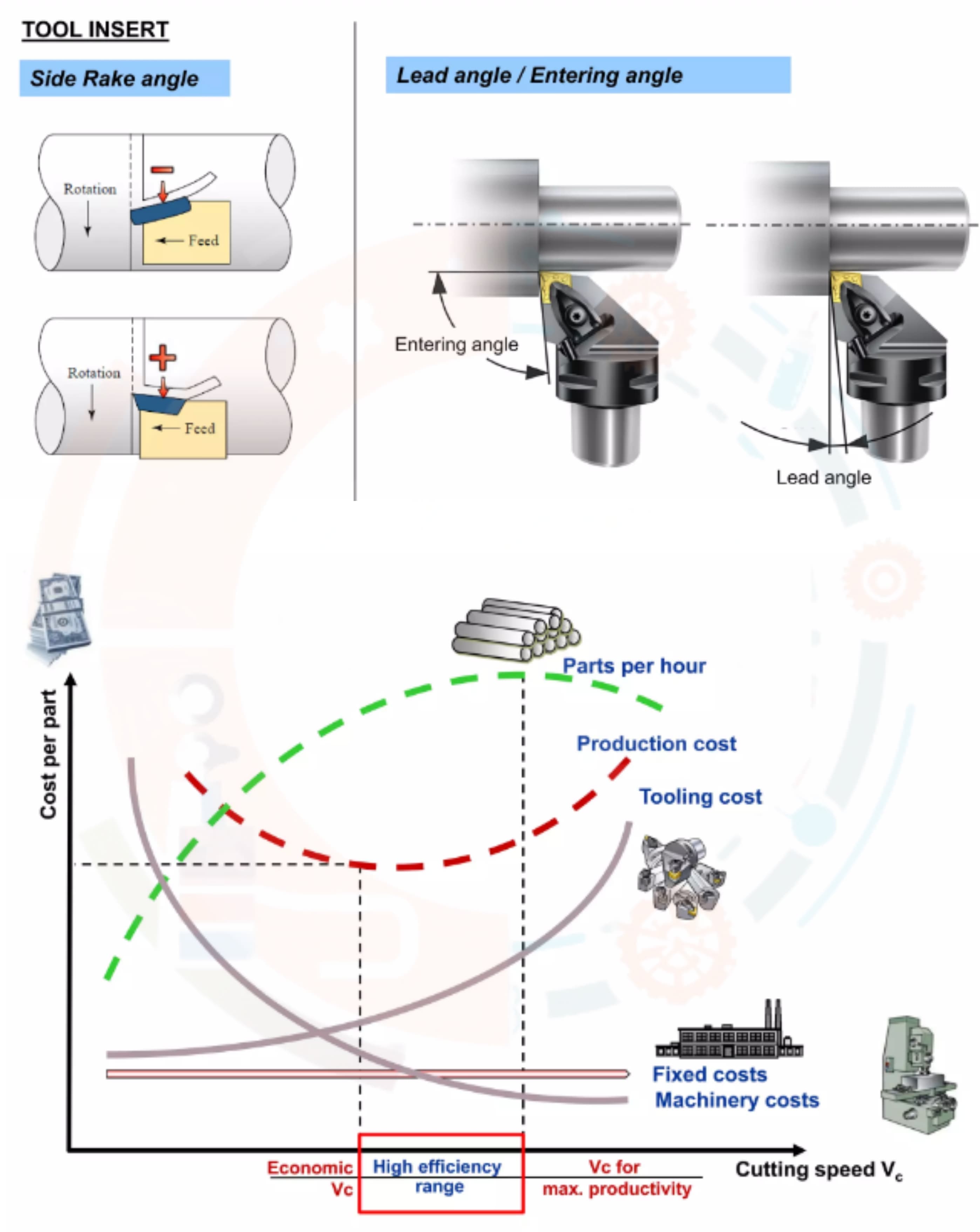
CONDITION FOR CUTTING
Other Chapters
INTRODUCTION TO NUMERICAL CONTROLNC MACHINE TOOL CHARACTERISTICSTYPES OF MACHINE TOOLSCONFIGURATION AND CONTROL METHOD OF NC MACHINE TOOLSACCESSORIES TOOLS AND CUTTING FLUIDTURNING CENTER PROGRAMMACHINING CENTER PROGRAMAUTOMATED MANUFACTURING SYSTEMCONDITION FOR CUTTINGCUTTING TOOLS AND CHIPSSELECTING A TYPE OF TOOL MATERIAL
- Q1: State the classification of Machining methods.Ans: Machining methods are classified as follows:
- ➔ Deformation method
- ➔ Deposition method
- ➔ Removal method
- Q2: Define the Deformation method.Ans: Deformation method involves shaping materials by applying force without removing any material, e.g., forging and rolling.
- Q3: Define the Deposition method.Ans: Deposition method involves adding material to create the desired shape, e.g., welding or 3D printing.
- Q4: Define the Removal method.Ans: Removal method involves cutting or removing excess material to achieve the desired shape, e.g., turning, milling, or drilling.
- Q5: Define Conventional Machining Method.Ans: Conventional machining uses mechanical means like cutting tools to remove material from a workpiece.
- Q6: Define Non-Conventional Machining Method.Ans: Non-Conventional machining uses advanced methods like electrical, chemical, or thermal processes to remove material.
- Q7: Define Ultrasonic Machining.Ans: Ultrasonic Machining removes material using high-frequency vibrations and abrasive slurry without heat.
- Q8: Define Abrasive Jet Machining.Ans: Abrasive Jet Machining removes material by a high-velocity stream of abrasive particles directed at the workpiece.
- Q9: Define Electrical Metal Removal process.Ans: Electrical Metal Removal (EMR) uses electrical energy, such as in EDM (Electrical Discharge Machining), to remove material.
- Q10: Define Mechanical Metal Removal process.Ans: Mechanical Metal Removal uses mechanical forces like cutting, shearing, or grinding to remove material.
- Q11: Define Thermal Metal Removal process.Ans: Thermal Metal Removal uses heat energy to melt or vaporize material, e.g., laser cutting or plasma machining.
- Q12: Define Chemical Metal Removal process.Ans: Chemical Metal Removal removes material through chemical reactions, e.g., chemical milling or etching.
- Q13: Define Cutting Feed.Ans: Cutting feed is the distance a cutting tool moves for each revolution of the workpiece.
- Q14: Define Spindle Feed.Ans: Spindle feed is the speed at which the workpiece rotates, usually measured in revolutions per minute (RPM).
- Q15: Define Finishing Allowance.Ans: Finishing allowance is the extra material left on a workpiece to ensure proper finishing during final machining.
- Q16: Name the factors affecting Finishing Allowance.Ans: The factors affecting Finishing Allowance are as follows:
- ➔ Type of material
- ➔ Accuracy required
- ➔ Machining method
- ➔ Surface finish desired
- Q17: Write the formula to convert feed rate per revolution to feed rate per mm.Ans: The formula is:
F = f × N
where:- F = Feed per minute
- f = Feed per revolution
- N = RPM (Revolutions per minute)
- Q18: Write the formula to calculate Cutting Power.Ans: The formula is:

- Q19: Write the formula to calculate Cutting Speed.Ans: The formula is: