Q1: Define Email.
Ans: Email is an electronic message sent or received over the internet.
Q2: Write 4 advantages of email.
Ans:
The advantages are:- ➔ Fast communication
- ➔ Low cost
- ➔ Easy to use
- ➔ Can send files and documents
Q3: Name 4 email service providers.
Ans:
The email service providers are:- ➔ Gmail
- ➔ Outlook
- ➔ Yahoo Mail
- ➔ iCloud Mail
Q4: Explain the difference between being Online and Offline.
Ans:
The difference is:- ➔ Online means connected to the internet
- ➔ Offline means not connected to the internet
Q5: What is an Edge browser?
Ans: Edge is a web browser developed by Microsoft used to access websites.
Q6: What is “Sign In” in terms of email?
Ans: Sign In means logging into an email account using a username and password.
Q7: What is “Sign Up” in terms of email?
Ans: Sign Up means creating a new email account.
Q8: What is “Sign Out” in terms of email?
Ans: Sign Out means logging out of an email account.
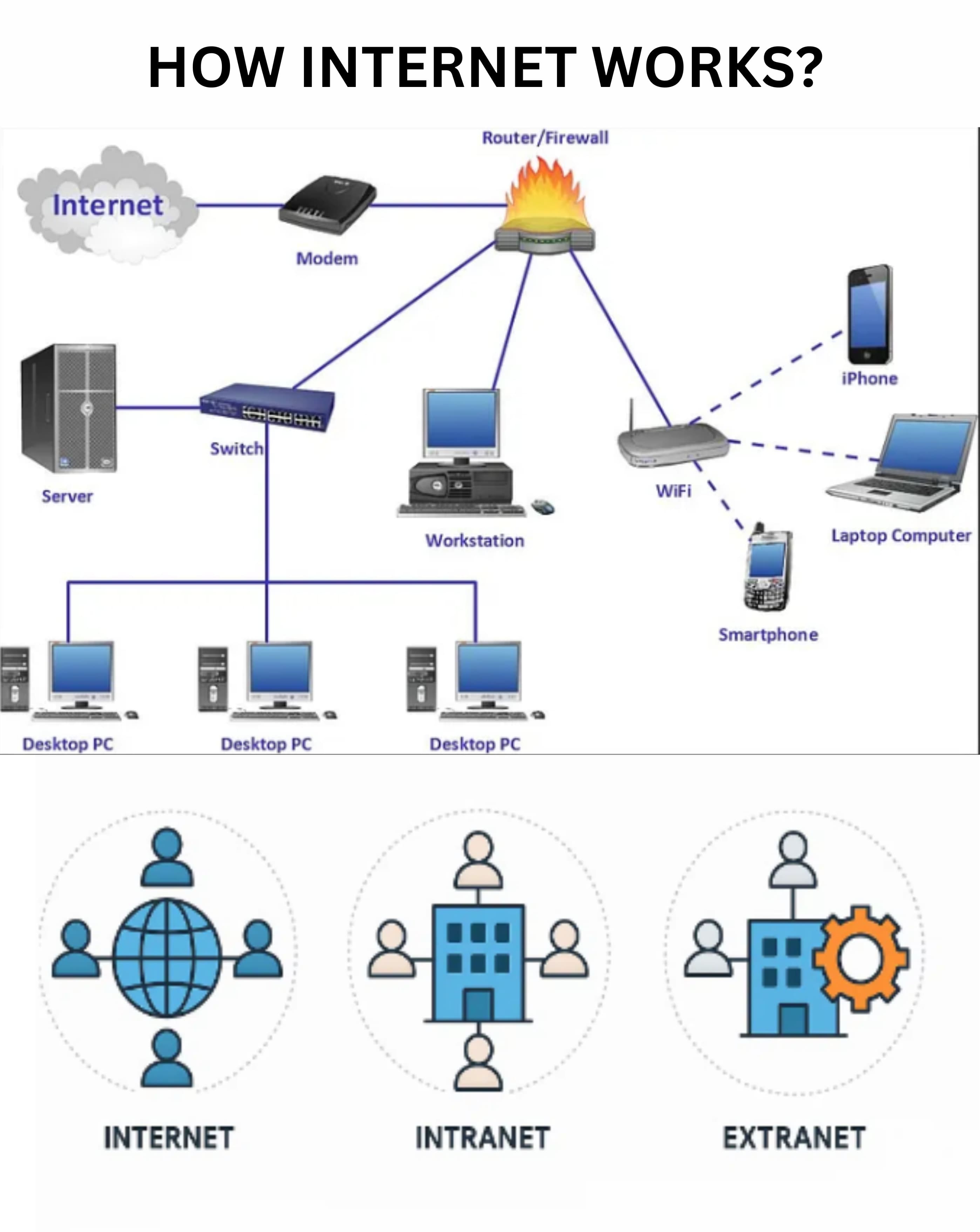
Q9: Define the Internet.
Ans: The Internet is a global network connecting millions of computers for sharing information.
Q10: Define Intranet.
Ans: An intranet is a private network accessible only to an organization’s members.
Q11: Define URL.
Ans: URL (Uniform Resource Locator) is the address used to access websites on the internet.
Q12: Name 4 basic components of a URL.
Ans:
The basic components are:- ➔ Protocol (http or https)
- ➔ Domain name
- ➔ Path
- ➔ File name
Q13: Define the Extranet.
Ans: An extranet is a private network that allows limited access to outsiders like business partners or customers.
Q14: Define Modem.
Ans: A modem is a device that converts digital data into signals for transmission over telephone or cable lines.
Q15: Define Router.
Ans: A router is a device that connects multiple networks and directs data from one network to another.
Q16: Which medium is used to connect computers with each other?
Ans: Cables, optical fiber, and wireless signals are used to connect computers with each other.
Q17: Define Internet Server.
Ans: An internet server is a computer that stores websites and provides data to users on the internet.
Q18: Which software is used to transfer data on the internet from one computer to another?
Ans: FTP (File Transfer Protocol) software is used to transfer data from one computer to another on the internet.
Q19: Define Search Engine.
Ans: A search engine is a tool that helps users find information on the internet.
Q20: How does a search engine work?
Ans: A search engine collects information from websites, stores it, and shows the most relevant results when a user searches.
Q21: Name 4 Search engines.
Ans:
Some of the search engines are:- ➔ Google
- ➔ Bing
- ➔ Yahoo
- ➔ Baidu
- ➔ DuckDuckGo
Q22: Define Web Browser.
Ans: A web browser is software used to access and view websites.
Q23: Name 4 parts of Web Browser.
Ans:
The parts are:- ➔ Address bar
- ➔ Navigation buttons
- ➔ Bookmarks bar
- ➔ Status bar
Q24: Name 4 Web Browsers.
Ans:
Some of the Web browsers are:- ➔ Google Chrome
- ➔ Mozilla Firefox
- ➔ Microsoft Edge
- ➔ Safari
Q25: How does the internet work?
Ans: The internet works by connecting computers through a network of servers using protocols to exchange data.
Q26: Why are search engines used?
Ans: Search engines are used to find relevant information quickly on the internet.
Q27: What does “www” stand for?
Ans: "www" stands for World Wide Web.
Q28: What is www used for?
Ans: WWW is used to access and view websites on the internet.
Q29: Differentiate between “http” and “https”.
Ans: HTTP is unsecured, while HTTPS is secure and encrypts data for safer communication.
Q30: Write 4 advantages of the internet.
Ans:
The advantages are:- ➔ Easy communication
- ➔ Access to information
- ➔ Online education
- ➔ Online shopping
Q31: Write 4 disadvantages of the internet.
Ans:
The disadvantages are:- ➔ Privacy risks
- ➔ Cyberbullying
- ➔ Misinformation
- ➔ Addiction
Q32: Name 4 advanced features of the internet.
Ans:
The advanced features are:- ➔ Video conferencing
- ➔ Cloud computing
- ➔ Online banking
- ➔ Voice over Internet Protocol (VoIP)
Q33: Define Domain in a website.
Ans: A domain is the unique name of a website that users type in the browser, such as google.com.
Q34: Define Web Hosting.
Ans: Web hosting is a service that provides space on a server to store a website and make it available on the internet.
Q35: Name 4 web hosters.
Ans:
The web hosters are:- ➔ GoDaddy
- ➔ Bluehost
- ➔ HostGator
- ➔ AWS
Q36: Define Inbox in terms of email.
Ans: Inbox is the folder where all received emails are stored.
Q37: Define Outbox in terms of email.
Ans: Outbox is the folder where emails waiting to be sent are stored.
Q38: What is the difference between CC and BCC in email?
Ans:
The difference is:- ➔ CC shows email addresses to all recipients
- ➔ BCC hides email addresses from other recipients
Q39: What is FTP?
Ans: FTP stands for File Transfer Protocol and is used to transfer files over the internet.
Q40: Define Home page.
Ans: The home page is the first page of a website that opens when the site is accessed.
Q41: Define ISP.
Ans: ISP stands for Internet Service Provider, which provides internet access to users.
Q42: What is the function of ISP?
Ans: ISP connects users to the internet and provides related services.
Q43: Define Website.
Ans: A website is a collection of related web pages under a single domain name.
Q44: What do you know about internet surfing?
Ans: Internet surfing means browsing or exploring different websites on the internet.
Q45: Define Web Crawler.
Ans: A web crawler is a program that scans websites and indexes content for search engines.
Q46: Define Web Page.
Ans: A web page is a single document on the internet, usually written in HTML.
Q47: How are web pages saved?
Ans: Web pages are saved as HTML files on web servers.
Q48: Write 4 advanced features of the search engines.
Ans:
The features are:- ➔ Boolean search
- ➔ Image search
- ➔ Voice search
- ➔ Filters for date or region
Q49: How do we send a file through email?
Ans: Attach the file to the email using the attachment option before sending.
Q50: Define LAN.
Ans: LAN (Local Area Network) is a network connecting computers within a limited area like a building.
Q51: Define WAN.
Ans: WAN (Wide Area Network) is a network that covers a large geographical area.
Q52: Define WLAN.
Ans: WLAN (Wireless LAN) is a LAN that uses wireless technology.
Q53: Define IP.
Ans: IP (Internet Protocol) is an address that identifies devices on a network.
Q54: Define Web address.
Ans: A web address is the URL used to access a specific web page.
Q55: Define FAQ.
Ans: FAQ (Frequently Asked Questions) is a list of common questions and answers about a topic.
Q56: Define HTML.
Ans: HTML (HyperText Markup Language) is the code used to create web pages.
Q57: Define Post.
Ans: A post is a message or content published on a website or social media.
Q58: Define Newbie.
Ans: A newbie is a beginner or someone new to a computer or internet activity.
Q59: Write steps to create an Email Account.
Ans:
To create an email account:- ➔ Visit an email provider website
- ➔ Click Sign Up
- ➔ Fill in personal details
- ➔ Choose a username and password
- ➔ Follow the verification steps
Q60: Define Social Networking.
Ans: Social networking is connecting and interacting with people online through social media platforms.
Q61: Name 4 Social Networks.
Ans:
These are:- ➔ Facebook
- ➔ Twitter
- ➔ Instagram
- ➔ LinkedIn
Q62: What is meant by Cloud Storage?
Ans: Cloud storage is a service that stores data on the internet instead of a local computer.
Q63: What is Cache?
Ans: Cache is temporary storage that helps websites load faster.
Q64: Define Local Storage.
Ans: Local storage is data saved directly on a computer or device.
Q65: State the difference between Uploading and Downloading.
Ans:
The difference is:- ➔ Uploading sends data from a device to the internet
- ➔ Downloading receives data from the internet to a device
Q66: What is a host computer?
Ans: A host computer is a main computer that provides services or data to other computers.
Q67: Define Dark Web.
Ans: The dark web is a part of the internet that cannot be accessed using normal browsers.
Q68: Define Google.
Ans: Google is a search engine used to find information, images, videos, and websites on the internet.
Q69: Define SERP.
Ans: SERP stands for Search Engine Results Page and shows the list of results after a search.
Q70: Define Indexing.
Ans: Indexing is the process of storing website information in a search engine database.
Q71: Define Ranking.
Ans: Ranking is the process of arranging search results based on relevance and importance.
Q72: What does VoIP stand for?
Ans: VoIP stands for Voice over Internet Protocol.
Q73: What does IDM stand for?
Ans: IDM stands for Internet Download Manager.
Q74: What does ARPANET stand for?
Ans: ARPANET stands for Advanced Research Projects Agency Network.
Q75: Define Address bar.
Ans: The address bar is the space in a web browser where a website address is typed.
Q76: Define Dropbox.
Ans: Dropbox is a cloud storage service used to store and share files online.