Q1: State the classification of Machining methods.
Ans: Machining methods are classified as follows:
- ➔ Deformation method
- ➔ Deposition method
- ➔ Removal method
Q2: Define the Deformation method.
Ans: Deformation method involves shaping materials by applying force without removing any material, e.g., forging and rolling.
Q3: Define the Deposition method.
Ans: Deposition method involves adding material to create the desired shape, e.g., welding or 3D printing.
Q4: Define the Removal method.
Ans: Removal method involves cutting or removing excess material to achieve the desired shape, e.g., turning, milling, or drilling.
Q5: Define Conventional Machining Method.
Ans: Conventional machining uses mechanical means like cutting tools to remove material from a workpiece.
Q6: Define Non-Conventional Machining Method.
Ans: Non-Conventional machining uses advanced methods like electrical, chemical, or thermal processes to remove material.
Q7: Define Ultrasonic Machining.
Ans: Ultrasonic Machining removes material using high-frequency vibrations and abrasive slurry without heat.
Q8: Define Abrasive Jet Machining.
Ans: Abrasive Jet Machining removes material by a high-velocity stream of abrasive particles directed at the workpiece.
Q9: Define Electrical Metal Removal process.
Ans: Electrical Metal Removal (EMR) uses electrical energy, such as in EDM (Electrical Discharge Machining), to remove material.
Q10: Define Mechanical Metal Removal process.
Ans: Mechanical Metal Removal uses mechanical forces like cutting, shearing, or grinding to remove material.
Q11: Define Thermal Metal Removal process.
Ans: Thermal Metal Removal uses heat energy to melt or vaporize material, e.g., laser cutting or plasma machining.
Q12: Define Chemical Metal Removal process.
Ans: Chemical Metal Removal removes material through chemical reactions, e.g., chemical milling or etching.
Q13: Define Cutting Feed.
Ans: Cutting feed is the distance a cutting tool moves for each revolution of the workpiece.
Q14: Define Spindle Feed.
Ans: Spindle feed is the speed at which the workpiece rotates, usually measured in revolutions per minute (RPM).
Q15: Define Finishing Allowance.
Ans: Finishing allowance is the extra material left on a workpiece to ensure proper finishing during final machining.
Q16: Name the factors affecting Finishing Allowance.
Ans: The factors affecting Finishing Allowance are as follows:
- ➔ Type of material
- ➔ Accuracy required
- ➔ Machining method
- ➔ Surface finish desired
Q17: Write the formula to convert feed rate per revolution to feed rate per mm.
Ans: The formula is:
F = f × N
where:
- F = Feed per minute
- f = Feed per revolution
- N = RPM (Revolutions per minute)
Q18: Write the formula to calculate Cutting Power.
Ans: The formula is:

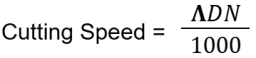
Q19: Write the formula to calculate Cutting Speed.
Ans: The formula is: