
Modern Architectural Design Trends in Pakistan 2026
Explore modern architectural design trends in Pakistan, from minimalist homes to smart building technologies and sustainable design principles.
By Ms. Jaweria Mushtaq5 min read
2.5% GDP
Construction Sector Share
Pakistan 2025 estimate
11 Trends
Covered in This Guide
Residential & commercial
Net Zero
Global Design Target
By 2050 for new builds
BIM & AI
Tools Reshaping Design
Revit, AutoCAD, Lumion
Trends covered in this article
Minimalist Design
Clean lines, neutral tones, and functional layouts with no excess ornamentation.
Sustainable Architecture
Solar panels, rainwater harvesting, passive cooling, and green roofs.
Smart Integration
Automated lighting, climate control, security, and energy monitoring.
Mixed Material Facades
Glass, wood cladding, stone, and metal screens combined for depth and shade.
Open Plan Living
Merged kitchen, dining, and living zones for airflow and flexible use.
Landscape Integration
Courtyards, vertical gardens, and terraces that improve microclimate.
Introduction — The Evolution of Modern Architecture in Pakistan 2025
Modern architectural design in Pakistan has entered a genuinely transformative era in 2025. As cities expand and lifestyles evolve, architects are redefining how residential, commercial, and public spaces are conceived, built, and experienced. Today's architecture in Pakistan blends modern aesthetics, climate-responsive sustainability, smart technology, and cultural identity in ways that were unimaginable a decade ago.
From minimalist houses in Lahore's DHA to smart apartments in Karachi's Clifton and eco-friendly developments along Islamabad's green corridor, modern architecture trends in Pakistan reflect global movements while adapting thoughtfully to local climate, traditional materials, and the social fabric of Pakistani communities. This comprehensive guide explores the most influential architectural design trends shaping Pakistan in 2025 and beyond.
- Minimalist architecture — the dominant aesthetic in new residential and commercial developments
- Sustainable design — driven by rising energy costs and Pakistan's extreme climate variability
- Smart home integration — technology embedded at the design stage, not retrofitted
- Mixed material facades — combining glass, stone, wood, and metal for identity and climate performance
- Biophilic and landscape architecture — courtyards, vertical gardens, and green roofs
Minimalist Architecture in Pakistan — Simplicity with Purpose
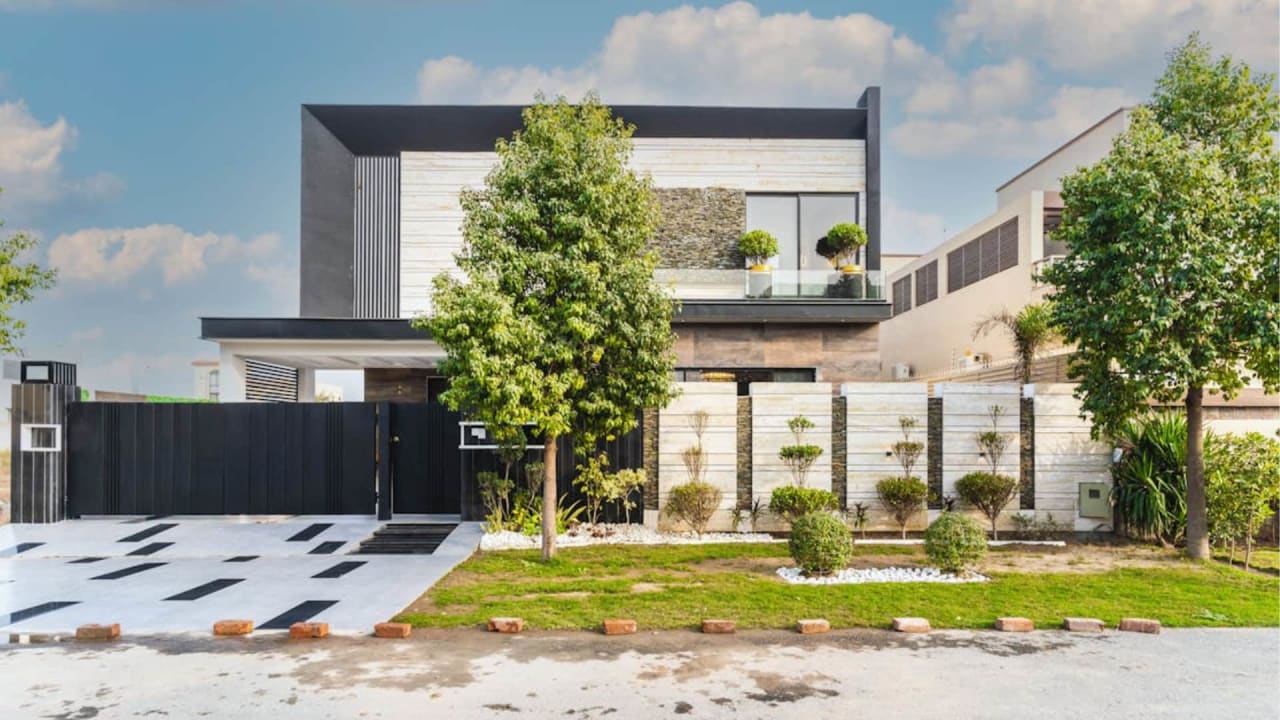
Minimalist architecture is the most dominant modern design trend in Pakistan's residential sector in 2025. Rooted in the principle that form follows function, minimalism removes all decorative excess and instead emphasises proportion, natural light, and the inherent beauty of carefully chosen materials. In Pakistan's urban context — where plot sizes are shrinking and construction costs are rising — minimalist design also delivers practical cost and spatial efficiency benefits.
Architects working on high-end residential projects in DHA Lahore, Bahria Town Islamabad, and Karachi's Clifton increasingly specify minimalist design language as the default. The influence has also filtered down to mid-market housing, where builders adopt clean elevations and simple rooflines to keep construction costs manageable while still achieving a contemporary look.
Key features of minimalist architecture in Pakistan
- Neutral colour palettes — white, grey, warm beige
- Geometric forms and uncluttered elevations
- Large windows maximising daylight and cross-ventilation
- Seamless indoor–outdoor spatial connection
- Flush joinery, concealed fixtures, and integrated storage
- Emphasis on material quality over surface decoration
Design tip: True minimalism is harder to execute than it looks — every detail, joint, and material choice is exposed to scrutiny. Budget for higher-quality fixtures and finishes than you would in a traditionally decorated interior, because there is nowhere to hide imperfection.
Sustainable Architecture in Pakistan — Designing for Climate & Future
Sustainability is no longer optional in Pakistan's architectural landscape. With energy costs rising sharply, frequent load shedding, water scarcity in major cities, and increasingly extreme summer temperatures, architects and clients alike are prioritising eco-friendly, climate-responsive building design as a practical necessity rather than an ideological preference.
Pakistan's geographic diversity — from the scorching plains of Punjab to the humid coast of Karachi and the cold winters of Islamabad — means that sustainable architecture must be deeply climate-specific. A passive cooling strategy that works in Multan will differ significantly from what works in Quetta. This is driving a welcome return to vernacular-informed design logic in modern construction.
Sustainable architecture strategies used in Pakistan 2025
- Solar photovoltaic panels and on-grid/off-grid hybrid systems
- Rainwater harvesting tanks and greywater recycling systems
- Passive cooling — deep eaves, shaded courtyards, thermal mass walls
- Natural cross-ventilation oriented to prevailing wind direction
- Green roofs and living walls for insulation and urban heat reduction
- High-performance double-glazed or low-E glass to reduce solar heat gain
Note: Pakistan's National Energy Efficiency & Conservation Authority (NEECA) has published building energy codes that are increasingly being referenced by provincial planning authorities. Architects designing commercial buildings above a certain floor area are now expected to demonstrate energy compliance at the building permit stage in many cities.
Smart Home Integration in Pakistan — Technology Meets Architecture
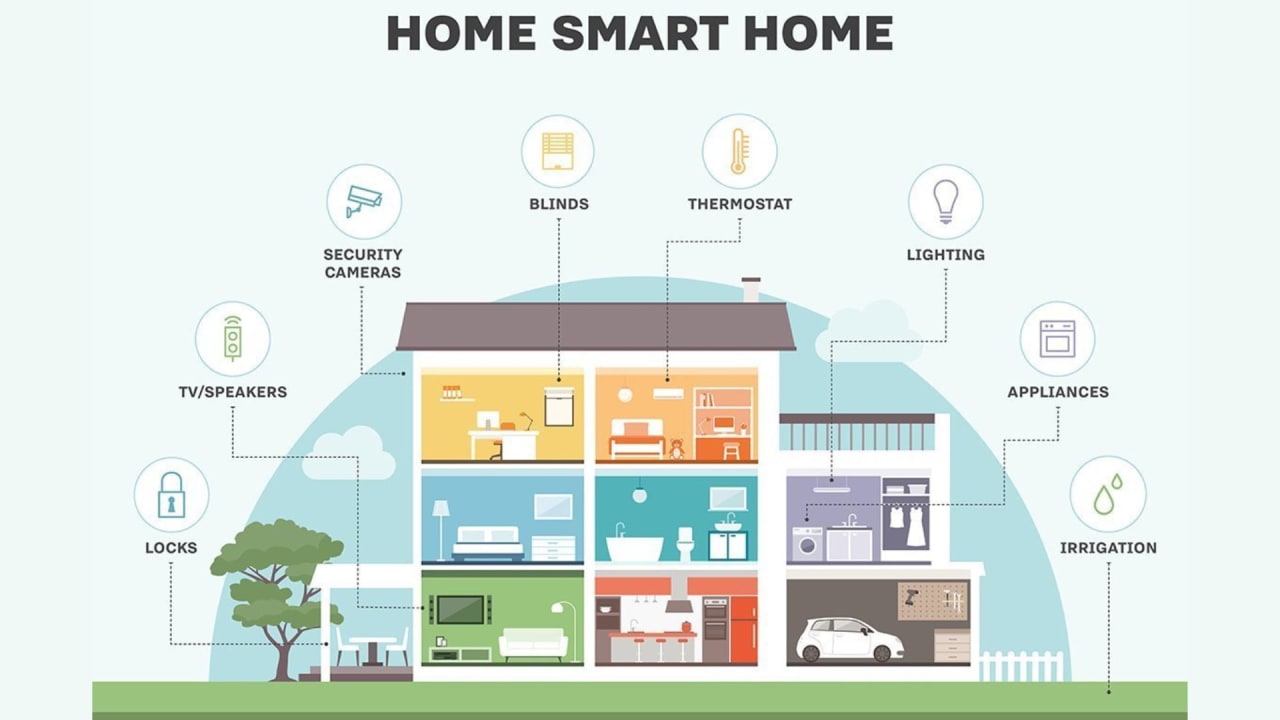
Smart home technology has shifted from a luxury add-on to a baseline expectation in Pakistan's premium residential market. In 2025, homes in high-end developments are designed from the ground up with integrated building automation systems — not retrofitted with consumer gadgets after construction. This shift means architects now need to coordinate smart home specifications alongside structural and MEP drawings from day one.
The growing availability of affordable smart home ecosystems — from international brands like Philips Hue and Xiaomi to locally supported solutions — has also brought smart features within reach of Pakistan's upper-middle-class housing market, not just ultra-luxury villas.
Smart home features now standard in modern Pakistani architecture
- Automated lighting scenes with occupancy and daylight sensors
- Smart climate control — zoned HVAC with app-based scheduling
- Integrated CCTV, video doorbell, and biometric access control
- Voice-activated appliances and whole-home audio systems
- Real-time energy consumption monitoring dashboards
- Pre-wired structured cabling and Wi-Fi 6 access point planning
For architects: Smart home coordination is now a billable scope item. Establish early in the design process which ecosystem the client intends to use, as conduit routing, switch plate sizing, and panel board requirements all vary between systems.
Mixed Material Facades in Pakistan — Texture, Identity & Climate
One of the most visually striking trends in Pakistani architecture in 2025 is the deliberate combination of multiple facade materials on a single building. Where earlier generations of modern construction in Pakistan often defaulted to painted render as the sole exterior finish, contemporary architects are using layered material palettes to achieve visual depth, climatic performance, and a distinct architectural identity that responds to Pakistan's cultural heritage without resorting to historicist pastiche.
Common facade materials in modern Pakistani architecture 2025
| Material | Primary Use in Modern Pakistani Architecture |
|---|---|
| Glass | Transparency, natural light, double-skin facades |
| Wood Cladding | Warmth, texture, biophilic connection |
| Stone & Marble | Durability, prestige, local identity |
| Metal Screens (Jali) | Solar shading, privacy, cultural pattern |
| Exposed Concrete | Brutalist accent, thermal mass |
| Terracotta Brick | Climate response, traditional reference |
The reinterpretation of traditional jali screens in modern metal or perforated aluminium panel form is one of the most culturally resonant trends — simultaneously providing solar shading, privacy, and a visual language that connects contemporary buildings to Pakistani architectural heritage.
Open Plan Living in Pakistan — Flexible Modern Spaces
Open-plan spatial layouts have become the dominant arrangement in modern Pakistani homes and commercial interiors. The traditional compartmentalised floor plan — with separate, enclosed rooms for every function — is giving way to fluid, interconnected spaces that prioritise airflow, social interaction, and spatial efficiency.
In Pakistani residential design specifically, the merging of the kitchen, dining room, and lounge into a single great room reflects evolving household dynamics — a growing preference for family-centred living, entertaining at home, and the practical reality that open layouts feel significantly larger than their square footage suggests. In a market where plot sizes are shrinking and construction cost per square foot is rising, this is a compelling argument.
Benefits of open-plan design in Pakistani residential architecture
- Improved natural cross-ventilation — critical in Pakistan's hot climate
- Enhanced sense of space in compact urban plots (5 marla, 10 marla)
- Better supervision of children from kitchen and living areas
- Flexibility to reconfigure space use without structural changes
- Stronger visual connection between indoor living and outdoor garden or courtyard
Cultural consideration: In Pakistani homes, open plans are often modified with moveable screens or partial walls to allow privacy when guests are present, particularly where gender-segregated entertaining is observed. Skilled architects design for this flexibility from the outset.
Landscape Architecture Trends in Pakistan — Integrating Nature
Landscape design has emerged from a purely ornamental role to become a fundamental component of modern architectural performance in Pakistan. Thoughtfully designed external spaces reduce urban heat island effect, improve microclimate around buildings, manage stormwater, support biodiversity, and — critically in a country experiencing water stress — can be designed to minimise irrigation demands through intelligent planting choices.
Key landscape architecture trends in Pakistani residential and commercial projects
- Central courtyards — a reinterpretation of the traditional Pakistani haveli courtyard in modern residential typologies, providing shade, natural ventilation, and a semi-private outdoor room
- Vertical gardens and living walls — increasingly specified on commercial facades in Lahore, Islamabad, and Karachi for thermal insulation and visual impact
- Shaded terraces and rooftop gardens — converting previously unused roof slabs into functional outdoor living spaces
- Native and drought-resistant planting — replacing water-intensive exotic species with Pakistan's own native flora
- Permeable paving and rain gardens — managing urban runoff and reducing flash flooding in dense residential neighbourhoods
Modern Interior Design Influences in Pakistan 2025
Interior design in Pakistan has undergone a significant transformation in 2025, moving away from the heavily ornate, maximalist aesthetic that characterised upper-middle-class homes of the previous generation towards a refined, curated minimalism that prizes quality, comfort, and visual calm.
Material Palette
- Limewash and micro-cement plaster walls
- Engineered wood and stone flooring
- Warm neutral tones — sand, linen, terracotta
- Brass and matte black metalwork
Furniture & Layout
- Low-profile, modular seating
- Multi-functional furniture for compact spaces
- Statement lighting as primary design element
- Floating shelves replacing heavy cabinets
Biophilic Elements
- Indoor plants — fiddle leaf fig, monstera, succulents
- Natural light maximised through skylights
- Organic forms in furniture and textiles
- Stone and wood in their natural, unpolished states
Smart Lighting Design
- Tunable white LED for circadian rhythm support
- Accent cove lighting replacing overhead pendants
- Architectural lighting integrated into joinery
- App-controlled scenes for ambient layering
Iconic Modern Buildings in Pakistan — Architecture Worth Studying
Pakistan has produced a number of landmark modern buildings that exemplify the trends discussed in this article. These projects are worth visiting and studying for architecture and DAE students.
Notable modern architecture in Pakistan
- Commercial
Dolmen City Mall
Karachi
- Mixed-Use
Centaurus Mall & Tower
Islamabad
- Tech Hub
Arfa Software Technology Park
Lahore
- Civic
Senate of Pakistan Building
Islamabad
- Residential
DHA & Bahria Town Villas
Nationwide
- Hospitality
Pearl-Continental Hotels
Multi-city
For students: Visiting these buildings in person and sketching them is one of the most effective ways to develop architectural observation skills. Pay attention to how natural light enters the space, how materials are detailed at corners and junctions, and how people actually move through and use the building. Explore our DAE Architecture career and scope guide to understand where these skills lead professionally.
Frequently Asked Questions — Modern Architecture in Pakistan
- What defines modern architecture in Pakistan?
- Modern architecture in Pakistan is defined by a blend of minimalism, sustainability, smart technology, and cultural context. It emphasizes functional spaces, clean lines, and energy-efficient designs while reflecting local aesthetics.
- Is modern architecture suitable for Pakistan’s climate?
- Yes, modern architecture can be highly suitable for Pakistan’s climate when combined with passive design strategies, shading devices, natural ventilation, and climate-appropriate materials.
- Are smart homes expensive?
- Smart homes can have higher initial costs due to technology integration, but they often provide long-term energy savings, convenience, and enhanced security, making them cost-effective over time.
- Which cities in Pakistan lead modern architecture trends?
- Karachi, Lahore, and Islamabad are at the forefront of modern architectural trends, featuring innovative residential, commercial, and public buildings.
- How can I keep my home modern but culturally relevant?
- You can integrate local materials, traditional patterns, or culturally inspired design elements with modern architecture trends to maintain cultural relevance while keeping the space contemporary.
Conclusion — The Future of Architecture in Pakistan
Modern architectural trends in Pakistan in 2025 reflect a sophisticated balance between innovation, climate-responsiveness, technology, and cultural identity. Minimalism, sustainability, and smart integration are not passing fashions — they represent a fundamental shift in how buildings are expected to perform and feel.
For architecture and DAE students in Pakistan, understanding these trends is not merely academic — it is directly relevant to the work you will be doing within months of graduating. Clients, contractors, and the construction industry are already demanding these skills.
As technology advances and environmental pressures intensify, architecture will continue evolving toward smarter, greener, and more deeply human-centred spaces. The architects and technicians who understand both the principles and the tools will define Pakistan's built environment for the next generation.
Interested in pursuing a career in architecture? Read our DAE Architecture scope guide or compare B.Arch vs BSc Architectural Engineering.
Written by
Ms. Jaweria Mushtaq
Ms. Jaweria Mushtaq brings 9 years of expertise in building design, HVAC systems, and structural integrity, balancing functionality and aesthetics in engineering solutions. Her work focuses on precision and sustainability.