
Scope of DAE in Pakistan 2026 — Jobs, Salary & Career Guide
Discover the complete scope of DAE in Pakistan 2026 — career opportunities, salary expectations, top fields, government vs private jobs, and higher-study options for Diploma of Associate Engineering graduates.
By Ms. Zoya Khaliq14 min read
Introduction — Why DAE Still Matters in Pakistan 2026
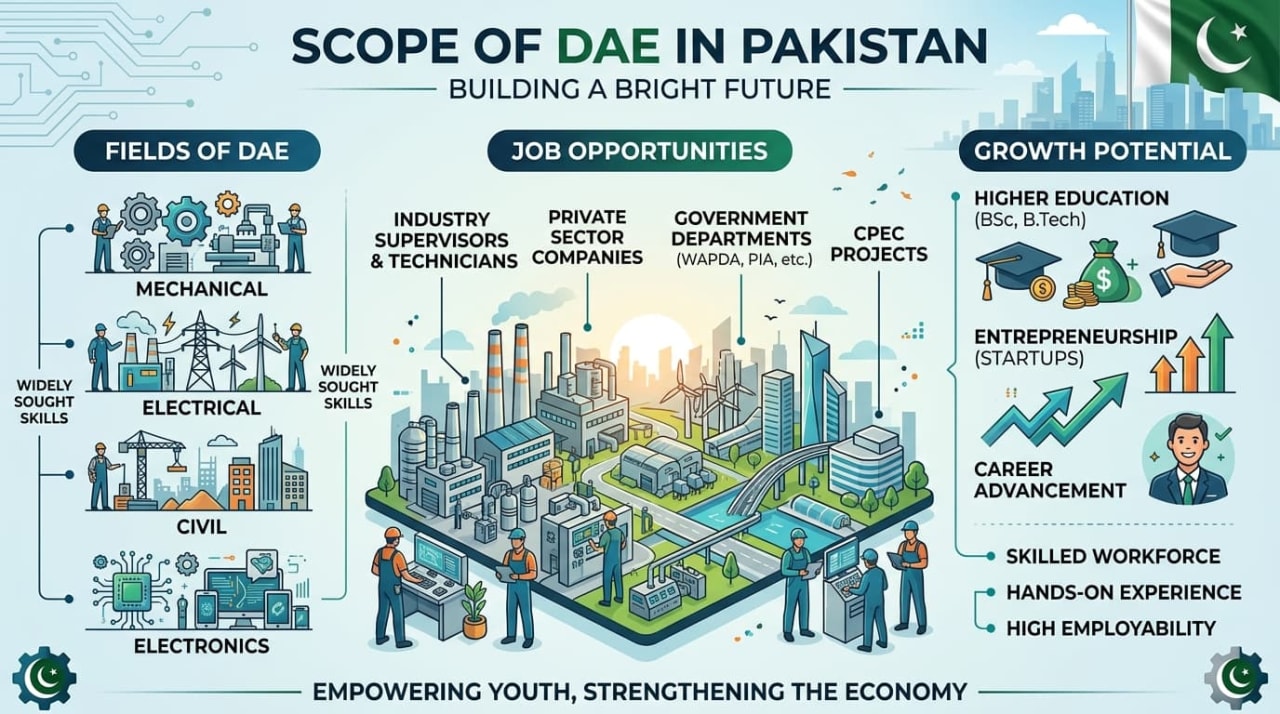
The scope of DAE in Pakistan 2026 remains one of the most talked-about questions among Matric-science students and their parents, and for good reason. Diploma of Associate Engineering (DAE) graduates continue to fill a critical gap in Pakistan's industrial workforce — the gap between a fresh Matric pass and a fully qualified engineer. While intermediate and BSc routes take longer and lean more on theory, DAE delivers job-ready technicians in just three years.
This guide breaks down the real scope of DAE in Pakistan in 2026 — covering which fields offer the strongest demand, what salaries actually look like across experience levels, government versus private sector trade-offs, higher-study pathways, and the skills that separate an average diploma holder from one who commands a senior salary. If you are specifically weighing DAE Mechanical Engineering as your field, our dedicated guide on DAE Mechanical Engineering scope in Pakistan goes deeper into salary and job titles for that discipline; this article gives you the bigger picture across every major DAE field.
Why thousands of students still choose DAE every year
- Faster route from Matric to a paying technical job — 3 years instead of 4–5
- Lower entry merit than FSc Pre-Engineering, with several specialisations to choose from
- Strong, hands-on practical training that employers value immediately
- Direct pathway into government, private, and overseas technical jobs
- Option to upgrade later into a full BSc Engineering degree
What Is DAE (Diploma of Associate Engineering)?
DAE stands for Diploma of Associate Engineering — a three-year, post-Matric technical education programme offered by provincial boards of technical education such as PBTE (Punjab), SBTE (Sindh), KPBTE (Khyber Pakhtunkhwa), and BTEK. It is generally treated as equivalent to FSc Pre-Engineering / HSSC for admission purposes, but the curriculum is built around workshop practice, laboratory work, and industrial training rather than pure classroom theory.
- Open to Matric (Science) students, typically with 50%+ marks depending on the board
- Specialisations across Mechanical, Electrical, Civil, Electronics, Computer, Chemical, and Architecture
- A mix of classroom lectures, workshop assignments, lab experiments, and industrial visits
- Recognised across Pakistan as equivalent to HSSC (12th grade) for further study
Scope of DAE in Pakistan 2026
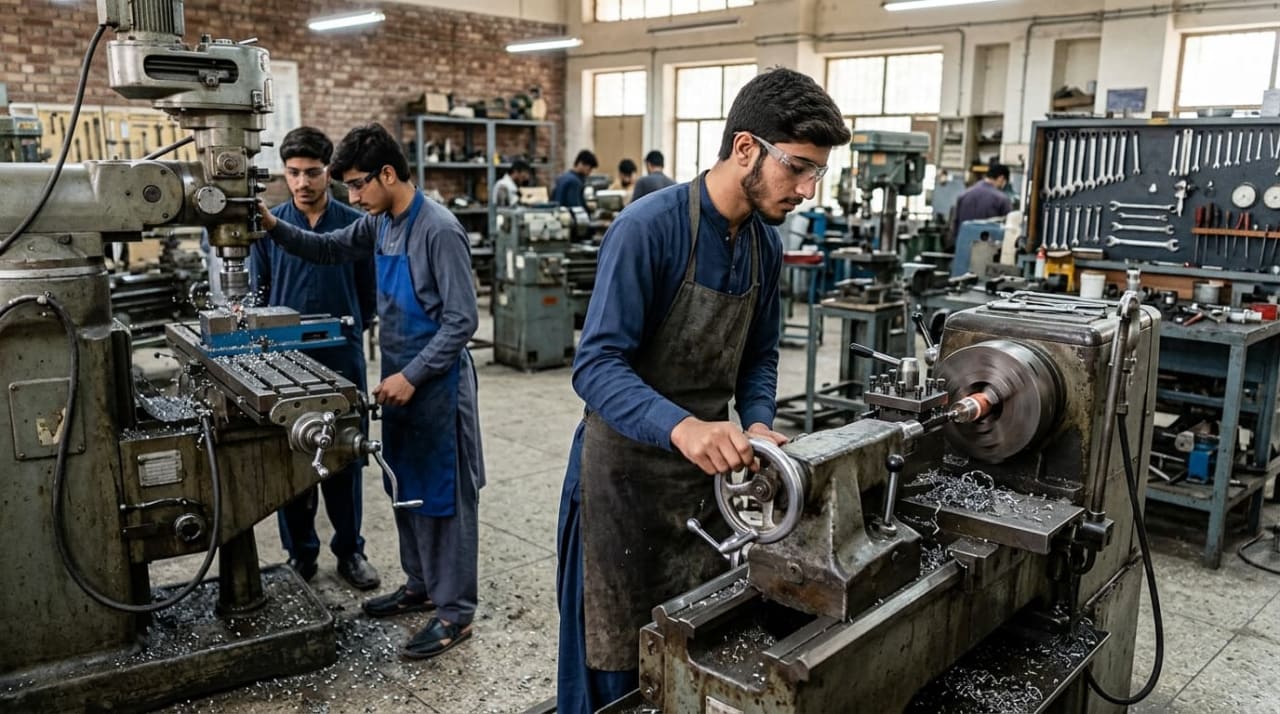
The scope of DAE in Pakistan 2026 is driven by the same forces that have always created demand for skilled technicians: an economy built on manufacturing, energy, and construction, now joined by a fast-growing IT, electronics, and telecom sector. Pakistan's textile mills, cement plants, sugar mills, power stations, and construction firms cannot run without trained mechanical, electrical, and civil diploma holders on the floor every single day.
CPEC-linked infrastructure, ongoing power-sector projects, and steady construction activity continue to create entry-level openings every year, while Gulf countries — particularly Saudi Arabia, the UAE, and Qatar — remain a major outlet for experienced DAE technicians seeking significantly higher pay than the local market offers.
Manufacturing & Industry
- Machine Operator
- Production Supervisor
- Quality Inspector
Energy & Power
- Plant Maintenance Tech
- Substation Technician
- Boiler / HVAC Operator
Construction & Infrastructure
- Site Supervisor
- Surveyor
- Quantity Estimator
Gulf & International
- Overseas Technician
- Maintenance Engineer
- Workshop Foreman
Best DAE Fields and Their Career Scope
Not every DAE specialisation offers the same scope. Here is how the four most-enrolled fields compare for demand and typical career direction in Pakistan:
Civil Technology
- Site supervision & surveying
- Quantity estimation & quality checks
- Building & road construction
Demand: High · Best for: Construction & infrastructure
Mechanical Technology
- Machine operation & maintenance
- CNC, lathe & milling work
- Plant & workshop supervision
Demand: Very High · Best for: Manufacturing, energy & maintenance
Electrical Technology
- Power generation & distribution
- Substation & wiring work
- Industrial electrical maintenance
Demand: Very High · Best for: Power, utilities & industry
Auto & Diesel Technology
- Vehicle engine diagnostics & repair
- Diesel engine & heavy-machinery service
- Auto workshop & dealership roles
Demand: High · Best for: Automotive workshops & transport
Architecture Technology
- Architectural drafting & 3D modelling
- Site supervision for building projects
- Assisting licensed architects
Demand: Moderate–High · Best for: Architectural & design firms
HVAC&R Technology
- AC & refrigeration installation/service
- Commercial HVAC system maintenance
- Strong demand in real estate & hospitality
Demand: High · Best for: Real estate, hospitality & Gulf markets
Computer & Electronics Technology
- Networking & hardware support
- Telecom field technician roles
- Electronics assembly & repair
Demand: Fast-growing · Best for: IT, telecom & electronics firms
What about DAE Architecture and Chemical Technology?
Architecture Technology and Chemical Technology are smaller but respectable specialisations. Architecture diploma holders often work as draftsmen or site assistants before progressing into architectural firms — our separate DAE Architecture guide for Pakistan covers subjects, scope, and jobs in full detail. Chemical Technology graduates typically find work in fertiliser plants, sugar mills, and process industries.
Jobs After DAE in Pakistan
After completing DAE, graduates can apply for a wide range of technical and supervisory roles. Entry-level positions focus on hands-on machine, site, or equipment handling, while experienced diploma holders progress into supervisory and management positions.
- Associate Engineer / Sub-Engineer
- Technician (Mechanical, Electrical, Civil, Electronics)
- Maintenance Supervisor or Workshop Incharge
- Quality Control Inspector
- Draftsman / AutoCAD Assistant
- CNC or Plant Machine Operator
- Site Supervisor or Surveyor (Civil)
Whichever role you start in, working safely matters from day one — our guide on safety rules in a mechanical workshop is a useful refresher before stepping onto any shop floor.
DAE Salary in Pakistan 2026
Approximate monthly salary ranges (PKR), blended across DAE fields. Actual figures vary by specialisation, employer, city, and skills — mechanical-specific figures are broken down further in our DAE Mechanical salary guide.
Monthly salary ranges (PKR)
Fresh Diploma HolderPKR 45,000
2–5 Years ExperiencePKR 80,000
Senior Technician / SupervisorPKR 115,000
Gulf / Overseas PostingPKR 200,000
Tip: Skilled technicians with CNC operation, AutoCAD, PLC, or telecom networking expertise command noticeably higher salaries. Adding a professional certification after DAE is often the fastest way to accelerate salary growth.
Government vs Private Sector Jobs
DAE graduates can build strong careers in either sector — the right choice depends on whether you prioritise job security or growth speed.
Government Sector
- Pakistan Railways
- WAPDA & Power Plants
- PWD (Public Works Dept.)
- PTCL & Telecom Corporations
- Armed Forces Technical Cadres
- OGDCL & PSO
Best for: job security, pension & long-term stability
Private Sector
- Manufacturing & Textile Mills
- Construction & Real Estate Firms
- IT & Electronics Companies
- Power Generation Companies
- Automobile Industry
- Gulf & International Employers
Best for: faster growth & higher salary potential
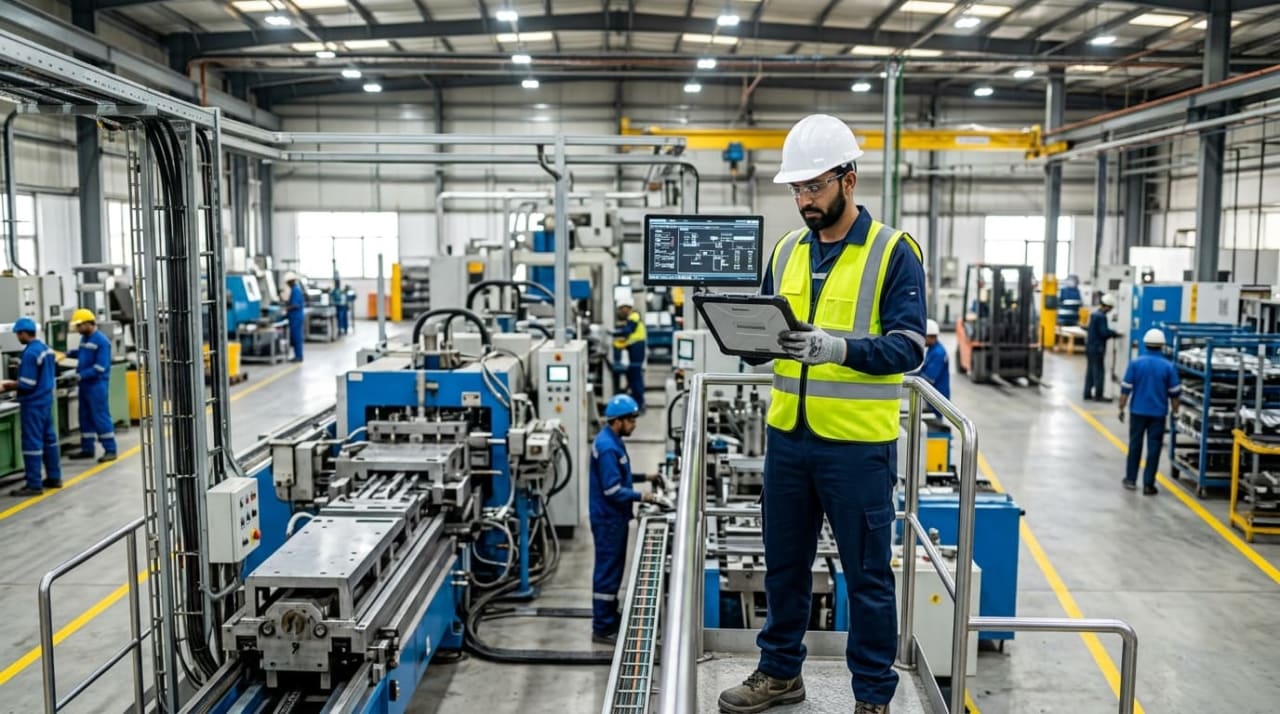
Higher Studies After DAE
Many students continue their education after DAE to accelerate career growth and unlock higher salary brackets. A DAE diploma provides a strong, practical foundation for engineering degrees at Pakistani universities — and for understanding the regulatory side, it helps to know what the Pakistan Engineering Council (PEC) actually does.
BSc Engineering Technology
Most PopularMost DAE graduates pursue a BSc at universities like UET, NUST, or COMSATS through lateral-entry routes.
PEC-Equivalent BSc Engineering
High ScopeA PEC-recognised BSc keeps the door open to full engineer registration and higher-grade government posts.
Professional Certifications
RecommendedAutoCAD, SolidWorks, CNC programming, and PLC certifications significantly boost employability and salary.
International Technical Diplomas
Gulf JobsCity & Guilds, BTEC, and Gulf-recognised technical certifications open doors to overseas employment.
If you are choosing between sticking with your diploma or moving on to a degree, our comparison of DAE Mechanical vs BSc Mechanical Engineering walks through the career, salary, and time trade-offs in detail.

Skills That Maximize DAE Scope
Technical qualifications alone are not enough. Employers in Pakistan and abroad look for DAE graduates who combine strong technical ability with professional workplace habits — our deeper breakdown of skills required for mechanical technician jobs applies just as well to electrical and civil technicians.
Technical Skills
- Technical drawing & AutoCAD
- Machine, panel, or site troubleshooting
- Hands-on workshop or lab equipment use
- Basic computer & software literacy
- Reading drawings, schematics & specs
Professional Skills
- Workplace safety & quality awareness
- Teamwork & clear communication
- Report writing & documentation
- Time management & planning
- Willingness to keep learning new tools
Future Outlook for DAE Graduates
The long-term outlook for DAE in Pakistan stays strong as long as graduates keep their skills current. Here is how three major trends are likely to play out:
Q1: Is automation a threat or an opportunity for DAE graduates?
→ Key Insight
Opportunity — technicians who learn PLC, CNC, and basic automation tools become more valuable, not less.
→ Action Point
Threat only for unskilled workers — upskilling makes you difficult to replace in automated factories.
Q2: How do CPEC and infrastructure projects affect DAE scope?
→ Key Insight
CPEC-linked energy plants, roads, and industrial zones directly require mechanical, electrical, and civil technicians.
→ Action Point
Long-term — infrastructure spending tends to create sustained demand for maintenance staff for years.
Q3: What is the Gulf job market outlook for DAE graduates in 2026?
→ Key Insight
Strong — Gulf industrial and construction expansion continues to create new technical roles for skilled diploma holders.
→ Action Point
Competitive — graduates with AutoCAD, CNC, or telecom skills and basic English have a clear advantage.
Bottom line: Technicians who continuously upgrade their skills — especially in CNC, AutoCAD, PLC, and basic automation — will remain in demand regardless of broader economic cycles. The future belongs to the skilled, not just the qualified.
DAE vs FSc Pre-Engineering — Which Should You Choose?
Both are valid routes after Matric. This side-by-side comparison highlights where they genuinely differ:
| Aspect | DAE | FSc Pre-Engineering |
|---|---|---|
| Duration | 3 years | 2 years |
| Primary focus | Practical, workshop & lab-based | Theoretical, exam-based |
| Typical entry merit | 50%+ in Matric (Science) | 60–70%+ for competitive colleges |
| Job-readiness | Job-ready immediately after diploma | Not job-ready until BSc / further study |
| University entry route | Lateral entry into BSc Engineering Technology | Direct entry via engineering entry test |
| Best for | Fast job entry & hands-on training | Students set on a 4-year BSc Engineering degree |

Frequently Asked Questions
- What is the scope of DAE in Pakistan in 2026?
- The scope of DAE in Pakistan in 2026 remains strong. Manufacturing, energy, construction, telecom, and electronics sectors all need skilled technicians, and Gulf countries continue to absorb experienced DAE graduates at significantly higher salaries than the local market.
- Is DAE better than FSc Pre-Engineering?
- Neither is universally 'better' — DAE suits students who want job-ready technical skills in three years and a lower entry merit, while FSc Pre-Engineering suits students who are confident about going straight into a four-year BSc Engineering degree.
- Can DAE students apply for BSc Engineering at university?
- Yes. Most DAE graduates use lateral-entry or lateral-eligibility routes into BSc Engineering Technology or BSc Engineering programmes at universities such as UET, NUST, and COMSATS, depending on the specific admission policy that year.
- What is the average starting salary after DAE in Pakistan?
- Fresh DAE diploma holders typically start around PKR 40,000–45,000 per month in 2026, rising to roughly PKR 80,000 with 2–5 years of experience and over PKR 100,000 in senior technician or supervisory roles, depending on the field and employer.
- Can DAE diploma holders get jobs in the Gulf?
- Yes. Saudi Arabia, the UAE, and Qatar regularly hire DAE-qualified technicians — especially in mechanical, electrical, and civil trades — and overseas postings typically pay multiples of the local Pakistani salary.
- Which DAE field has the best scope in Pakistan?
- Mechanical, Electrical, and Civil remain the highest-demand fields because they map directly onto Pakistan's manufacturing, energy, and construction sectors, while Computer and Electronics technology is the fastest-growing field as IT and telecom expand.
- Do I need PEC registration as a DAE technician?
- DAE diploma holders are not registered as Professional Engineers under the Pakistan Engineering Council, since PEC registration is reserved for BSc Engineering graduates. However, understanding PEC's role matters if you plan to upgrade to a BSc later.
- Is DAE still relevant in 2026 with rising automation?
- Yes, but relevance now depends on upskilling. Automation is replacing repetitive manual tasks, not skilled technicians — DAE graduates who learn CNC, PLC, or basic automation tools remain in strong demand.
Conclusion — Is DAE Worth It in Pakistan in 2026?
The scope of DAE in Pakistan 2026 remains strong for students who treat the diploma as a starting point rather than a finish line. Manufacturing, energy, construction, and the growing electronics and telecom sectors all need skilled, job-ready technicians — and Gulf employers continue to pay a real premium for experienced DAE graduates.
Whether you pick Mechanical, Electrical, Civil, or Computer & Electronics technology, success comes down to the same formula: strong fundamentals during the diploma, real workshop experience, a willingness to add certifications like AutoCAD or CNC, and an eye on higher studies if you want to climb further.
Choose government stability or private-sector growth, local jobs or an overseas posting — for a motivated DAE graduate, the scope of DAE in Pakistan has rarely looked better than it does in 2026.
Looking for more guidance? Browse more articles or check out how to pass your DAE papers while you're still studying.
Written by
Ms. Zoya Khaliq
Ms. Zoya Khaliq offers over 8 years of experience teaching architectural design, environmental planning, and building sciences, helping students transform ideas into tangible structures. Her teaching combines practical insights with a focus on sustainability.